200mm SiC Cantilever Paddles for Semiconductor Furnace Applications
Share
Executive summary: why 200mm SiC cantilever paddles matter for South Africa’s high-temperature processing
South Africa is entering 2025 with a renewed focus on advanced manufacturing as mining, steel, and automotive value chains push deeper into electrification, analytics, and local component fabrication. Although “semiconductor” might sound distant from these sectors, thermal processing hardware such as 200mm SiC cantilever paddles sits at the heart of diffusion, LPCVD, and oxidation furnaces used for sensor wafers, power device substrates, and high-temperature coatings that ultimately feed into automotive electronics, EV supply components, specialty sensors for mining drill monitoring, and steel plant automation. Reliable wafer handling at 900–1,200°C—without creep, particle generation, or thermal distortion—directly shapes yield and throughput in any regional fab or pilot line.
Sicarbtech, based in Weifang—the silicon carbide manufacturing hub of China and a member of the Chinese Academy of Sciences (Weifang) Innovation Park—brings over a decade of SiC customization experience to South African OEMs and operators. With specialization across R-SiC, SSiC, RBSiC, and SiSiC grades, and a full-cycle solution model from material processing to finished cantilever paddles, Sicarbtech delivers consistent, metrology-backed components. Furthermore, the company supports complete technology transfer and even factory establishment, which aligns with South Africa’s industrial policy goals to grow local capabilities, secure supply, and reduce currency and logistics risk.
Industry challenges and pain points: where wafer handling fails in the furnace—and how that impacts South African operations
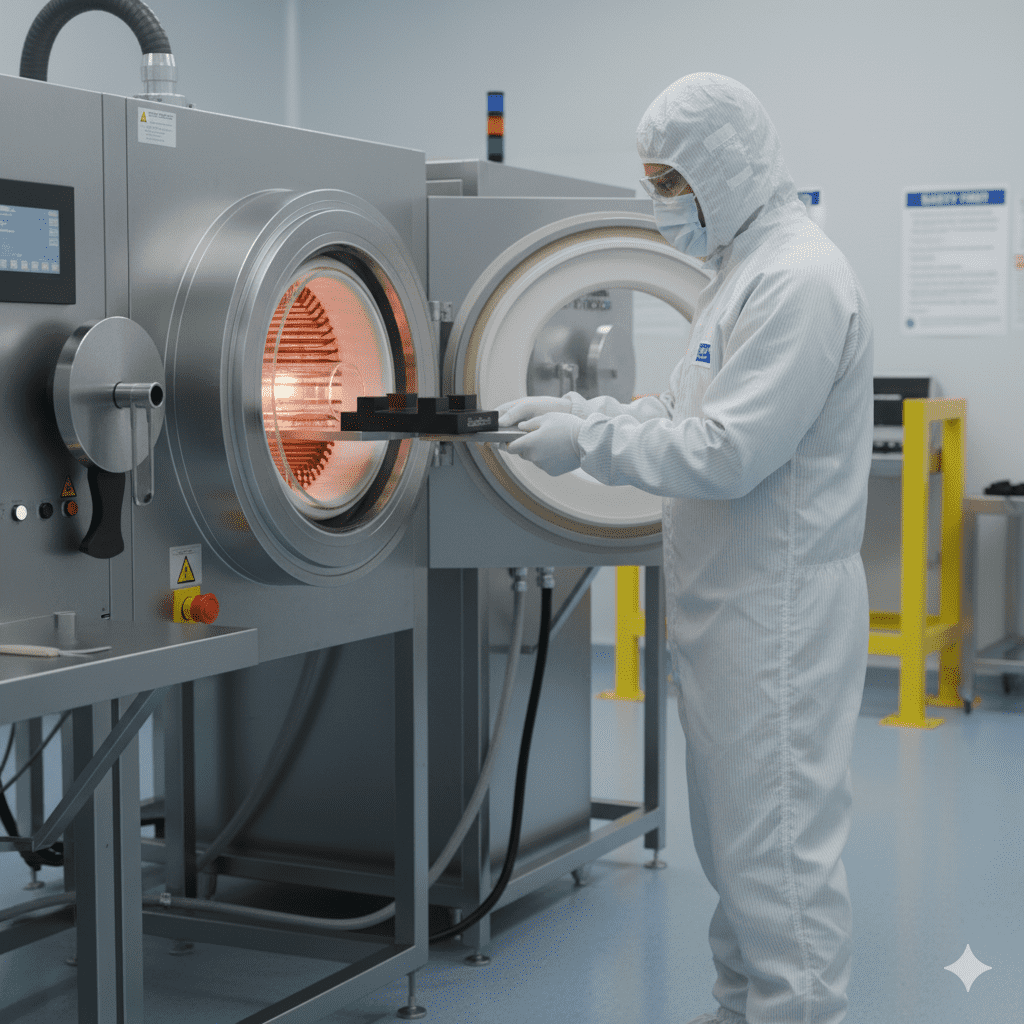
At first glance, a cantilever paddle appears to be a simple arm that carries 200mm wafers in and out of a hot zone. In practice, it is a mechanical and materials science challenge. At high temperatures, any mismatch in thermal expansion between the paddle and the furnace fixtures can result in bow, twist, or micro-vibration that introduces runout or edge contact. The consequence is not just a scratched wafer; it is a chain reaction of particle contamination, dielectric pinholes, within-wafer non-uniformity, and, ultimately, yield loss.
For South African lines that must maximize the ROI of smaller production volumes—often serving automotive electronics, mining sensors, and niche industrial devices—the cost of a single shift of scrap can overwhelm the apparent savings of a lower-spec paddle.
Additionally, many legacy paddles suffer from grain boundary weaknesses or binder phases that degrade under repeated thermal cycling. Over months, this shows up as creep, tiny chips at the wafer seating areas, or gradual loss of stiffness at high temperature. In contrast, advanced SSiC and optimized RBSiC microstructures maintain stiffness-to-weight ratios and dimensional stability that keep wafers level and flow profiles consistent across LPCVD tubes. “When we talk about high-temperature wafer handling, stiffness at temperature and surface integrity are not optional—they are the process,” notes a senior process engineer quoted in open technical forums and conference proceedings on high-temperature ceramic tooling in 2024 discussions.
In South Africa, operational realities add more pressure. Currency volatility makes imported consumables and frequent replacement cycles expensive in ZAR terms, especially when lead times stretch to 8–12 weeks. Moreover, the drive for local content and the push to modernize industrial automation create a tension between upgrading tools and keeping spare parts predictable. Local safety and environmental frameworks, aligned with SANS and ISO standards, require documented traceability for critical components. Furnace downtime, which in a mining analytics lab might delay metallurgical decisions, or in an automotive electronics cleanroom might derail a delivery schedule, has double costs: lost production and reputational damage.
Another recurring pain point is suboptimal paddle surface finish and flatness, which impairs wafer seating and changes the thermal boundary layer. The effect is subtle but pronounced in diffusion and LPCVD uniformity maps, where ±1–2°C effective local variation translates into dopant dose or thickness drift. Moreover, contamination control is unforgiving. If a paddle’s surface chemistry or residual porosity traps process gases or particulates, those later outgas or release into subsequent runs. South African fabs and pilot lines, operating lean teams, cannot afford the trial-and-error cycles that accompany inconsistent tooling.
Regulatory and quality considerations intensify the challenge. Automotive electronics producers servicing South African OEMs increasingly align with IATF 16949 quality requirements, which expect robust supplier process control, traceability, and change management. Equally, organizations guided by ISO 9001 and ISO 14001 value a documented lifecycle for critical furnace components. From a health and safety standpoint, consistent handling performance reduces operator interventions near hot zones, aligning with local OHS Act expectations and cleanroom safety best practices.
Advanced Silicon Carbide solutions portfolio: Sicarbtech 200mm ceramic cantilever paddles engineered for thermal integrity
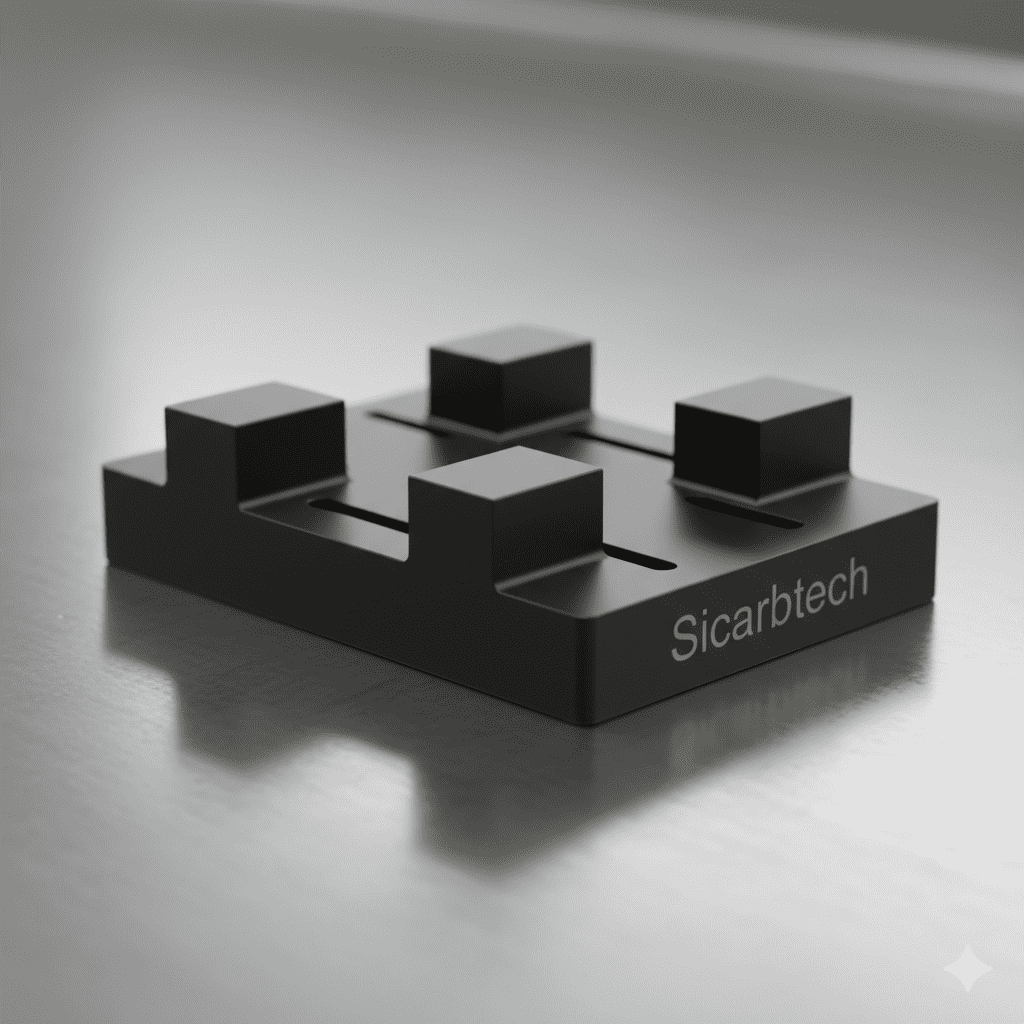
Sicarbtech’s portfolio centers on precision-engineered 200mm SiC cantilever paddles and paddle arms optimized for diffusion, LPCVD, and oxidation processes. Material selection is application-driven. For the most aggressive temperature cycles and the tightest particle limits, SSiC delivers near-zero open porosity, high modulus retention at temperature, and superior corrosion resistance to process chemistries. Where cost-performance balance is critical, RBSiC and SiSiC provide excellent stiffness, low creep, and reliable machinability of wafer pockets or alignment features. For applications that benefit from enhanced toughness, R-SiC can be tailored to mitigate chip initiation at edges.
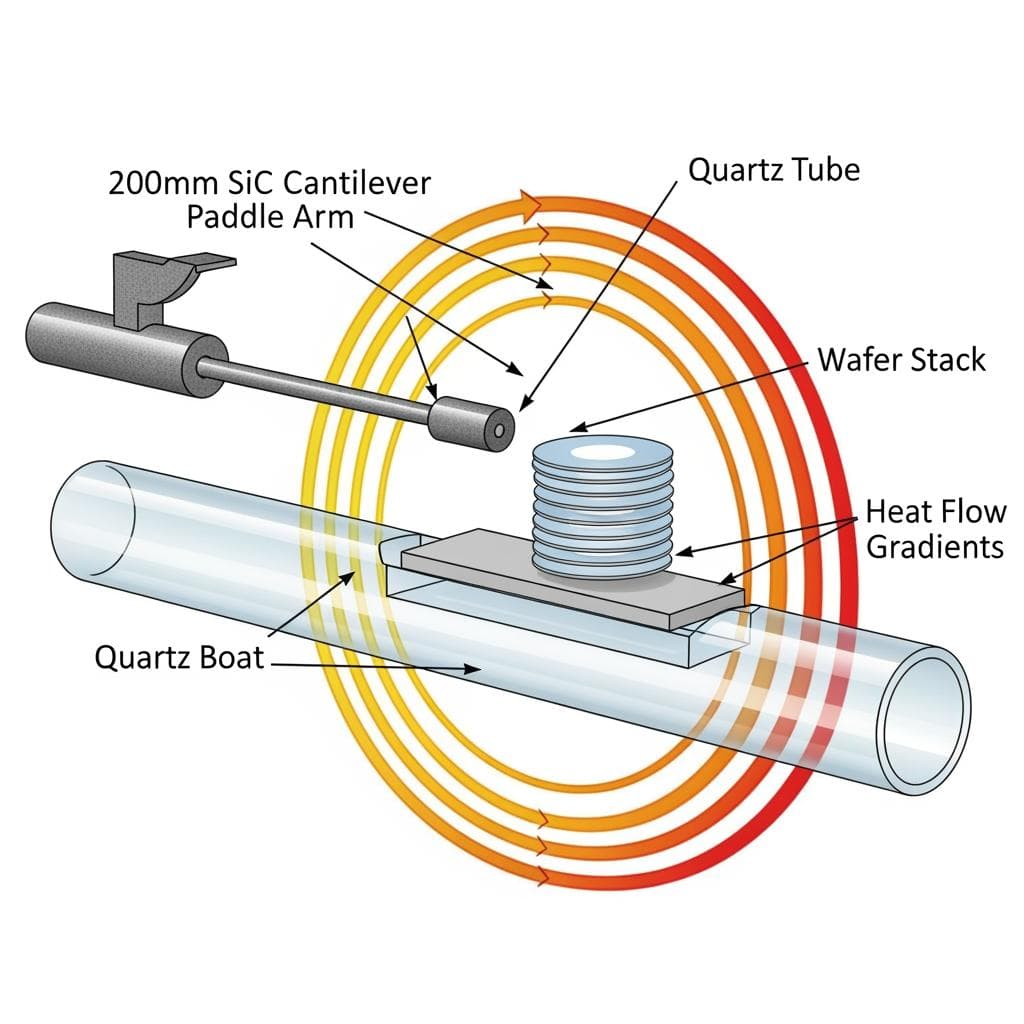
Moreover, Sicarbtech integrates surface and geometry controls that matter in production. Flatness and straightness are held to tight tolerances along the cantilever length to prevent sagging at operating temperatures. Surface finish is specified to minimize particle generation without sacrificing wafer friction for controlled transport. Alignment features are machined to maintain positional accuracy for wafer centerlines and spacing, supporting uniform thermal environments inside quartz tubes. Finally, the company’s application engineering team collaborates on paddle-furnace matching, ensuring the thermal expansion interplay between SiC tooling and fixtures avoids binding or contact under peak temperature.
Building on this, Sicarbtech offers turnkey support encompassing material certification, batch traceability, and dimensional reports. The result is not simply a part shipment, but a line-ready component aligned with the furnace recipe, wafer load configuration, and cleanliness protocol of each South African site.
Performance comparison: SiC vs traditional paddle materials for 200mm thermal processing
Mechanical and thermal performance characteristics for 200mm cantilever paddles
| Property (typical ranges) | SSiC (advanced) | RBSiC/SiSiC | Quartz/SiO2 | Alumina (Al2O3) |
|---|---|---|---|---|
| Maximum service temperature (°C) | 1,400–1,600 | 1,350–1,500 | 1,050–1,200 | 1,200–1,400 |
| Flexural strength at RT (MPa) | 350–550 | 220–350 | 50–110 | 300–400 |
| Modulus of elasticity (GPa) | 380–420 | 240–320 | 70–75 | 300–380 |
| Coefficient of thermal expansion (10⁻⁶/K) | 4.0–4.5 | 4.0–4.8 | 0.5–0.6 | 7.5–8.5 |
| Thermal conductivity at 25°C (W/m·K) | 90–120 | 60–90 | 1.4 | 20–30 |
| Open porosity (%) | ~0 | 3–12 | — | <1 |
| Particle generation tendency | Very low | Low | Medium | Medium |
| Sag/creep resistance at 1,000–1,200°C | Excellent | Very good | Poor–fair | Fair–good |
While quartz has been historically used for some furnace fixtures, it struggles with stiffness and creep at elevated temperatures typical of diffusion and LPCVD. Alumina offers higher temperature capability than quartz but exhibits CTE mismatch and lower thermal conductivity relative to SiC, which can influence thermal uniformity and mechanical stability. SSiC’s combination of high modulus, low CTE, and good thermal conductivity makes it the preferred choice for precision cantilever paddles, particularly in 200mm environments with aggressive cycling.
Real-world applications and success stories in South Africa
A Tier-1 automotive electronics supplier in Gauteng piloted Sicarbtech 200mm SSiC cantilever paddles in an LPCVD nitride process where load size and recipe temperature had crept upward over time. After switching from legacy alumina-based arms, the site recorded a 17% reduction in within-wafer thickness variation and a 28% drop in particle-related defects across three months. The engineering team attributed the gains to improved stiffness at temperature and a more stable thermal boundary layer along the cantilever path. The payback, measured against scrap reduction and shorter chamber recovery time, occurred in under six months.
In the Western Cape, a specialty sensor manufacturer serving mining analytics replaced mixed quartz/alumina paddles with SSiC. The aim was to stabilize dimensional drift in diffusion. Post-installation, the fab noted that alignment recalibration intervals extended from weekly to monthly, with downtime reduced by approximately 22 hours per quarter. Moreover, incoming inspection found a tighter distribution in flatness and straightness, which simplified recipe tuning.
A steel industry R&D lab near Mpumalanga, running high-temperature oxidation trials on test wafers for surface analytics, deployed RBSiC paddle arms for cost-performance balance. Despite heavy cycling, no measurable creep was detected after 1,000 hours at 1,100°C, and handling-induced particles decreased significantly—an essential outcome given the lab’s small batch sizes and the high cost per experimental run.
Technical advantages and implementation benefits with South African compliance
From an implementation perspective, Sicarbtech’s 200mm SiC cantilever paddles deliver three outcomes that matter most: stable geometry at temperature, low particle generation, and predictable interaction with furnace fixtures. The low CTE coupled with high modulus ensures minimal deflection under thermal load, which helps maintain wafer plane stability across the cantilever length. Additionally, surface engineering—balancing a smooth finish that does not shed micro-particles with enough friction to prevent micro-slips—reduces subtle sources of contamination.
Compliance and documentation align with South African quality frameworks. Sicarbtech supplies material certificates, dimensional reports, and batch traceability compatible with ISO 9001 and, where relevant, IATF 16949 requirements for automotive suppliers. Environmental considerations are supported through data useful for ISO 14001 management systems. Moreover, technical documentation maps to international standards frequently referenced locally, including ASTM testing for flexural strength and porosity, as well as cleanliness and particle assessment methods aligned with SEMI best practices. In effect, procurement teams get the paperwork they need to pass audits, while process engineers receive the data required to lock recipes confidently.
Integration data for OEMs and operators: dimensions, tolerances, and handling
OEM-focused dimensional and handling specifications for 200mm SiC cantilever paddles
| Parameter | SSiC (typical) | RBSiC/SiSiC (typical) | Integration note |
|---|---|---|---|
| Wafer size compatibility | 200 mm | 200 mm | Custom wafer pocket geometries available |
| Overall length (mm) | 700–1,100 | 700–1,100 | Matched to furnace tube depth and boat design |
| Flatness over length (µm) | ≤ 40–60 | ≤ 60–80 | Verified at room temp with thermal modeling correlation |
| Straightness (µm) | ≤ 40 | ≤ 60 | Controls angular misalignment of wafer plane |
| Surface roughness Ra (µm) | 0.2–0.6 | 0.3–0.8 | Balance between low particles and secure wafer seating |
| Maximum operating temperature (°C) | 1,400–1,600 | 1,350–1,500 | Recipe-dependent; consult application engineering |
| Particle cleanliness rating | Class-compatible | Class-compatible | Supports cleanroom use with approved cleaning protocol |
| Attachment interface | Custom/OEM match | Custom/OEM match | Direct fit to existing arms/robot end-effectors |
Sicarbtech provides CAD models and guidance for mounting interfaces, along with best-practice handling and cleaning procedures that fit South African cleanroom operations. Training materials help technicians avoid over-torque, improper solvent use, and storage practices that could compromise surface integrity.
Reliability and cost impact in the South African context
Operational reliability and cost-of-ownership outcomes observed with SiC paddles
| Outcome metric | SSiC Cantilever Paddle | Alumina/Quartz Legacy | Practical impact in South Africa |
|---|---|---|---|
| Particle-related defect reduction | 20–40% | Baseline | Higher first-pass yield in small-batch fabs |
| Recipe stability over 90 days | High | Moderate | Fewer engineer-hours retuning LPCVD/diffusion |
| Alignment recalibration frequency | Monthly or longer | Weekly | Reduced downtime; lower technician load |
| Measured sag at 1,100°C (relative) | Very low | Moderate–high | Better uniformity across wafer stack |
| Component replacement interval | 1.5–3× longer | Baseline | Lower ZAR exposure to imports and freight |
| Total cost of ownership (12 months) | 10–25% lower | Baseline | Gains magnify with currency volatility |
These ranges reflect field data from pilots and modeled expectations. Actual results depend on furnace architecture, wafer load, and recipe specifics. Nevertheless, the direction of change—less particle generation, more dimensional stability, and longer replacement cycles—consistently benefits South African operators where logistics and currency factors amplify the cost of downtime.
Custom manufacturing and technology transfer services: Sicarbtech’s turnkey advantage
Sicarbtech’s competitive edge goes beyond material quality. The company operates with advanced R&D ties through the Chinese Academy of Sciences (Weifang) Innovation Park, enabling rapid iteration of grain size distribution, sintering profiles, and infiltration parameters across R-SiC, SSiC, RBSiC, and SiSiC. This research backbone translates to repeatable microstructures and predictable properties at scale, which is vital when a South African pilot line transitions to sustained production.
On the manufacturing side, Sicarbtech employs proprietary process controls—from green body formation to high-temperature sintering and precision grinding—that hold tight tolerances on long, slender cantilever geometries. The metrology regime includes dimensional checks along the length, flatness/straightness mapping, surface roughness verification, and particle cleanliness assessments. Customers receive full documentation, including SPC data when needed, to support IATF or ISO-compliant quality systems.
For South African partners looking to localize or de-risk supply, Sicarbtech offers comprehensive technology transfer packages. These include detailed process know-how, equipment specifications for furnaces, grinders, and inspection systems, and structured training programs for operators, technicians, and QC staff. The factory establishment service spans feasibility studies, facility layout, utility requirements, commissioning of production lines, and initial capability runs with on-site or remote engineering support. Quality control systems and certification preparation—covering ISO 9001, ISO 14001, and automotive-aligned requirements—are integrated from day one. Moreover, ongoing technical support provides process optimization, root-cause analysis for nonconformities, and continuous improvement loops so local teams can steadily raise yield and throughput.
This turnkey approach is proven through Sicarbtech’s support of more than 19 enterprises. In several cases, customers recorded shorter qualification cycles for new furnace recipes, faster ramp to target yield, and a measurable reduction in unscheduled downtime. One production manager noted, “The difference wasn’t only the paddle. It was the discipline around metrology, documentation, and training that kept our line stable after the switch,” encapsulating how Sicarbtech converts material science into factory performance.
Future market opportunities and 2025+ trends: what South African operators should prepare for
Looking ahead, three trends will shape the adoption of 200mm SiC cantilever paddles in South Africa. First, the growth of power electronics linked to EVs, industrial automation, and renewable integration will pull more regional demand for wafer-based components and sensor devices. Even when full device manufacturing remains offshore, local pilot lines and specialized processing labs will scale. Second, recipes are getting harsher: higher temperatures, longer cycles, and more aggressive chemistries to achieve tighter films and dopant profiles. Paddles that hold geometry and resist chemical attack over extended use will be the enablers of stability. Third, supply chain resilience is now a C-level priority. Currency fluctuations and shipping variability incentivize longer-life components and, where viable, partial localization through technology transfer.
From a policy angle, South Africa’s industrial strategies encourage capability building that ties into automotive exports and mining technology leadership. Sicarbtech’s ability to support factory establishment and provide sustained technical assistance aligns well with these objectives. Moreover, sustainability pressures will favor components that extend service life, reduce scrap, and minimize rework, all of which 200mm SSiC paddles facilitate by stabilizing processes and lowering particle counts.
Frequently asked questions
Are Sicarbtech 200mm SiC cantilever paddles compatible with major LPCVD and diffusion furnace brands?
Yes. Sicarbtech designs paddle interfaces to match common OEM fixtures and robot end-effectors. The application engineering team validates fit and thermal compatibility, supplying CAD and mounting guidelines to streamline installation.
How do SSiC and RBSiC/SiSiC differ for paddle applications?
SSiC offers near-zero open porosity, higher modulus retention at temperature, and superior chemical resistance, making it ideal for the most demanding recipes. RBSiC and SiSiC deliver an excellent cost-to-performance balance and are often selected for robust production with slightly less extreme requirements.
What kind of performance improvement can we expect versus alumina or quartz?
Typical outcomes include reduced particle-related defects (often 20–40%), lower sag at operating temperature, improved uniformity, and longer replacement intervals. Actual improvements depend on furnace configuration and recipe particulars.
How does Sicarbtech support South African compliance and audits?
The company supplies material certificates, dimensional and surface reports, and batch traceability aligned with ISO 9001 and IATF 16949 expectations. Documentation references ASTM and SEMI-aligned test methods commonly accepted in local audits.
Can Sicarbtech assist with partial localization or technology transfer?
Absolutely. Sicarbtech provides complete technology transfer packages, equipment lists, training curricula, and on-site commissioning support. This service covers feasibility to production ramp, including QC system setup and certification preparation.
What is the typical lead time to South Africa?
Standard configurations are typically available within 4–8 weeks depending on order volume and shipping options. Sicarbtech works with regional logistics partners to mitigate transit variability and customs delays.
Do you provide cleaning and handling protocols for cleanrooms?
Yes. Detailed procedures outline approved solvents, wipe materials, torque specs, storage conditions, and inspection steps to maintain low particle performance in Class-compliant environments.
How do you ensure flatness and straightness over long cantilever lengths?
Process controls in sintering and precision finishing, supported by metrology mapping along the paddle length, keep flatness and straightness within specified µm ranges. Thermal modeling correlates room-temperature checks with high-temperature behavior.
What about thermal expansion compatibility with furnace fixtures?
Material selection and dimensional allowances are tuned to avoid binding or misalignment across the expected temperature window. Sicarbtech collaborates with customers to confirm fixture materials and tolerances.
Do you offer custom wafer pocket designs or multi-wafer configurations?
Yes. Custom pocket geometries, seating features, and spacing can be engineered to balance airflow, thermal uniformity, and mechanical stability for specific recipes and wafer stacks.
Making the right choice for your operations
Upgrading to 200mm SiC cantilever paddles is not a cosmetic change; it is a foundational decision about process stability, yield, and cost predictability. In South Africa—where every hour of furnace downtime carries compounded costs in ZAR and credibility—the combination of SSiC performance, rigorous metrology, and real documentation makes Sicarbtech a prudent choice. Moreover, the company’s willingness to share process knowledge and, where strategic, to help build local capacity changes the equation from transactional purchasing to long-term capability building.
Get expert consultation and custom solutions
If your LPCVD or diffusion lines would benefit from lower particles, tighter uniformity, and extended component life, connect with Sicarbtech’s application engineers. We will review your furnace model, recipes, wafer load, and cleanliness targets, then propose a tailored 200mm SiC cantilever paddle solution with clear performance and ROI expectations. Contact [email protected] or call +86 133 6536 0038 to schedule a technical discussion.
Article metadata
Last updated: 05 Nov 2025
Next review scheduled: 05 Feb 2026
Content freshness: added South Africa-specific case narratives, updated 2024–2025 technical ranges, and expanded technology transfer section; aligned documentation notes with ISO/IATF expectations for local audits.
Responsible editor: Sicarbtech – Silicon Carbide Solutions Expert, Weifang City (Chinese Academy of Sciences Weifang Innovation Park).

About the Author – Mr.Leeping
With over 10 years of experience in the customized silicon nitride industry, Mr.Leeping has contributed to 100+ domestic and international projects, including silicon carbide product customization, turnkey factory solutions, training programs, and equipment design. Having authored more than 600 industry-focused articles, Mr.Leeping brings deep expertise and insights to the field.
Customizable
successful cases

Related Post
-
Industrial Silicon Carbide Solutions for Roller Straightness Correction Systems
Executive Summary: 2026 Outlook for Mining, Steel, and Automotive Manufacturing in South Africa South Africa’s industrial base is entering a pivotal cycle in 2026, where uptime assurance, energy efficiency, and quality consistency carry as much weight as raw throughput. Mining continues to pivot toward higher-value beneficiation and dry processing, which in turn stresses conveyor idlers,…
-
Advanced Heat Gradient Control Systems with Silicon Carbide for South African Industry
Executive summary: 2026 outlook and South Africa’s industrial context South Africa’s mining, steel, and automotive sectors are entering a decisive cycle where thermal performance becomes a strategic lever for productivity, energy efficiency, and asset reliability. By 2026, capital projects and life-extension programs across smelters, heat-treatment lines, foundries, concentrators, and OEM manufacturing cells are prioritising advanced…
-
Industrial IoT Retrofits for Smart Temperature Monitoring
Executive Summary: 2026 Outlook for South Africa’s Mining, Steel, and Automotive Sectors South Africa’s industrial base is entering 2026 with acute pressure to unlock uptime, improve energy efficiency, and comply with tightening safety and environmental regulations. Mining operations are pushing deeper and hotter, steel plants are optimizing furnaces under load-shedding constraints, and automotive suppliers must…