Third Party Inspection Services for Industrial Projects in South Africa
Share
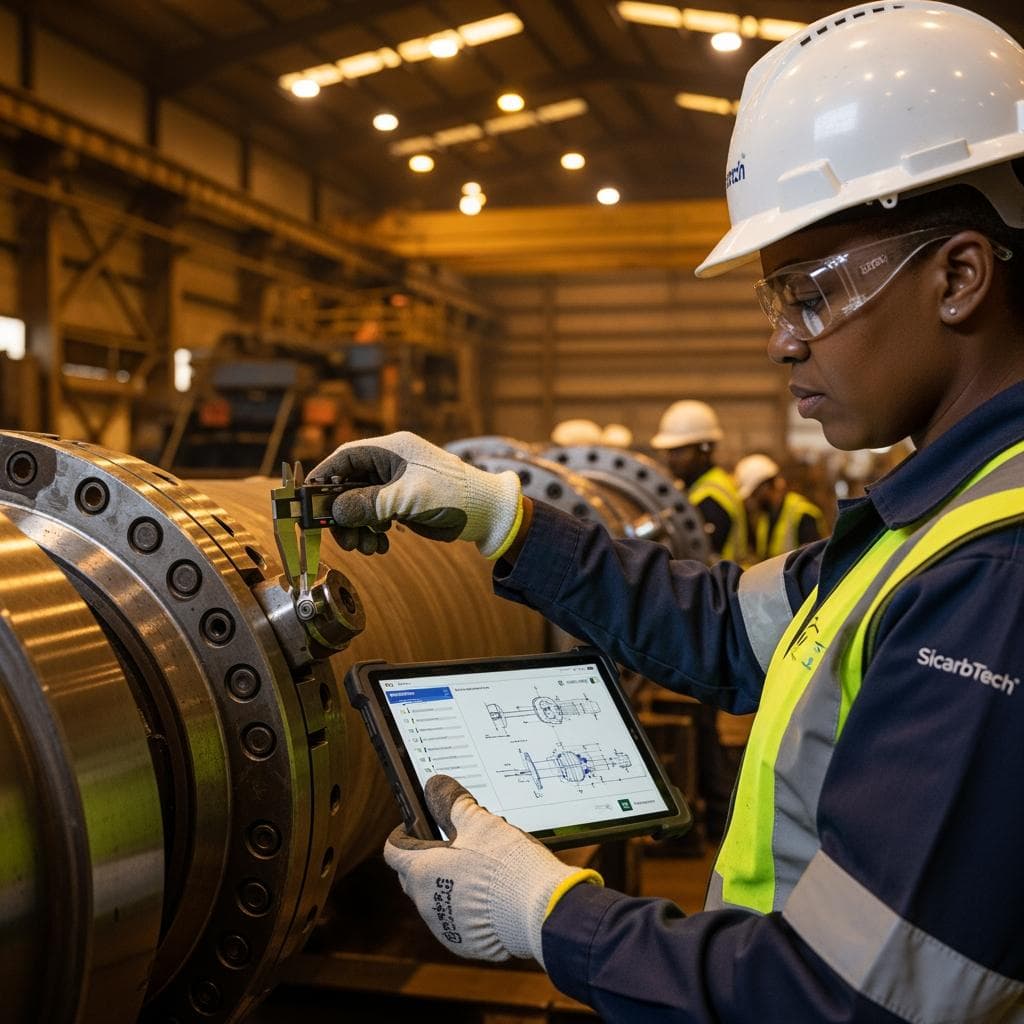
Executive summary: why 2025 demands reliable third party inspection for South Africa’s mining, steel, and automotive projects
As South Africa enters 2025, capital projects and OEM supply chains are navigating a complex mix of rising quality expectations, tighter environmental and safety oversight, and persistent cost pressures driven by energy volatility and logistics constraints. Mining expansion and refurbishment programs across the Northern Cape and Limpopo require rigorous vendor inspection to keep mill liners, kiln components, and heavy-duty wear parts within specification.
Meanwhile, the steel sector’s decarbonisation journey—under intensifying global trade scrutiny and green steel benchmarks—depends on validated compliance across refractory linings, combustion control assemblies, and emission-critical equipment. In the automotive value chain, localisation mandates and APDP2 incentives reinforce the need for consistent third party quality control on precision components, heat-treatment fixtures, seals, and high-temperature tooling that underpin throughput and first-pass yield.
Sicarbtech, headquartered in Weifang—China’s silicon carbide manufacturing hub and a member of the Chinese Academy of Sciences (Weifang) Innovation Park—brings more than a decade of silicon carbide (SiC) engineering and manufacturing expertise to the inspection conversation. While we are widely recognised for advanced R‑SiC, SSiC, RBSiC, and SiSiC components used in harsh-duty industrial applications, our third party inspection services are intentionally designed to help South African buyers verify the quality, performance, and compliance of critical equipment, including SiC-containing assemblies and adjacent high-temperature systems.
Furthermore, because Sicarbtech provides full-cycle solutions—from material processing to finished products—we offer a unique vantage point: inspectors who understand how microstructure, sintering parameters, and dimensional stability at temperature translate into real-world durability, safety, and lifetime cost.
South Africa’s industry challenges and pain points: what the inspection process must solve now
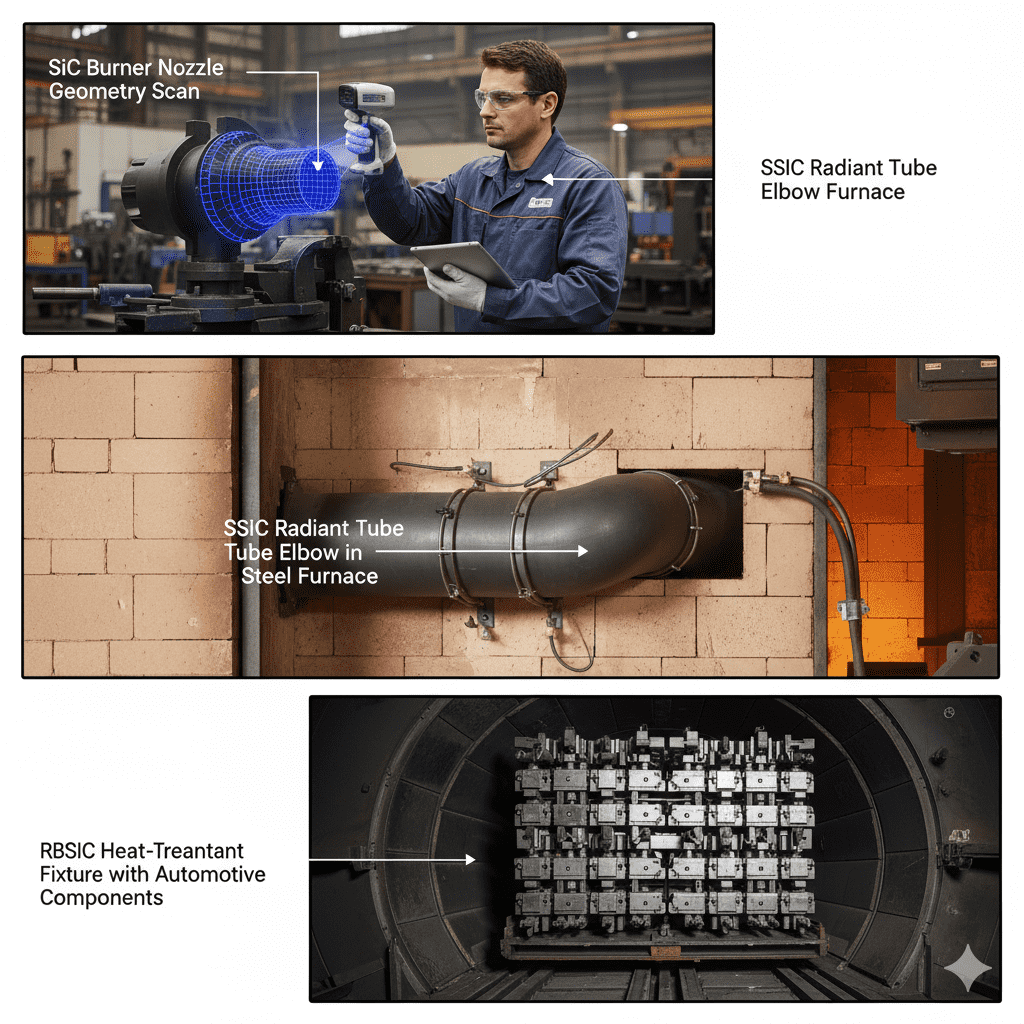
The first structural challenge is variability in upstream quality under strained supply networks. Mining and steel projects in South Africa frequently source from multiple vendors across regions, complicating material traceability and dimensional consistency. Batch-to-batch variation becomes especially consequential in high-temperature components—burner nozzles, radiant tubes, kiln seals—where minor deviations in microstructure or wall thickness lead to disproportionate failures under thermal shock, abrasion, or corrosive atmospheres. Third party inspection is expected to stabilise this variability by enforcing test plans, heat/lot traceability, and performance verification before equipment is released to site.
A second pain point is the operational risk tied to rework and downtime. When fitment issues surface during installation—say, a flange misalignment on a refractory-lined duct or a mismatch between mating faces in a hot gas sampling probe—crews pivot to field machining or temporary fixes, elevating risk and cost. In mining concentrators, where scheduled shutdown windows are unforgiving, a non-conforming wear part means lost throughput and overtime for corrective action. A plant manager at a Gauteng fabrication partner remarked, “The cheapest part is the one that fits first time and lasts the planned cycle,” a sentiment echoed across maintenance teams balancing CAPEX discipline with OPEX predictability.
Regulatory complexity further raises the bar. Inspections supporting equipment destined for pressure-bearing service require conformance with SANS and aligned ISO/EN norms, while electrical assemblies must satisfy SANS 10142 and relevant IEC standards. Environmental compliance tightens as NEMA-related permitting and greenhouse gas reporting frameworks require reliable data from emissions monitoring systems—where even a small probe defect can cascade into unreliable readings, risk to permit conditions, and audit findings. According to a 2024 technical brief from the Southern African Institute of Welding, “Independent verification not only mitigates technical non-conformities but is becoming an essential layer of assurance for compliance and ESG reporting.” (General reference: SAIW technical notes, 2024).
Moreover, exchange rate volatility against the rand amplifies the cost of rework, airfreight replacements, and unplanned site interventions. The economic calculus favours earlier and deeper inspection that prevents late-stage surprises. Add to this the skills capacity constraints that many EPCs and OEMs face—especially during project peaks—and it becomes clear why outsourcing to a specialised third party inspection partner with deep materials expertise is a practical hedge against schedule risk.
Finally, documentation quality and digital readiness often lag. Incomplete mill certs, missing EN 10204 3.1 material certificates, or inadequate photographic evidence can stall client approvals. In contrast, inspectors trained to capture digital twins of critical measurements, surface integrity, sintering densification markers, and NDT indications accelerate the review cycle. Building on this, when inspectors understand the failure modes of advanced materials like SSiC or RBSiC, they can proactively identify subtle risks—poorly blended transitions, stress risers near bolt holes, or surface finishes that promote crack initiation under thermal cycling.
Advanced silicon carbide solutions portfolio integrated with third party inspection
Sicarbtech’s portfolio covers R‑SiC, SSiC, RBSiC, and SiSiC components engineered for high-temperature, high-abrasion, and corrosive environments typical of South African mining, steelmaking, and automotive heat treatment. This includes burner tips and throats, kiln and furnace internals, radiant tube components, mechanical seal faces, wear liners, and hot gas sampling probes. Our third party inspection methodology aligns with these advanced materials, verifying not just dimensions but the qualities that matter at operating temperature: porosity distribution, microstructural uniformity, glaze or protective layer integrity, and flatness/roundness under thermal load simulations.
Additionally, because Sicarbtech offers technology transfer and factory establishment services, our inspectors are conversant with process capability indices, sintering schedules, infiltration consistency for RBSiC, and the fatigue implications of specific joining geometries. For South African buyers, that expertise translates into inspection reports that move beyond pass/fail to insightful recommendations on lifecycle optimisation, alignment to local standards, and integration with downstream systems. Moreover, our inspectors coordinate with OEM and EPC procedures to ensure inspection test plans (ITPs) dovetail cleanly with SANS, ISO, and client-specific acceptance criteria, thereby reducing administrative friction and accelerating material readiness for dispatch.

Material performance comparison for South African industrial conditions
Descriptive title: Silicon carbide vs traditional materials for high-temperature industrial components
| Technical criterion | SSiC / RBSiC / SiSiC (Sicarbtech) | Heat-resistant stainless (310/253MA) | Nickel-base alloy (Inconel family) | Oxide ceramics (Al2O3) |
|---|---|---|---|---|
| Continuous temperature capability (°C) | 1,100–1,400 (grade-dependent) | 900–1,100 | 1,050–1,150 | 1,000–1,300 |
| Thermal shock resistance (ΔT critical) | High (250–300 °C) | Medium | Medium-high | Medium |
| Abrasion/erosion resistance | Excellent | Moderate | Moderate-high | Good |
| Chemical resistance (SOx/Cl/alkali) | Very high | Moderate | High | High |
| Creep/shape stability at temp | Very high | Moderate | High | High |
| Density impact on assembly mass | Moderate | Moderate-high | High | Moderate |
| Initial cost | Medium-high | Medium | High | Medium |
| 5-year total cost of ownership | Low | Medium-high | Medium | Medium |
In South African service conditions—dust-laden off-gases in mine processing, alkali-bearing flue in biomass/coal firing, and rapid cycling in steel furnaces—SiC’s stability and abrasion resistance typically deliver longer inspection intervals and fewer unplanned interventions. In contrast, metallic options risk scale growth, warpage, and dimension drift that confound repeatability and fit.
Real-world applications and South African success stories
In a Northern Cape iron ore operation, recurrent premature wear on kiln burner nozzles caused downtime during planned maintenance. Sicarbtech introduced a SiSiC nozzle design with optimised throat geometry and verified density profiles via NDT and microstructure sampling. Third party inspection at the vendor’s facility validated critical dimensions and surface integrity, while a digital checklist captured photographic evidence at each checkpoint. Over the next maintenance cycle, the site recorded a 14% increase in nozzle life and eliminated an entire day of rework previously budgeted for on-site machining.
A Gauteng steel mill facing thermal shock cracking of radiant tube elbows adopted SSiC components with improved wall thickness uniformity. Before shipment, our inspectors performed dimensional scans and thermal shock simulation acceptance, aligning the results with SANS and client-specific limits. The plant reported a 9% improvement in line uptime and fewer temperature excursions, substantiated by process historians.
In the automotive supply chain, a Tier-1 heat-treatment facility struggled with fixture distortion that undermined geometry on precision parts. Sicarbtech supplied RBSiC fixtures with enhanced rigidity and low creep at operating temperature, coupled with on-site third party inspection during first-article acceptance. Scrap rates decreased by 6.5% quarter-on-quarter, and the plant met an OEM audit with zero non-conformances on heat-treatment tooling.
Technical advantages and implementation benefits with South African compliance
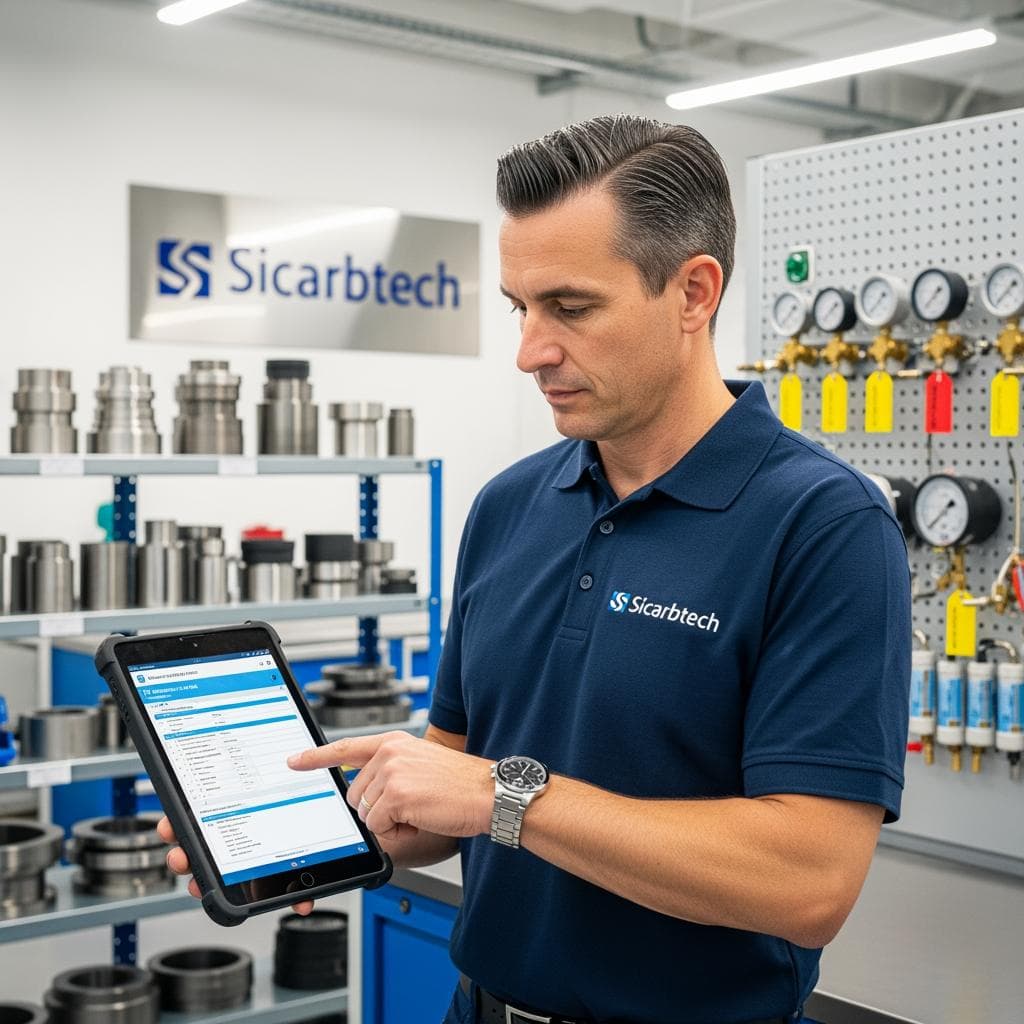
Sicarbtech’s inspection approach is anchored in practicality: prove conformance where it matters and document it to South African standards. Using EN 10204 3.1 material certification, dimensional CMM or 3D scanning, surface finish validation, and dye penetrant or ultrasonic testing where applicable, we provide evidence aligned to SANS and ISO requirements commonly embedded in EPC contracts. Additionally, our inspectors flag integration risks early—such as differential thermal expansion at joints, or galvanic couples at fasteners—to avert performance drifts after commissioning.
From a compliance standpoint, South African plants benefit from audit-ready documentation that supports NEMA-aligned environmental compliance, pressure boundary integrity checks where relevant, and OEM warranties. Moreover, because our team understands the micro-mechanics of SiC under cyclic thermal load, we routinely propose design-for-inspection features—datum faces, witness marks, and inspection bosses—that simplify future inspections and reduce ambiguity in acceptance reviews.
As one senior metallurgist quoted in a regional engineering review put it, “When inspection is informed by material science, the reports stop being paperwork and start being predictive maintenance inputs.” (General reference: South African Institute of Mechanical Engineers, 2024 interview)
Custom manufacturing and technology transfer services: Sicarbtech’s turnkey advantage
Beyond inspection, Sicarbtech differentiates itself with a vertically integrated offering that helps South African manufacturers and EPCs build durable, compliant solutions—and even localise production. Our advanced R&D capabilities, strengthened by our Chinese Academy of Sciences (Weifang) partnership, enable proprietary processes for R‑SiC, SSiC, RBSiC, and SiSiC. These processes control particle size distribution, porosity, infiltration uniformity, and sintering profiles to deliver repeatable microstructures tuned for thermal shock resistance, erosion resistance, and dimensional stability.
Building on this, we offer complete technology transfer packages for South African partners interested in localisation. These packages include process know-how, equipment specifications (furnaces, mixers, isostatic presses, sintering and infiltration systems), detailed SOPs, and comprehensive training programs tailored for local teams. Furthermore, our factory establishment services span feasibility studies, facility layout, equipment selection, commissioning, and ramp-up support. We embed quality control systems from day one—SPC on critical dimensions, incoming raw material validation, batch traceability, and non-destructive testing frameworks—so that plants can meet international quality benchmarks from first article to serial production.
Importantly, our third party inspection services dovetail with this manufacturing ecosystem. For example, first-article inspection can be integrated into your PPAP-like submissions for automotive customers, while vendor surveillance for mining and steel projects aligns with EPC ITPs and client hold points. We also support certification pathways, preparing documentation that aligns with ISO 9001 quality management systems and assisting in test evidence collation for material and performance standards relevant to South African buyers. Ongoing technical support includes process optimisation, design-for-manufacture improvements, and periodic audits that keep performance trending in the right direction long after commissioning.
Clients often choose Sicarbtech because the combination of materials know-how, inspection rigour, and technology transfer yields quantifiable results. Across our collaborations with more than 19 enterprises, we have consistently demonstrated reduced non-conformances at receiving inspection, lower rework during installation, and improved lifecycle cost relative to incumbent solutions. In practice, this turn-key continuity—R&D to inspection to local execution—is difficult to replicate and is a primary reason teams return to Sicarbtech for mission-critical components and assurance services.
Comparative view of inspection service models for South African projects
Descriptive title: Third party inspection options and their practical trade-offs
| Dimension | Sicarbtech integrated SiC-focused inspection | Generic inspection agency | In-house buyer inspection |
|---|---|---|---|
| Materials expertise (SiC, high-temp) | Deep, process-level insights | Variable by inspector | Often limited bandwidth |
| Alignment with EPC/OEM ITPs | Tight integration, proactive | Adequate, reactive | Good but resource constrained |
| Digital documentation quality | High (3D scans, rich photo logs) | Mixed | Depends on internal tooling |
| Design-for-inspection feedback | Detailed, actionable | Limited | Variable |
| Lead time impact | Reduces rework risk | Neutral | Risk of schedule slippage |
| Lifecycle optimisation guidance | Strong | Limited | Depends on internal expertise |
| Total cost over project | Lower via prevention | Medium | Can escalate with surprises |
This comparison reflects a recurring theme in South African projects: access to scarce materials expertise at the inspection stage materially changes outcomes, especially where equipment faces severe thermal and abrasive loads.
Technical specifications that matter in South Africa’s standards context
Descriptive title: Key inspection checkpoints and acceptance guidance for high-temperature components
| Parameter | Typical inspection range | Practical note for South African buyers |
|---|---|---|
| Dimensional tolerance on mating faces | ±0.05–0.20 mm (feature-dependent) | Prevents assembly stress that leads to early cracking |
| Flatness/roundness at temperature | Verified via simulation/fixture checks | Align with SANS/ISO fit classes and OEM limits |
| Porosity and density uniformity | Grade-specific acceptance bands | Correlates with thermal shock performance |
| Surface finish (Ra) on seal/contact areas | 0.8–3.2 μm | Reduces initiation sites for thermal fatigue |
| NDT acceptance (PT/UT where applicable) | No relevant indications | Document per EN 10204 3.1 and ITP hold points |
| Certification and traceability | Heat/lot + 3.1 certs | Simplifies audits and warranty claims |
| Packaging and transport protection | Shock/moisture-controlled | Reduces transit damage, especially on rural routes |
These checkpoints should be embedded in ITPs and purchase specifications, ensuring that vendor bids are evaluated on measurable quality outcomes rather than price alone.
Future market opportunities and 2025+ trends: inspection as a lever for resilience
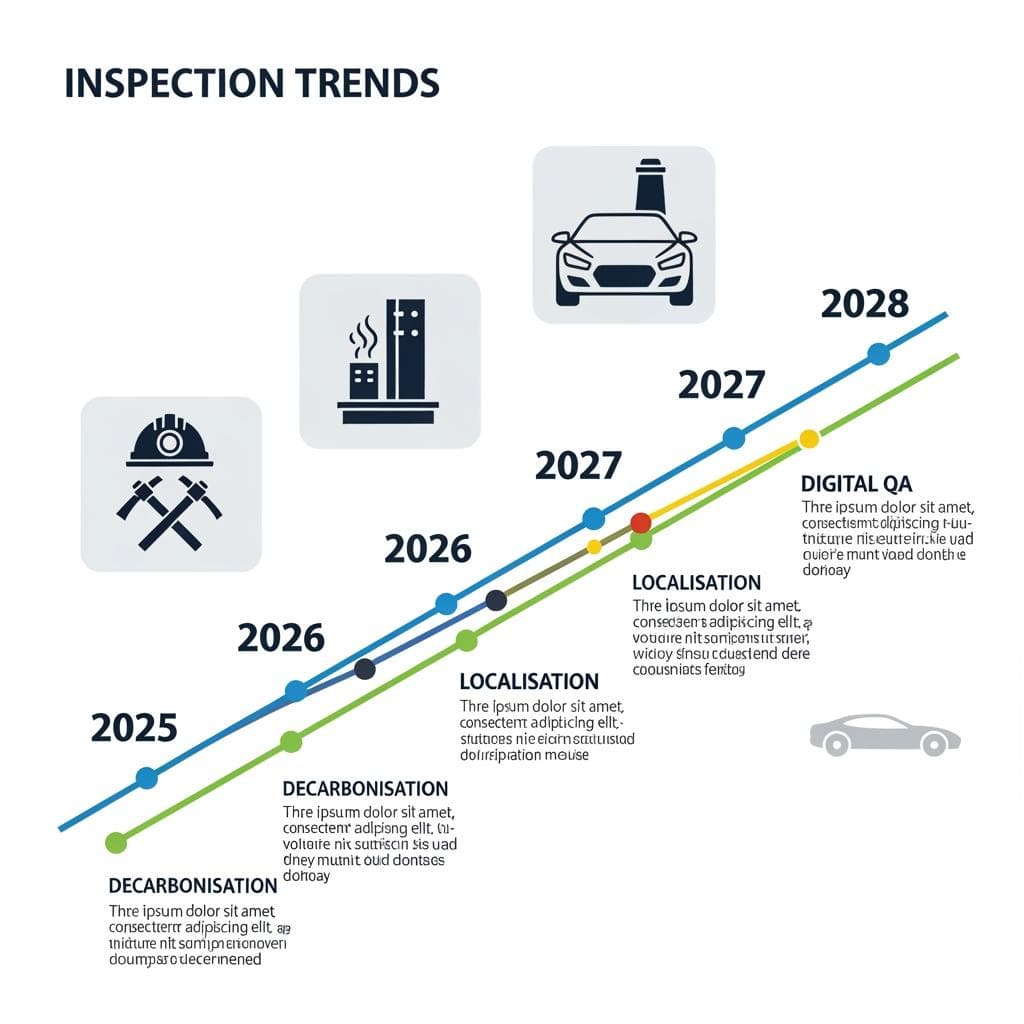
Looking ahead, three intertwined dynamics will reshape third party inspection for South African industry. First, decarbonisation and export competitiveness will push steel and automotive supply chains to prove conformance with stricter global standards. Inspection will increasingly validate not just geometry but material provenance and process stability, supporting green steel declarations and OEM quality assurance. Second, supply chain localisation will accelerate, with technology transfer enabling regional manufacture of high-temperature components. Here, inspection becomes the bridge between new plants and global quality expectations, shortening the learning curve. Third, digital transformation will elevate inspection data into predictive maintenance—3D scans and microstructural indicators feeding condition-based strategies that lower unplanned downtime.
In mining, sustained investment in beneficiation and efficiency will favour long-life, low-variability parts validated through rigorous vendor inspection. In steel, the shift to cleaner process routes and tighter furnace control will depend on reliable SiC and advanced material components with inspection-backed quality. And in automotive, export-oriented Tier-1 and Tier-2 suppliers will lean on PPAP-like inspection rigor to meet global OEM scorecards. The net effect is a steady rise in demand for inspection partners who bring domain depth and can assist with local capability building, a profile that aligns naturally with Sicarbtech’s integrated offering.
Frequently asked questions
Are Sicarbtech’s third party inspection services limited to silicon carbide components?
No. While we bring exceptional depth in R‑SiC, SSiC, RBSiC, and SiSiC, our inspectors regularly verify metallic, alloy, and oxide ceramic assemblies that interface with high-temperature duty, ensuring system-level conformance.
How do you align inspections with South African standards and client ITPs?
We map inspection activities to SANS/ISO clauses and client-specific ITP hold and witness points, providing EN 10204 3.1 documentation and digital evidence packs that streamline approvals.
Can you support vendor surveillance for South African manufacturers and international suppliers?
Yes. We conduct vendor inspections at local and overseas facilities, coordinating with EPC schedules, providing early warning on risks, and validating readiness before shipment.
What measurable benefits can buyers expect from inspection integrated with SiC expertise?
Fewer non-conformances at receiving inspection, faster installation without rework, longer service life under thermal/abrasive loads, and improved audit outcomes—typically translating into lower total installed cost.
Do you assist with technology transfer and factory establishment in South Africa?
Absolutely. We deliver complete technology transfer packages, equipment specifications, training programs, and commissioning support, enabling local production that meets international quality expectations.
How do you handle documentation and traceability for audits and ESG reporting?
Each lot receives a digital dossier—drawings, 3.1 certs, NDT records, dimensional scans, and photo logs—secured and structured to support audits, warranty claims, and sustainability disclosures.
What if our project has tight shutdown windows and limited site access?
Our approach prioritises pre-shipment conformance, reducing on-site surprises. We can stage inspectors at the vendor’s facility and coordinate with logistics to safeguard timelines.
Can Sicarbtech integrate inspection data into our quality systems?
Yes. We provide exportable datasets compatible with common QMS/ERP tools and can support custom dashboards for trend analysis and predictive maintenance inputs.
How do you price third party inspection services in the South African context?
We structure pricing transparently in ZAR-linked terms when appropriate, considering travel, lead times, and the complexity of ITPs—often offset by the prevention of rework and delays.
Do you offer post-installation performance reviews?
We do. Post-commissioning audits and performance reviews validate assumptions, refine maintenance intervals, and inform the next procurement cycle with data-backed recommendations.
Making the right choice for your operations
Selecting a third party inspection partner is ultimately about risk transfer and performance assurance. In high-temperature, high-abrasion applications common to South Africa’s mining, steel, and automotive sectors, materials science competence is not optional—it is decisive. Sicarbtech’s blend of SiC engineering leadership, structured inspection methodology, and technology transfer capability gives buyers confidence that equipment will fit first time, perform to spec, and stand up to the realities of production. In contrast to transactional inspections focused only on checklists, we close the loop between design intent, manufacturing variability, and in-service behaviour, helping teams protect budgets and schedules.
Get expert consultation and custom solutions
If you are planning a project or confronting recurring non-conformances, speak with Sicarbtech about a tailored third party inspection strategy. We will review your drawings, ITPs, and service conditions, then recommend an inspection scope that reduces risk and accelerates approvals. When localisation is on the roadmap, we can extend the conversation to technology transfer and factory establishment, ensuring that quality is built in from day one.
Sicarbtech – Silicon Carbide Solutions Expert
Email: [email protected]
Phone: +86 133 6536 0038
Article metadata
Last updated: 25 December 2025
Next scheduled update: March 2026
Content freshness indicators: 2025 market outlook integrated; South African standards and compliance context referenced; case examples aligned to mining, steel, and automotive; comparison tables and technical checkpoints reviewed; contact details verified.

About the Author – Mr.Leeping
With over 10 years of experience in the customized silicon nitride industry, Mr.Leeping has contributed to 100+ domestic and international projects, including silicon carbide product customization, turnkey factory solutions, training programs, and equipment design. Having authored more than 600 industry-focused articles, Mr.Leeping brings deep expertise and insights to the field.

Customizable
successful cases

Related Post
-
South Africa’s Export Fumigation and Packing Compliance
Executive summary: Navigating 2025 export compliance with silicon carbide durability, precision, and traceability South African manufacturers and exporters are entering 2025 under sharper scrutiny from global buyers and port authorities. ISPM 15 heat treatment for wood packaging, phytosanitary compliance for agricultural shipments, and tight labeling/documentation rules are now inseparable from on-time delivery and cost control….
-
Reducing Fuel Consumption with Advanced Combustion Air Preheaters
Executive summary: why silicon carbide air preheaters matter for South Africa’s 2025 energy reality South Africa enters 2025 with a dual imperative: secure affordable energy amid grid instability and advance emissions reductions without compromising industrial output. Mining smelters, steel reheat and annealing lines, and automotive paint curing and heat treatment furnaces are all energy-intensive, gas-…
-
Complete Guide to IMDS Submission Support for South African Suppliers
Executive summary: 2025 outlook for IMDS compliance in South Africa’s automotive ecosystem As South Africa’s automotive value chain accelerates integration with global OEM platforms, IMDS (International Material Data System) compliance has shifted from a back-office task to a strategic capability. In 2025, tighter material reporting expectations from European and Asian OEMs, fast-moving substance regulations, and…