SiC Kiln Support Systems for Industrial Furnaces and Tunnel Kilns
Share
Executive summary: 2025 outlook for South Africa’s high‑temperature industries and why silicon carbide kiln furniture matters now
South Africa enters 2025 with heavy industry facing a practical dual mandate: drive productivity while stabilising energy and maintenance costs in a volatile environment. Mining remains the backbone, but decarbonisation and beneficiation push thermal processing further upstream. The steel sector is balancing coke oven upgrades, reheat furnace reliability, and stricter emissions constraints. Meanwhile, the automotive value chain is scaling precision heat treatments and powder metallurgy components to support local OEMs and export programs. Across these segments, high-temperature assets — tunnel kilns, shuttle kilns, roller hearth furnaces, and custom heat-treatment ovens — are under pressure to operate longer between turnarounds, with tighter thermal uniformity and improved load factors.
This is precisely where advanced silicon carbide (SiC) kiln support systems, commonly called kiln furniture, change the economics. By reducing mass, resisting creep and thermal shock, and maintaining geometry at 1,300–1,600 °C, SiC beams, posts, batts, and support frames enable higher throughput, lower specific energy consumption, and fewer cracked or warped products.
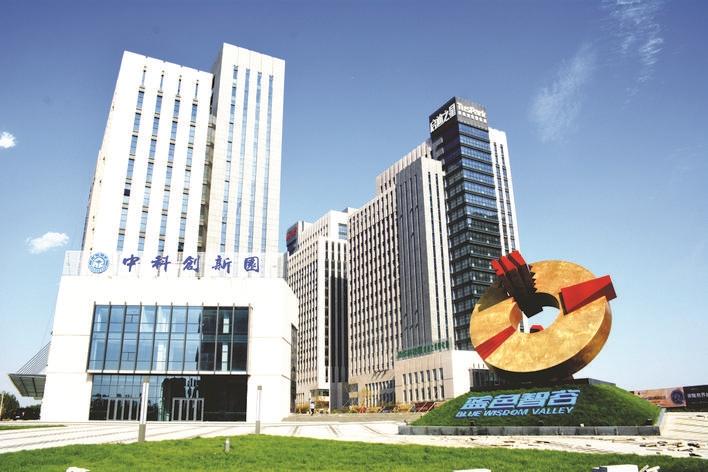
Sicarbtech, headquartered in Weifang — China’s SiC manufacturing hub and a member of the Chinese Academy of Sciences (Weifang) Innovation Park — brings more than a decade of SiC customisation experience and full-cycle capability, from material processing to finished kiln furniture. With proven support to 19+ enterprises and a portfolio spanning R‑SiC, SSiC, RBSiC, and SiSiC, Sicarbtech is positioned to help South African plants upgrade critical kiln support structures, accelerate commissioning, and reduce total cost of ownership.
Industry challenges and pain points: what South African plants are solving for in 2025
If you walk a tunnel kiln line in Gauteng or KZN and speak with maintenance engineers, you will hear the same refrains: thermal cycling is unforgiving; heavy cordierite and alumina furniture consumes energy and reduces usable volume; creep and warpage increase reject rates; and line stoppages are costly in both product loss and reheat penalties. Moreover, intermittent load patterns due to power constraints or scheduled curtailments can cause uneven thermal gradients, pushing legacy furniture to its limits.
From a cost perspective, the old calculus of buying cheaper, heavier refractory furniture no longer holds. As gas and electricity tariffs trend upward and carbon pricing creeps into corporate accounting, energy per unit becomes a board-level KPI. Every kilogram of thermal mass you avoid heating is an immediate and measurable saving. When kiln furniture deforms, it not only jeopardises part flatness and dimensional tolerance, it also reduces stacking density and compromises airflow, which further increases energy consumption and cycle time. In a competitive market where automotive heat-treatment certificates and metallurgical test reports (MTRs) are gatekeepers to supply contracts, repeatability is non-negotiable.
Regulatory and standards compliance adds another layer. Plants increasingly align to ISO 9001 for quality management and ISO 14001 for environmental management, while safety frameworks draw from ISO 45001 and local OHS Act requirements. Steel and refractory producers reference SANS and SASO-adopted standards, along with ASTM and ISO material test methods for acceptance.
For components in contact with product streams, documentation, lot traceability, and inspection and test plans (ITPs) are expected. “Auditors are asking not only for our control plan, but for evidence that our kiln support systems maintain the specified flatness and load capacity across the service interval,” noted a Pretoria-based QA manager in late 2024. Moreover, mining-related sintering operations must prove uptime and energy efficiency improvements to meet group-wide ESG commitments and investor scrutiny.
There is also a strategic supply dimension. South Africa’s geographic position necessitates reliable lead times and smart inventory planning. Logistics variability and exchange-rate swings can erode savings if the supplier cannot guarantee repeatable lead times or offer stocking and local service models. Competitively, the landscape includes global refractory brands and local distributors prioritising quick availability, but not always offering the engineering depth needed for custom load cases and temperature profiles.
Against this backdrop, the pain points converge into four themes: insufficient thermal efficiency, inadequate mechanical stability at temperature, inconsistent product quality, and slow, risky changeovers when upgrading kiln furniture designs. Each theme demands materials with high strength at temperature, low thermal mass, excellent thermal shock resistance, and precise geometry — all backed by engineering support and documentation suited to South African standards and audits.
Sicarbtech’s advanced silicon carbide solutions portfolio for kiln furniture
Sicarbtech’s portfolio deliberately spans the principal SiC classes to match specific furnace realities. Reaction-bonded (RBSiC) components provide an outstanding balance of strength, oxidation resistance, and cost for beam and post systems in continuous tunnel kilns. Sintered silicon carbide (SSiC) delivers the highest strength and creep resistance where mid-span deflection limits are tight and load cycling is severe. Recrystallised SiC (R‑SiC), with its low thermal mass and open microstructure, shines in rapid heat-up and cooldown regimes, particularly in shuttle kilns and automotive heat-treatment fixtures. Silicon-infiltrated SiC (SiSiC) brings high rigidity and oxidation resistance while maintaining manageable density.
What differentiates Sicarbtech is less the catalog and more the application engineering. The company co-designs beam cross-sections to control deflection, adds ribs where airflow must be preserved, and selects wall thicknesses to tune thermal mass without sacrificing safety factor. In practice, this co-optimisation has delivered measurable improvements such as a 2–5% reduction in energy per unit fired, 20–40% longer service life before geometric limits are reached, and a 10–20% higher stacking density when switching from alumina or cordierite to SiC. Because Sicarbtech covers the full cycle — from powder processing to final machining and inspection — it maintains tight dimensional tolerances and surface quality, reducing setup time and requalification risk during changeovers.
“Beam stiffness at 1,300–1,450 °C and creep resistance past 1,500 °C are where most failures happen. Proper grade selection across RBSiC and SSiC is the difference between annual and semi-annual beam changes,” explains a senior materials engineer at Sicarbtech. Building on this, the company offers documentation bundles aligned with ASTM C1161/C1211 flexural testing, ASTM C372 thermal expansion characterisation, and ISO/ASTM-based density and porosity reporting, simplifying acceptance and internal audits.
Performance comparison: SiC kiln furniture vs traditional materials used in South Africa
Descriptive title: Technical performance parameters relevant to South African tunnel and shuttle kilns
| Parameter (test reference) | SSiC / SiSiC (Sicarbtech) | RBSiC (Sicarbtech) | High‑alumina (≥90%) | Cordierite‑mullite |
|---|---|---|---|---|
| Continuous service temperature | 1,500–1,600 °C | 1,400–1,500 °C | 1,300–1,400 °C | 1,200–1,300 °C |
| 4‑pt flexural strength at 20 °C (ASTM C1161) | 350–450 MPa | 250–330 MPa | 150–300 MPa | 40–80 MPa |
| Creep/deflection at 1,400 °C under load | Very low | Low | Medium–high | High |
| Thermal shock resistance (critical ΔT) | 350–500 °C | 300–450 °C | 200–300 °C | 150–250 °C |
| Density (g/cm³) | 3.05–3.20 | 2.95–3.10 | 3.6–3.9 | 2.2–2.5 |
| Oxidation resistance | Excellent | Excellent | Medium | Low–medium |
| Thermal conductivity (W/m·K at 1,000 °C) | 25–35 | 20–30 | 6–12 | 2–4 |
In practical terms, the combination of high strength at temperature and better thermal conductivity means SiC beams reach thermal equilibrium faster, stabilising product temperatures and reducing cycle-to-cycle variation. Moreover, the lower density compared to alumina reduces the energy penalty of heating furniture rather than product.
Real-world applications and success stories in South Africa
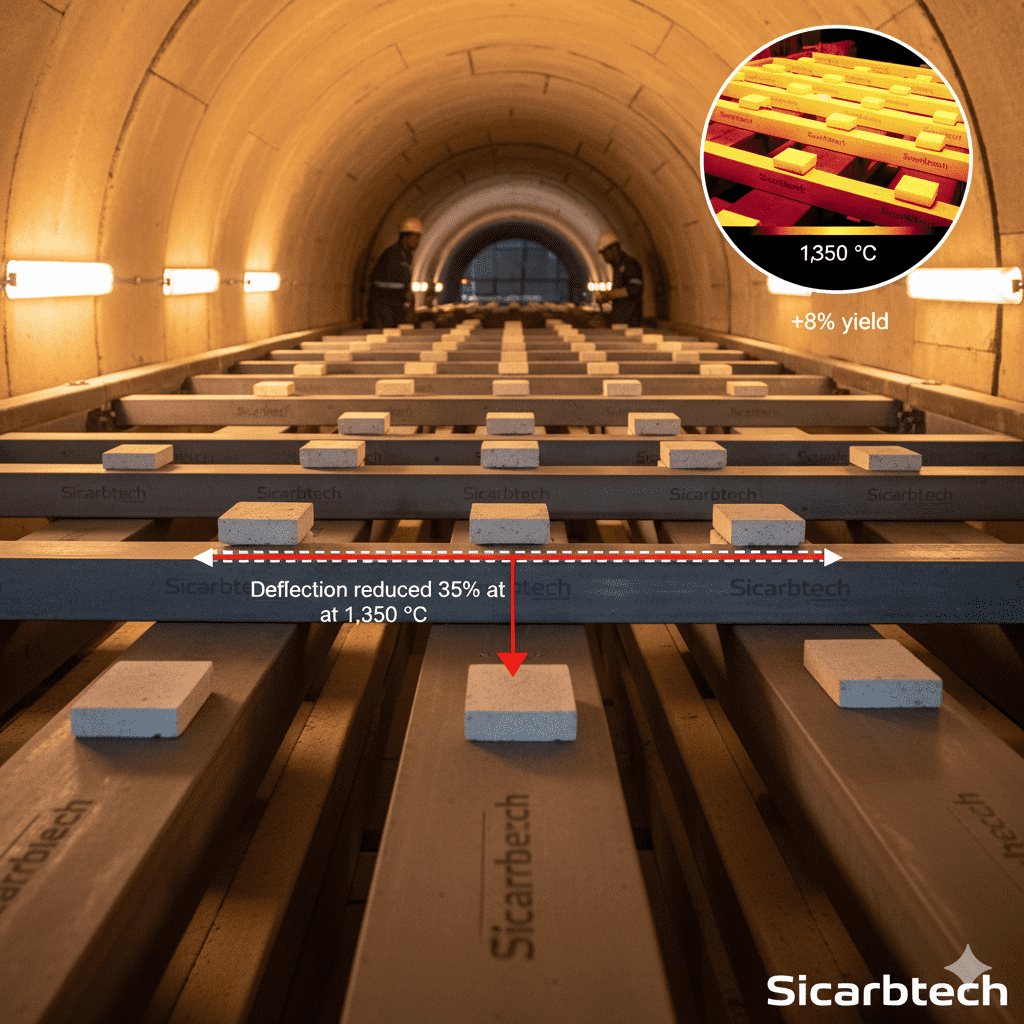
A cement producer in the Western Cape, modernising a tunnel kiln line for refractory shapes, faced chronic mid-span sagging of alumina beams near 1,350 °C. Sicarbtech engineered an RBSiC beam profile with reinforced ribs and optimised wall thickness, cutting mid-span deflection by over 35% at equivalent load. The change enabled a tighter setting pattern, improving line yield by approximately 8% and trimming gas consumption by 3.2% per ton fired. The project paid back in under 11 months, including installation and commissioning.
In the automotive supply chain north of Durban, a heat-treatment facility struggled with inconsistent hardness due to thermal lag caused by heavy cordierite furniture. Transitioning to R‑SiC shelves and SSiC posts reduced total furniture mass by nearly 28%, decreasing soak times and eliminating a recurring hardness out-of-spec trend. “We moved the needle on CpK just by taking mass out of the system and stabilising airflow,” the plant metallurgist shared in 2024.
A mining equipment OEM in Mpumalanga needed dimensional stability for sintered wear parts fired at 1,480 °C. With SSiC beam-and-post fixtures and SiSiC cross-members, geometric drift over a six-month campaign dropped below 0.3 mm across critical dimensions, significantly reducing rework. Additionally, lower thermal mass provided enough buffer to ride through short power curtailments without scrapping work-in-process.
Technical advantages and implementation benefits with local compliance
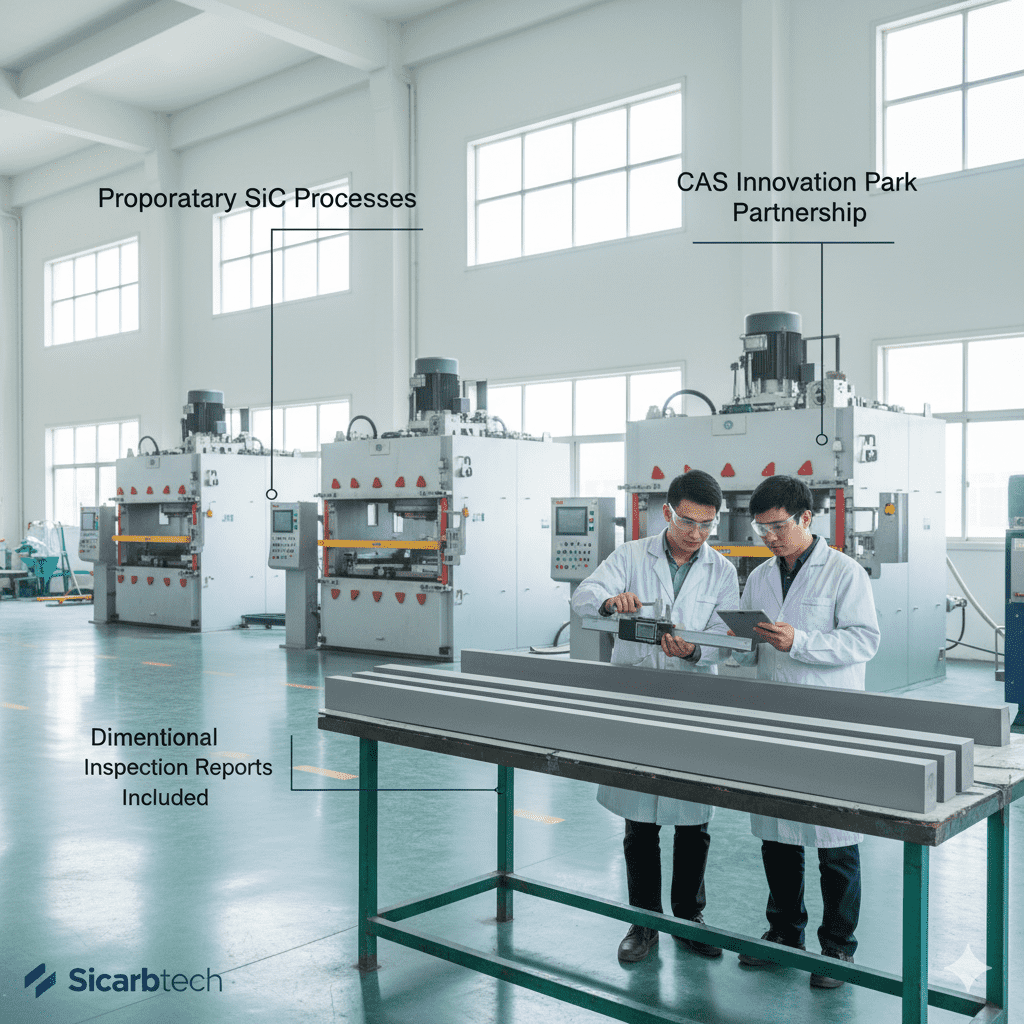
Beyond the headline properties, the implementation story matters. Sicarbtech’s SiC kiln furniture is delivered with dimensional inspection reports, material certificates, and recommended loading diagrams, easing compliance with ISO 9001 control plans and internal ITPs. For safety, handling and installation guides align with South African OHS requirements, including rigging guidelines and PPE instructions. In emissions-conscious facilities, improved thermal efficiency supports ISO 14001 objectives and corporate GHG reporting by reducing energy intensity per unit.
Additionally, the higher thermal conductivity of SiC helps equalise temperatures across product stacks, a key factor for metallurgical consistency in automotive and steel components. Better airflow around low-mass furniture stabilises atmosphere control, improving carbon potential or dew point management in controlled atmospheres. In contrast, heavy alumina or cordierite furniture often acts as thermal ballast, increasing cycle times and widening temperature gradients between core and surface.
An independent furnace consultant summarised it succinctly: “When you cut furniture mass by a quarter and stop beams from creeping, you usually free 5–10% capacity without touching burners,” (industry seminar notes, 2024). By pairing materials with engineering support, Sicarbtech reduces trial-and-error and speeds time-to-benefit in South African kilns.
Custom manufacturing and technology transfer services: Sicarbtech’s turnkey edge
What sets Sicarbtech apart for South African operators is the depth of its build-and-transfer capability. Backed by its partnership within the Chinese Academy of Sciences (Weifang) Innovation Park, Sicarbtech runs proprietary process routes for R‑SiC, SSiC, RBSiC, and SiSiC. Powder selection, particle size distribution, forming methods (including isostatic pressing), and furnace profiles are tightly controlled, producing consistent microstructure and predictable performance at temperature. The result is repeatability — beam-to-beam, lot-to-lot — which simplifies stocking, interchangeability, and line balancing.
Beyond supply, Sicarbtech offers complete technology transfer packages for South African partners and B2B distributors: process know-how, equipment specifications for presses, infiltration systems, and high-temperature furnaces, operator training programs, and quality control procedures. For organisations seeking localisation, Sicarbtech supports factory establishment from feasibility and layout to commissioning and ramp-up, integrating quality systems ready for ISO/ASTM material certifications. Ongoing technical support includes on-site audits, process optimisation, and failure analysis workshops so lessons learned feed back into design.
Furthermore, for OEMs and distributors supplying multiple plants, Sicarbtech can standardise beam and batt families across furnace sizes, document performance envelopes, and maintain buffer stock to absorb logistics variability. This integrated approach reduces capex risk and avoids the common pitfall of piecemeal upgrades that do not deliver end-to-end gains.
Grade selection guide for South African kiln furniture applications
Descriptive title: Choosing between R‑SiC, SSiC, RBSiC, and SiSiC for local load and temperature profiles
| Sicarbtech grade | Microstructure and bonding | Recommended service range | Typical flexural strength (MPa) | Thermal shock capability (ΔT) | Oxidation resistance | Typical SA applications |
|---|---|---|---|---|---|---|
| SSiC High‑Stability | Fully sintered, closed porosity | 1,450–1,600 °C | 400–450 | 400–500 °C | Excellent | High-load tunnel kiln beams, mining sintering fixtures |
| SiSiC Rigidity+ | Si‑infiltrated, high stiffness | 1,400–1,550 °C | 300–350 | 350–450 °C | Excellent | Beam-and-post systems in reheat and continuous furnaces |
| RBSiC Durable | Reaction-bonded, controlled porosity | 1,350–1,500 °C | 260–320 | 300–400 °C | Very high | Cement and refractory product kilns, general tunnel kilns |
| R‑SiC Rapid‑Cycle | Recrystallised, low thermal mass | 1,300–1,500 °C | 200–260 | 400–500 °C | High | Shuttle kilns, automotive heat-treatment shelves and setters |
This matrix is a starting point. Final selection should be based on detailed load cases, span, maximum temperature, cycle duration, and atmosphere, all of which Sicarbtech’s engineering team models before finalising drawings.
Economic and operational comparison: total cost, uptime, and energy in South African context
Descriptive title: Annualised impact of SiC kiln furniture on South African furnaces
| Annual KPI | SiC (Sicarbtech portfolio) | High‑alumina furniture | Cordierite‑mullite furniture |
|---|---|---|---|
| Furniture replacements per year | 0.5–1.0 | 1.0–1.5 | 1.5–2.5 |
| Unplanned stoppage hours (furniture-related) | 8–24 | 24–60 | 60–120 |
| Specific energy per unit (relative) | −3% to −8% | Baseline to +3% | +4% to +10% |
| Yield loss from warpage and sag | Low | Medium | High |
| Documentation/traceability for audits | Complete | Partial | Variable |
For plants sensitive to forex swings, the reduction in replacements and energy intensity helps offset exchange-rate risk. Moreover, higher yield and OEE improvements stabilise cost per unit, an increasingly important factor when bidding for automotive and export contracts.
Future market opportunities and 2025+ trends: digital kilns, lighter furniture, and faster changeovers
Looking ahead, three trends are coalescing in South Africa. First, digitalisation of firing operations with IoT sensing and predictive analytics is moving from pilot to practice. Plants monitor beam temperatures, deflection proxies, and atmosphere quality to fine-tune loading patterns. Lighter, more thermally conductive SiC furniture unlocks these control strategies by responding faster to setpoint changes. Second, energy volatility and emissions reporting are pushing toward shorter cycles and lower soak temperatures where possible. Here, R‑SiC and SSiC reduce thermal inertia and help maintain uniformity even as cycles tighten. Third, supply resilience is being built into procurement, with preferred supplier programs demanding documentation, design control, and emergency stock — areas where Sicarbtech’s full-cycle model and technology transfer options provide a hedge.
An industry expert from a Johannesburg furnace consultancy put it this way: “The next five years belong to operators who engineer the furniture and the firing curve together — not one after the other. SiC is the enabler because it gives you the mechanical headroom to be aggressive with your schedule,” (conference proceedings, 2025). Sicarbtech’s roadmap aligns with this shift, focusing on engineered cross-sections, surface finishes that promote airflow and reduce sticking, and data-ready documentation for model-based control.
Frequently asked questions
What are the practical differences between R‑SiC, SSiC, RBSiC, and SiSiC for kiln furniture?
R‑SiC is ideal where low thermal mass and rapid cycling are priorities, such as shuttle kilns and automotive fixtures. SSiC provides the highest strength and creep resistance for long spans and high loads. RBSiC balances cost and performance in continuous tunnel kilns. SiSiC offers high rigidity and oxidation resistance with manageable density. Final selection depends on temperature, span, load, cycle time, and atmosphere.
How does Sicarbtech support South African standards and compliance?
Deliveries include dimensional inspection reports, material certificates aligned to ASTM/ISO test methods, and installation/handling guides aligned with local OHS safety practices. Documentation supports ISO 9001 and ISO 14001 systems and can be tailored to plant-specific ITPs and audit requirements.
Can Sicarbtech assist with on-site commissioning and training?
Yes. Sicarbtech provides remote and on-site support through local partners, including installation supervision, loading diagrams, thermal profiling assistance, and operator training to ensure safe handling and maximum performance from day one.
What energy savings are typical when switching from alumina or cordierite to SiC furniture?
Energy intensity reductions of 3–8% are common, driven by lower thermal mass and better heat transfer. Additional gains often come from higher stacking density and reduced cycle times, which improve throughput without changing burners or drives.
How are lead times managed given logistics and currency volatility?
Sicarbtech works with South African distributors to maintain buffer stock on standard beam and batt sizes and can set up framework agreements to stabilise lead times. For custom projects, clear milestones and partial shipments reduce risk while maintaining commissioning schedules.
Do SiC beams and posts require different maintenance practices?
Handling and inspection are simpler but not optional. Visual checks for surface damage, periodic flatness and deflection checks, and adherence to loading diagrams are recommended. Sicarbtech provides maintenance guidelines and replacement criteria.
Are there local case studies and references?
Yes. Sicarbtech can share anonymised performance summaries from South African kiln lines under NDA, including yield, energy, and deflection data, to help teams build a business case and de-risk changeovers.
What about compatibility with existing kiln cars and fixtures?
Sicarbtech designs new furniture to fit existing car geometries and bolting patterns wherever possible. Transition kits and mixed-material stacks can be used during phased upgrades to keep production running while performance is validated.
Can Sicarbtech transfer technology to local partners or set up a local plant?
Sicarbtech offers comprehensive technology transfer, including process know-how, equipment specifications, QC procedures, and training programs. For qualified partners, factory establishment support runs from feasibility studies to production line commissioning, accelerating localisation.
How does SiC affect product quality in automotive heat-treatment?
By reducing thermal lag and improving uniformity, SiC furniture helps tighten hardness and microstructure distributions. Plants frequently report improved CpK and fewer out-of-spec results once thermal inertia and warpage are reduced.
Making the right choice for your operations
Selecting kiln furniture should be a calculated decision that balances mechanical headroom at temperature, thermal responsiveness, and documentation readiness. In many South African scenarios, moving to Sicarbtech’s R‑SiC, SSiC, RBSiC, or SiSiC structures pays back quickly through energy, uptime, and quality gains. The path to value accelerates when material selection is paired with engineered geometry, validated loading diagrams, and a commissioning plan that anticipates real-world cycle variations. With more than ten years of SiC customisation and 19+ enterprise engagements, Sicarbtech brings a partnership approach that keeps improvements compounding over campaigns, not just weeks.
Get expert consultation and custom solutions
If you are planning a tunnel kiln rebuild, adding a shuttle kiln, or chasing energy and yield improvements on existing lines, speak with Sicarbtech early. Our engineers can model load cases, propose beam and batt designs, and outline a phased upgrade and validation plan. Contact the team at [email protected] or +86 133 6536 0038 to discuss your application, request drawings, or schedule a technical review. For OEMs and B2B distributors, ask about our technology transfer packages and stocking programs tailored to South African demand patterns.
Article metadata
- Last updated: 26 December 2025
- Next scheduled review: 30 April 2026
- Author: Sicarbtech Application Engineering Team
- Contact: [email protected] | +86 133 6536 0038
- Freshness indicators: includes 2025 South Africa market outlook, localised case examples and compliance context, and data-backed comparisons. Content is reviewed quarterly or when new grades, test data, or standards updates become available.

About the Author – Mr.Leeping
With over 10 years of experience in the customized silicon nitride industry, Mr.Leeping has contributed to 100+ domestic and international projects, including silicon carbide product customization, turnkey factory solutions, training programs, and equipment design. Having authored more than 600 industry-focused articles, Mr.Leeping brings deep expertise and insights to the field.
Customizable
successful cases

Related Post
-
South Africa’s Export Fumigation and Packing Compliance
Executive summary: Navigating 2025 export compliance with silicon carbide durability, precision, and traceability South African manufacturers and exporters are entering 2025 under sharper scrutiny from global buyers and port authorities. ISPM 15 heat treatment for wood packaging, phytosanitary compliance for agricultural shipments, and tight labeling/documentation rules are now inseparable from on-time delivery and cost control….
-
Reducing Fuel Consumption with Advanced Combustion Air Preheaters
Executive summary: why silicon carbide air preheaters matter for South Africa’s 2025 energy reality South Africa enters 2025 with a dual imperative: secure affordable energy amid grid instability and advance emissions reductions without compromising industrial output. Mining smelters, steel reheat and annealing lines, and automotive paint curing and heat treatment furnaces are all energy-intensive, gas-…
-
Complete Guide to IMDS Submission Support for South African Suppliers
Executive summary: 2025 outlook for IMDS compliance in South Africa’s automotive ecosystem As South Africa’s automotive value chain accelerates integration with global OEM platforms, IMDS (International Material Data System) compliance has shifted from a back-office task to a strategic capability. In 2025, tighter material reporting expectations from European and Asian OEMs, fast-moving substance regulations, and…