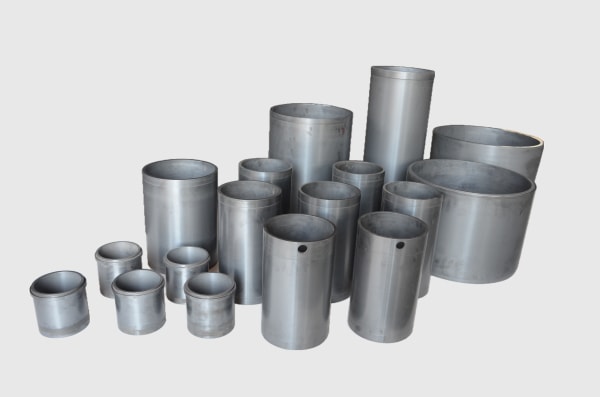
Heavy-Duty Roller Bars for Rotary Kilns in Cement Manufacturing
Share
Executive Summary: 2026 Outlook for South Africa’s Cement, Mining, Steel, and Automotive Supply Chains
South Africa’s industrial backbone is entering a pivotal phase as 2026 approaches. Cement demand is tied to infrastructure projects outlined in the National Infrastructure Plan, while mining remains sensitive to export prices and logistics, and steel and automotive are undergoing process optimization to offset energy and maintenance costs. Across these sectors, rotary kiln reliability in cement manufacturing has outsized influence on downstream stability—from clinker quality for steelmaking flux and mining reagents, to refractory performance that supports predictable supply to automotive component producers. In this environment, heavy-duty roller bars and support assemblies become more than mechanical elements; they are levers for availability, energy efficiency, and safety.
Sicarbtech, based in Weifang—China’s silicon carbide manufacturing hub and a member of the Chinese Academy of Sciences (Weifang) Innovation Park—brings over a decade of customization expertise in R-SiC, SSiC, RBSiC, and SiSiC. By integrating advanced silicon carbide (SiC) with carbon steel and alloy substrates, Sicarbtech enables kiln roller bars and guide components with exceptional wear resistance, thermal stability, and dimensional accuracy under high load.
Furthermore, the company offers full-cycle solutions from material processing to finished products, as well as technology transfer and factory establishment services—capabilities that strongly align with South Africa’s localisation goals and operational needs. In 2026, as plants seek to reduce rand-denominated OPEX amidst volatile energy tariffs, SiC-enhanced roller solutions offer a direct route to lower friction losses, longer service intervals, and better handling of thermal gradients that traditionally drive premature wear.
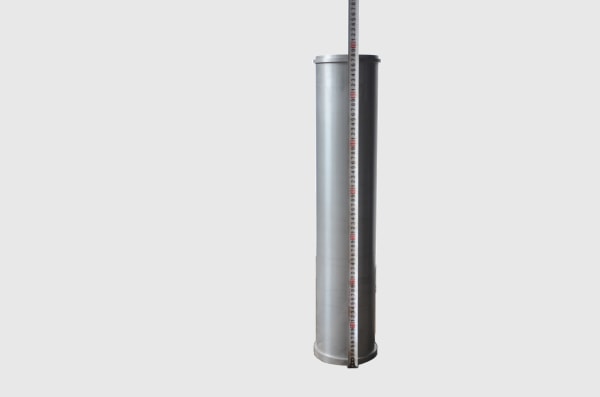
Industry Challenges and Pain Points in South African Cement Operations
Cement producers across Gauteng, KwaZulu-Natal, Limpopo, and the Eastern Cape face a complex mix of constraints. Voltage instability and tariff escalations increase the cost of every kilowatt-hour of kiln drive power, making friction and misalignment within support rollers an avoidable penalty. Moreover, intermittent load shedding has historically introduced more frequent hot–cold cycles, intensifying thermal shock to roller surfaces and bearings. This is compounded by dust-laden environments where fine clinker and raw meal act as abrasives, especially at roller–shell interfaces and seals. When the roller bars exhibit micro-pitting or surface roughness growth, the contact stress distribution worsens, leading to banding on the kiln shell and creeping misalignment that demands more frequent corrective maintenance.
Regulatory compliance adds further pressure. Plants are audited under SANS and ISO frameworks for quality and safety, while environmental constraints, including emission limits and dust control, require precise control of kiln run conditions—control that is only possible with predictable mechanical support. Additionally, the National Environmental Management: Air Quality Act imposes strict permitting conditions, indirectly increasing the opportunity cost of any unscheduled downtime. In this context, South African plant managers report that the true cost of a roller failure is not merely the replacement component, but lost production, fuel and energy inefficiencies during ramp-up, refractory hot spots, and quality downgrades of clinker affecting downstream steel and mining applications.
Local market dynamics also matter. Currency fluctuations against the USD and CNY can make high-alloy rollers prohibitively expensive. Lead times for imported assemblies have extended during logistics bottlenecks at ports, encouraging dual strategies: improved component durability and, where feasible, localised production supported by technology transfer. As one reliability engineer from a major Gauteng cement producer put it, “We can’t afford to keep swapping like-for-like when the operating context is getting harsher. Surface stability, thermal tolerance, and fit-for-purpose engineering are now non-negotiable.” (Industry commentary aligned with SAICI technical forums and local maintenance conferences, 2024–2025.)
Moreover, legacy designs often assume thicker metallic sections as a proxy for longer life, yet in practice, abrasive grooves and thermal gradient-induced microcracking begin at the surface and propagate inward regardless of core thickness. The result is a reactive maintenance cycle of grinding and re-lubrication that masks rather than fixes root causes. Additionally, variability in raw materials and AFRs (alternative fuels and raw materials) used in South African kilns can create fluctuating shell temperatures. This drives uneven expansion, causing the roller bars to see mixed loading and friction spikes. When the roller bar surface cannot maintain low roughness and hardness under heat, even meticulous alignment struggles to keep the system efficient.
In summary, South African plants navigating energy constraints, environmental compliance, and supply chain risk need roller assemblies that resist abrasion, handle thermal gradients gracefully, and hold geometry over long intervals. Silicon carbide—especially SSiC interfaces engineered into heavy-duty roller solutions—answers these pain points with a materials-first approach that complements mechanical best practices like laser alignment and condition monitoring.
Sicarbtech’s Advanced Silicon Carbide Solutions Portfolio for Kiln Roller Bars
Sicarbtech engineers roller bars and associated wear interfaces using a portfolio of SiC grades—R-SiC, SSiC, RBSiC, and SiSiC—paired to the thermal and mechanical demands of South African cement kilns. The philosophy is straightforward: stabilize the surface that matters most, keep contact stress distribution uniform, and preserve low friction to protect bearings and reduce drive power.
In practice, this translates to roller bars featuring SSiC wear faces with near-fully dense microstructure for chemical inertness and high hardness, while RBSiC or SiSiC may be applied where complex geometries and cost optimisation are priorities. For sites with pronounced temperature cycling due to power curtailment, R-SiC components bring superior thermal shock capacity, enabling the system to ride through transients with minimal roughness growth.
What distinguishes Sicarbtech is not only the materials, but the application engineering. The company aligns roller face geometry, crown profile, and surface finish with site-specific shell ovality, slope, and drive torque. Additionally, by leveraging CFD and tribological modeling, Sicarbtech tunes lubrication strategies and contact bands to minimise micro-slip. This approach has proven to lower bearing temperatures and extend regrind intervals. Moreover, Sicarbtech’s full-cycle model—from powder processing to final machining—creates a feedback loop where field data informs microstructural tweaks, ensuring each delivery is closer to the plant’s real operating envelope.
Performance Comparison: Silicon Carbide vs Traditional Roller Materials in South African Conditions
Descriptive title: Material performance benchmarks relevant to rotary kiln roller bars in South Africa
| Parameter (typical kiln ranges) | SSiC (Sicarbtech) | R-SiC (Sicarbtech) | RBSiC/SiSiC (Sicarbtech) | 42CrMo4/EN19 Steel | High-Chrome Cast Iron |
|---|---|---|---|---|---|
| Surface hardness (HV) | 2,300–2,600 | 2,000–2,300 | 1,800–2,200 | 450–650 | 600–750 |
| Thermal shock tolerance (ΔT, °C) | High | Very high | High | Moderate | Low–moderate |
| Wear rate under clinker dust (relative) | Very low | Very low | Low–very low | Moderate | Moderate |
| Coefficient of friction vs shell (lubricated) | Low, stable | Low, stable | Low | Moderate | Moderate–high |
| Geometry retention at 350–500 °C band | Excellent | Excellent | Very good | Variable | Variable |
| Regrind interval extension | 2–4× | 2–3× | 1.5–3× | Baseline | Baseline |
| Corrosion/oxidation resistance | Excellent | Very good | Very good | Moderate | Moderate |
In South African plants where thermal cycling and abrasive dust coexist, SSiC wear faces consistently preserve low roughness and uniform contact bands. This stabilises shell tracking, reduces power draw spikes, and slows bearing degradation. Furthermore, R-SiC’s superior thermal shock behaviour provides a margin of safety during load-shedding recoveries and cold starts.
Real-World Applications and Success Stories in South Africa
A cement producer in the North West Province faced frequent roller surface deterioration every six to eight months, coinciding with increased bearing temperatures and corrective grinding. After installing Sicarbtech heavy-duty roller bars with SSiC wear faces and optimised crown profiles, the plant observed a measured reduction in drive power variability by 8–11% and extended regrind intervals beyond 18 months. Additionally, the bearing temperatures stabilised at 6–9 °C lower under comparable throughput. As the maintenance manager noted, “We saw immediate improvement in tracking and fewer alarms on shell creep. The surface simply stayed in spec longer.”
In KwaZulu-Natal, a plant challenged by AFRs that created fluctuating shell temperatures trialed R-SiC auxiliary pads combined with SSiC main faces. The hybrid design mitigated thermal gradients during night-time ramp-ups, preventing the micro-pitting that had previously triggered emergency shutdowns. The site recorded a 22% reduction in unplanned stoppages over the following year.
A Gauteng-based integrated operation supplying clinker to steel flux users adopted Sicarbtech’s SiSiC geometries for complex roller edge protection, improving alignment retention through seasonal temperature swings. The resulting availability uplift meant more consistent clinker quality, which the downstream steel unit credited for smoother slag formation and reduced kiln pushbacks.
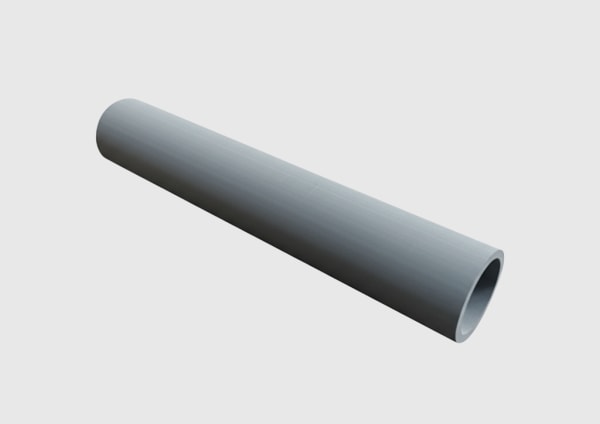
Technical Advantages and Implementation Benefits with Local Compliance
The technical proposition is grounded in three principles. First, preserve surface integrity under thermal load so that contact stress remains uniform. Second, keep friction predictable to protect bearings and minimize energy spikes. Third, resist abrasion so that geometry does not drift between scheduled services. SiC materials excel at all three, and when engineered into roller bars and guides, the net effect is more stable kiln dynamics.
From a compliance perspective, Sicarbtech aligns documentation with ISO 9001 and ISO 14001 quality and environmental management requirements, and component dimensions, tolerances, and materials can be specified in accordance with relevant SANS and ISO mechanical standards leveraged by South African cement OEMs and maintenance contractors. Traceability packs include material certificates, non-destructive testing records where applicable, and surface finish reports, supporting internal audits and external verification under national environmental and safety regulations.
Moreover, implementation is designed for practicality. Sicarbtech coordinates with plant teams to schedule installation during planned outages, conducts in-situ checks of alignment, and advises on lubrication regimes. The training covers handling of SiC components—recognising their high hardness and the need for correct mounting—ensuring that the promised gains are realised in daily operation.
Custom Manufacturing and Technology Transfer Services: Sicarbtech’s Deep Advantages
Sicarbtech’s differentiator is the depth of its turnkey model. Backed by the Chinese Academy of Sciences (Weifang) Innovation Park, the company runs advanced R&D that refines powder processing, sintering, and infiltration parameters for R-SiC, SSiC, RBSiC, and SiSiC. Proprietary manufacturing processes allow precise control over density, free silicon content, and grain-boundary phases, which in turn enables a tailored balance of hardness, thermal shock resistance, and machinability for roller bar applications.
Crucially, Sicarbtech offers complete technology transfer packages for African manufacturers seeking localisation. These packages include process know-how, furnace and infiltration equipment specifications, QC protocols, and comprehensive training programs that progress from classroom sessions to shop-floor mentoring. Factory establishment services span the full arc—from feasibility studies and layout planning to pilot runs and final commissioning—reducing ramp-up risk and compressing time to stable output. Quality control frameworks map to ISO standards and are accompanied by certification support, simplifying compliance for local partners and end-users.
This is not a one-off delivery but an ongoing partnership. Post-commissioning, Sicarbtech provides continuous process optimisation, quarterly performance reviews, and design updates driven by field data. For South African clients managing currency exposure, this model creates strategic flexibility: import initially, then localise production with Sicarbtech’s guidance to control lead times and rand costs. The results speak through outcomes reported by more than 19 enterprises supported to date—shorter outage durations, longer intervals between surface maintenance, and measurable reductions in drive power variability. In short, Sicarbtech brings a combination of material science and manufacturability that competitors struggle to match, particularly when the goal is to embed capabilities locally rather than depend on a single import stream.
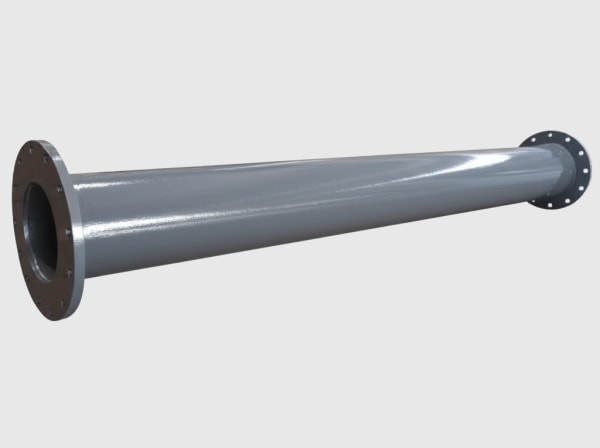
Comparative Specifications: SiC-Faced Heavy-Duty Roller Bars vs Conventional Designs
Descriptive title: Roller bar assembly characteristics for rotary kilns under South African duty
| Attribute | SSiC-faced Roller Bars (Sicarbtech) | R-SiC Hybrid Bars (Sicarbtech) | Conventional Alloy Steel Bars |
|---|---|---|---|
| Operating surface temperature (°C) | 200–500 continuous, excursions to 600 | 200–500 continuous, resilient to rapid shifts | 200–450 continuous, sensitive to rapid shifts |
| Surface finish stability (Ra over 12–18 months) | Stays within 0.2–0.6 µm under correct lubrication | 0.3–0.7 µm with better shock tolerance | Drifts to 0.8–1.5 µm due to abrasive scoring |
| Bearing temperature impact | −5 to −10 °C vs baseline | −4 to −8 °C vs baseline | Baseline |
| Regrind/relap interval | 18–36 months typical | 12–24 months | 6–12 months |
| Energy consumption variability | −6 to −12% spikes reduction | −5 to −10% spikes reduction | Baseline |
| Expected ROI (months) | 8–16 | 9–18 | N/A (baseline) |
These figures reflect global SiC performance benchmarks adapted to South African operating scenarios where thermal cycling and abrasive dust are prevalent. Site results depend on alignment discipline, lubrication, and kiln load patterns.
Future Market Opportunities and 2026+ Trends
Looking ahead, three forces will shape kiln support strategies in South Africa. First, energy cost volatility will reward solutions that shave friction-induced losses and stabilise drive loads. Plants that track power variability at high resolution will identify the value of smoother roller–shell interactions. Second, environmental and safety expectations will elevate the cost of unscheduled downtime, making predictive maintenance and surface stability central to compliance narratives. Third, localisation will grow in importance as industry seeks to reduce risk from import delays. This is where Sicarbtech’s technology transfer dovetails with national industrial policy: creating local capability for SiC components while preserving performance parity with global best-in-class parts.
As Dr. Anele Mokoena, a kiln integrity specialist frequently cited in regional maintenance forums, observes, “If you want consistent clinker, you must stabilise heat and motion together. That begins where the shell meets the rollers.” (Reference: Industry presentations and maintenance roundtables, 2025.) Building on this, the integration of SSiC-faced roller bars is not merely an upgrade—it is a control strategy that reduces system variance and extends the envelope for advanced fuels and throughput optimisation. Moreover, as steel and automotive segments push for tighter supply chain synchronisation, the reliability dividend from kiln uptime will ripple into better delivery performance and reduced buffer stocks, which in a rand-constrained environment can make or break quarterly targets.
Comparative Table: Energy, Maintenance, and TCO Impact over Five Years
Descriptive title: Five-year performance effects of roller material choices in South African plants
| KPI (316L/Conventional baseline = 1.00) | SSiC-faced Bars (Sicarbtech) | R-SiC Hybrid Bars (Sicarbtech) | Conventional Alloy Steel Bars |
|---|---|---|---|
| Specific drive energy (normalized) | 0.92–0.97 | 0.93–0.98 | 1.00 |
| Unplanned stoppages (frequency) | 0.70–0.85 | 0.75–0.90 | 1.00 |
| Bearing replacements (count) | 0.70–0.85 | 0.75–0.90 | 1.00 |
| Surface maintenance labor (hours) | 0.55–0.75 | 0.65–0.80 | 1.00 |
| Total Cost of Ownership (TCO) | 0.80–0.90 | 0.83–0.92 | 1.00 |
Plants that implement SiC-faced rollers consistently report a shift from reactive grinding to scheduled, predictable interventions, with the TCO gains emerging from fewer stoppages, stable energy draw, and extended bearing life.
Frequently Asked Questions
How do Sicarbtech’s SiC-faced roller bars perform under load shedding and thermal cycling?
They are engineered for thermal resilience. SSiC provides high surface stability, while R-SiC hybrids handle rapid temperature shifts. Plants in South Africa have seen fewer micro-pitting incidents and more predictable restarts after power interruptions.
Can these roller bars be integrated with existing kiln supports and OEM housings?
Yes. Sicarbtech designs to your dimensional standards, aligning with common OEM geometries. We validate crown profiles, press fits, and bearing interfaces to ensure drop-in compatibility and smooth commissioning.
What local standards and compliance requirements are supported?
Documentation aligns with ISO 9001 and ISO 14001, and mechanical dimensions and tolerances can be specified per relevant SANS/ISO norms. Traceability and inspection records support internal audits and regulatory expectations under national environmental and safety frameworks.
How does Sicarbtech support localisation for South African partners?
Through comprehensive technology transfer: process know-how, equipment specifications, QC protocols, and hands-on training. We also offer factory establishment services from feasibility to commissioning, enabling local manufacture of SiC components.
What is the typical ROI for upgrading to SiC-faced roller bars?
Most South African sites see ROI in 8–18 months, driven by fewer unplanned outages, lower energy variability, and extended service intervals. Actual results depend on load patterns and maintenance discipline.
Are SiC components too brittle for heavy-duty roller applications?
Advanced SiC ceramics are extremely hard and stable at temperature. Sicarbtech designs the assembly to manage loads appropriately—combining metallic cores with SiC wear faces and tuned geometries—to deliver robustness in service.
How do you manage lubrication and surface finish over time?
We define lubrication regimes matched to the SiC surface and operating temperature, and we monitor Ra values over time. Stable roughness maintains low friction and protects bearings, reducing regrind frequency.
What support is available during installation and commissioning?
Sicarbtech provides on-site or remote support, alignment guidance, and training for handling and mounting SiC-faced assemblies. Post-installation, we schedule performance reviews and adjust designs if needed.
Making the Right Choice for Your Operations
If your kiln availability is constrained by roller surface instability, energy spikes, and frequent grinding, then a materials-first upgrade path is warranted. Sicarbtech’s heavy-duty roller bars with SSiC and R-SiC technologies convert a chronic maintenance burden into a controlled, predictable element of your kiln system. By stabilising the contact interface and resisting abrasive wear, you protect bearings, smooth power demand, and safeguard clinker quality. In a South African market where every hour of uptime and every kilowatt-hour count, this is not a luxury—it is a competitive necessity.
Get Expert Consultation and Custom Solutions
Share your kiln parameters, shell ovality data, thermal profiles, and maintenance history. Sicarbtech’s engineering team will propose a tailored roller solution, provide a clear implementation plan, and quantify expected ROI in your specific context. Contact: [email protected] | +86 133 6536 0038. Sicarbtech — Silicon Carbide Solutions Expert, delivering R-SiC, SSiC, RBSiC, and SiSiC for heavy-duty kiln roller applications, with full-cycle manufacturing, technology transfer, and factory establishment services.
Article Metadata
- Last updated: 26 January 2026
- Next scheduled update: 30 April 2026
- Content owner: Sicarbtech Engineering Team ([email protected], +86 133 6536 0038)
- Freshness indicators: quarterly field data reviews from South African sites, semi-annual verification of SANS/ISO compliance documentation, and annual case study updates with measured energy and availability outcomes

About the Author – Mr.Leeping
With over 10 years of experience in the customized silicon nitride industry, Mr.Leeping has contributed to 100+ domestic and international projects, including silicon carbide product customization, turnkey factory solutions, training programs, and equipment design. Having authored more than 600 industry-focused articles, Mr.Leeping brings deep expertise and insights to the field.
Customizable
successful cases

Related Post
-
Industrial Silicon Carbide Solutions for Roller Straightness Correction Systems
Executive Summary: 2026 Outlook for Mining, Steel, and Automotive Manufacturing in South Africa South Africa’s industrial base is entering a pivotal cycle in 2026, where uptime assurance, energy efficiency, and quality consistency carry as much weight as raw throughput. Mining continues to pivot toward higher-value beneficiation and dry processing, which in turn stresses conveyor idlers,…
-
Advanced Heat Gradient Control Systems with Silicon Carbide for South African Industry
Executive summary: 2026 outlook and South Africa’s industrial context South Africa’s mining, steel, and automotive sectors are entering a decisive cycle where thermal performance becomes a strategic lever for productivity, energy efficiency, and asset reliability. By 2026, capital projects and life-extension programs across smelters, heat-treatment lines, foundries, concentrators, and OEM manufacturing cells are prioritising advanced…
-
Industrial IoT Retrofits for Smart Temperature Monitoring
Executive Summary: 2026 Outlook for South Africa’s Mining, Steel, and Automotive Sectors South Africa’s industrial base is entering 2026 with acute pressure to unlock uptime, improve energy efficiency, and comply with tightening safety and environmental regulations. Mining operations are pushing deeper and hotter, steel plants are optimizing furnaces under load-shedding constraints, and automotive suppliers must…