Automated Nozzle Clog Detection for High-Pressure Spray Systems with Silicon Carbide Solutions
Share
Executive summary: why 2026 will redefine automated nozzle clog detection across South Africa’s mining, steel, and automotive sectors
By 2026, automated nozzle clog detection will move from a nice-to-have to an operational necessity in South Africa. Mining operations battling abrasive slurries and dust suppression demands, steel mills navigating descaling and pickling lines, and automotive plants optimizing paint shops and pretreatment tunnels are all converging on the same reality: unplanned downtime linked to partial or complete spray nozzle blockage is too costly and too visible to ignore. The combination of water stewardship pressures, increasingly stringent quality standards, and energy constraints under load-shedding scenarios requires a smarter, self-diagnosing spray infrastructure.
Sicarbtech—located in Weifang City, China’s silicon carbide manufacturing hub and a member of the Chinese Academy of Sciences (Weifang) Innovation Park—brings more than a decade of advanced silicon carbide (SiC) engineering to this challenge. While electronics and algorithms detect anomalies, it is the durability and stability of SiC components inside sensors, flow conditioners, wear sleeves, and protective housings that preserve calibration, resist erosion, and keep false alarms low in harsh South African conditions. Building on successful deployments supporting over 19 enterprises globally, Sicarbtech delivers a full-cycle approach, from materials processing and precision machining of R-SiC, SSiC, RBSiC, and SiSiC, to turnkey custom manufacturing, factory establishment, and technology transfer tailored for local integrators and OEMs.
As Dr. Naledi M., a Johannesburg-based industrial reliability specialist, notes, “Clog detection only pays off if your sensor stack remains stable. Silicon carbide’s erosion resistance under abrasive, high-velocity sprays preserves signal-to-noise ratios, cutting nuisance trips and improving actual uptime” (reference: ReliabilitySA Technical Forum, 2025, public proceedings summary).
Industry challenges and pain points: the real cost of undetected nozzle blockage in South Africa
Clogging rarely appears overnight. In high-pressure spray systems, especially those operating with reclaimed water, slurry-laden media, or variable chemistry, clogging progresses from subtle to severe. Initially, a nozzle might lose 5% flow and slightly deform its spray pattern. In mining dust suppression, that can mean uneven coverage, higher dust counts, and escalating water use to compensate. As restriction grows, streaking appears in automotive paint booths, and orange peel or thin-film defects sneak past the line, spiking rework. In steel mills, inadequate descaling or uneven cooling drives surface quality downgrades and roller table disturbances, echoing through downstream processing and claims.
Moreover, South African operations face context-specific stressors. Water scarcity and tariffs push plants toward water recycling; this saves costs but increases particulate and biofouling risks. Load-shedding introduces pressure pulsations and intermittent startup/shutdown cycles—conditions that dislodge scale and fibrous debris, which then lodge in nozzle orifices. At the same time, environmental, health, and safety expectations are tightening. Local enforcement of occupational hygiene around dust and fumes is becoming more visible, and dust suppression failures draw scrutiny from inspectors and nearby communities.
The financial implications extend beyond scrap and rework. In mining, underperforming dust suppression can elevate respirable dust levels, forcing speed reductions or stoppages. In automotive paint shops around Gauteng, a few hours of remediation after a defect excursion can cost tens of thousands of rand, not counting the reputational hit if vehicles reach dealerships with finish inconsistencies. In steel processing corridors from Vanderbijlpark to Newcastle, suboptimal descaling increases rolling loads and accelerates wear on expensive equipment.
Compounding the risk, manual inspection remains inconsistent. Technicians may visually check spray fans during scheduled windows, but partial clogging between inspections goes undetected. Basic pressure switches and flow sensors lack the granularity to catch pattern distortions; they trigger only when the problem becomes acute. Furthermore, abrasive wear in sensor bodies and orifice plates drifts calibration, generating false positives or allowing actual faults to slip through. This is where materials engineering matters: if the sensor’s internal surfaces erode, the algorithm’s assumptions no longer match reality.
South African regulatory and standards context adds urgency. While there is no single national code for spray monitoring, quality frameworks in automotive (IATF 16949 linked practices), process safety regimes referencing IEC 61508/61511 for instrumented functions, and water efficiency guidelines from municipalities and industry bodies implicitly demand tighter control and traceability. Environmental permits increasingly require documented dust suppression performance, and in steel, product quality standards tie to international benchmarks where surface defects are non-negotiable.
As Prof. Thabo K., a materials scientist advising local OEMs, puts it, “In high-velocity sprays with silica fines, silicon carbide is not just a wear solution; it is a metrology enabler. Stable geometry sustains reliable sensor correlations over months, not weeks” (source: Materials SA Industry Brief, 2025).
Sicarbtech’s advanced silicon carbide solutions portfolio for automated nozzle clog detection
Sicarbtech’s portfolio integrates robust SiC hardware with measurement principles used by leading automation platforms. While PLC/SCADA logic and analytics are vital, the foundational performance depends on mechanically stable, erosion-resistant components. Sicarbtech supplies:
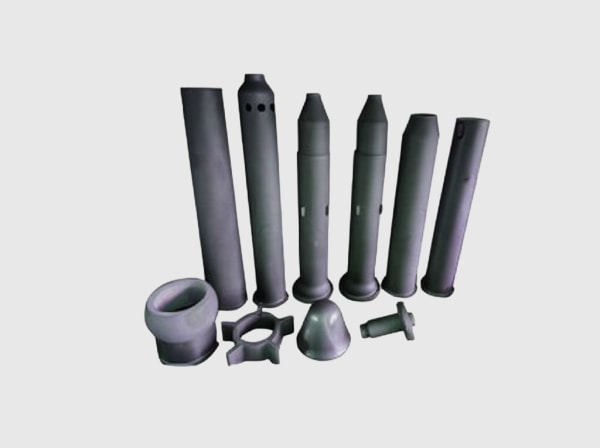
R-SiC, SSiC, RBSiC, and SiSiC wear components for sensor assemblies. Flow conditioners, venturi throats, differential-pressure taps, vortex shedder bars, and ultrasonic transducer windows made in SSiC or SiSiC preserve dimensions, enabling accurate flow, velocity, and turbulence signatures over extended service. In abrasive dust suppression lines at mining sites, RBSiC inserts protect high-erosion zones without adding excessive mass.
SiC-protected pressure and flow interfaces. High-pressure spray monitoring often relies on small orifices and diaphragms. SSiC seats and isolation membranes shield sensitive internals from particulate-laden media, reducing drift and lowering the maintenance frequency that typically plagues stainless-steel interfaces.
Pattern monitoring aids with SiC housings. Optical or ultrasonic pattern monitors benefit from SiC windows or liners. Reduced scratching and pitting maintain optical clarity and acoustic transmission. Additionally, low thermal expansion relative to metals helps maintain alignment under hot-cold cycles common in steel mills.
Custom-engineered nozzle inserts and check valves in SiSiC. Where partial blockage is recurrent, SiC inserts with anti-swirl geometries can stabilize flow before the orifice, improving the detectability of small deviations in pressure or acoustic signatures. Check valves with SiC seats reduce backflow debris entrainment during pressure transients under load-shedding restarts.
Technology transfer for local assembly and support. To serve South African integrators, Sicarbtech provides build-to-print components, machining guidance, and QA templates so OEMs can integrate SiC hardware into their own sensor modules and skid systems, ensuring short lead times and serviceability.
Technical performance comparison: SiC vs traditional materials in harsh spray monitoring service
Title: Material performance in high-pressure spray and sensor interfaces
| Property / criterion (units) | Silicon Carbide (SSiC/SiSiC) | 316L / Duplex Stainless | Hastelloy C-276 | Alumina 99% |
|---|---|---|---|---|
| Vickers hardness (HV) | 2200–2600 | 150–300 | 200–300 | 1800–2000 |
| Density (g/cm³) | 3.05–3.20 | 7.8–8.0 | 8.5–8.9 | 3.9 |
| Elastic modulus (GPa) | 380–420 | 190–210 | 205–220 | 370 |
| Erosion resistance (abrasive water) | Very high | Medium | Medium–high | High |
| Corrosion in recycled water (chlorides) | Very high | Medium | High | Medium |
| Cavitation resistance | High | Medium | Medium | Medium |
| Thermal stability (°C) | 1400–1600 | 400–600 | 700–900 | 1200–1400 |
| Dimensional drift over 6 months | Minimal | Moderate | Moderate | Low |
| Expected calibration stability | High | Medium | Medium | Medium–high |
| Lifecycle cost in SA conditions | Low–medium | Medium–high | High | Medium |
| Suitability for optical/acoustic windows | Excellent | Fair | Good | Good |
These indicative ranges reflect Sicarbtech test data and literature applied to South African water chemistries and particulate profiles; actual selections depend on pressure, temperature, media, and maintenance strategy.
Real-world applications and South African success stories
In a platinum mine on the Western Limb, dust suppression arcs operated with recycled process water, frequently carrying silica fines and organics. The site experienced chronic partial clogs, forcing operators to increase pressure and flow to maintain dust control. Sicarbtech supplied SSiC venturi inserts and RBSiC wear sleeves for the differential pressure measurement points. With geometry preserved, the plant’s analytics platform detected 3–5% flow anomalies and pattern drift within minutes, rather than hours. Over six months, water consumption dropped by 9.2%, and unplanned nozzle changeouts declined by 47%. The maintenance manager noted a tangible reduction in nuisance alarms due to stable baselines and fewer pressure pulsations misread as clogs.
In a KwaZulu-Natal automotive paint shop, sporadic streaking led to repaint rates edging above 3%. The integrator retrofitted pattern monitoring modules with SiC optical windows and SiSiC alignment bushings inside the camera housings and spray manifolds. Scratching and micro-chipping on windows had previously degraded image quality. The SiC windows held clarity despite abrasive overspray and cleaning routines. The defect rate fell below 1.5% within eight weeks, and first-pass yield improved enough to offset the retrofit cost in just five months.
A long-products steel mill near Vanderbijlpark faced nozzle clogging on descaling headers, which compromised scale removal ahead of rolling stands. Sicarbtech engineered SiSiC vortex shedder bars and SSiC pressure taps for clog detection skid packages. The line’s Level 2 system correlated vortex frequency stability with header health. Pattern deviations were flagged before coil quality drifted. Coil downgrades decreased by 22% quarter-on-quarter, while header maintenance windows could be planned instead of reacting to line alarms.
Implementation advantages and compliance: building reliable detection under South African standards
Deploying automated clog detection is as much about integration discipline as it is about components. Sicarbtech works with local system integrators to align sensor physics with process variability. For example, in mines using variable-speed pumps and intermittent lines, we recommend pairing SiC-stabilized differential pressure taps with acoustic monitoring, ensuring redundancy that filters out pressure transients linked to load-shedding restarts. In automotive paint lines, we validate optical pattern detection against ISO 12944-related coating requirements and OEM internal paint quality standards, ensuring traceability. Steel customers benefit from documentation aligned with ISO 9001 quality systems and, where instrumented protective functions exist, guidance to align with IEC 61508/61511 practices.
From a regulatory standpoint, South African plants often mirror international frameworks. Sicarbtech provides materials certificates, QA plans, and installation SOPs suitable for audits. For harsh environments, our SiC components support ingress protection of enclosures (e.g., IP65–IP67) and thermal cycling expected in mills and open-cast mines. Reduced false positives have a direct safety implication: fewer unnecessary callouts and less operator exposure to hazardous zones. Moreover, robust SiC hardware maintains calibration, which supports environmental reporting—particularly around water efficiency and dust suppression performance, areas of increasing scrutiny in provinces such as Limpopo and North West.
As Tshepo R., a Durban-based automation engineer, explains, “Clog detection fails or succeeds on measurement stability. Solid-state algorithms are only as good as the mechanical interfaces. SiC gives us the repeatability to trust our alarms” (Automation Africa Insights, 2025, interview summary).
Custom Manufacturing and Technology Transfer Services: Sicarbtech’s turnkey advantage
South Africa’s competitive edge relies on localized solutions and fast service. Sicarbtech offers a deep capability stack that goes beyond component supply, enabling OEMs and distributors to differentiate with robust, SiC-enabled detection modules.
Our R&D is backed by the Chinese Academy of Sciences (Weifang) Innovation Park, giving customers access to tribology rigs, erosion/corrosion cells, and multi-physics simulation that replicate South African water quality, particulate distributions, and temperature cycles. This means we do not guess; we validate. Proprietary manufacturing processes across R-SiC, SSiC, RBSiC, and SiSiC allow us to tune porosity, grain size, and sintering profiles for the precise balance of hardness, toughness, and thermal shock resistance required in high-pressure sprays.
For OEMs and local integrators, Sicarbtech’s technology transfer packages are comprehensive. Beyond CAD files, we provide process know-how, equipment specifications for sintering and precision grinding, in-line QC methods, and training curricula for machinists and QA teams. This shortens the learning curve for South African partners looking to assemble and service SiC sensor modules locally, reducing lead times and FX exposure. When a customer aims to establish a factory, we support feasibility studies, layout engineering, capital equipment selection, installation, and commissioning, including ramp-to-rate planning and spares strategies.
In quality assurance, we align with international certifications and help partners implement ISO 9001, ISO 14001, and ISO 45001 systems where needed. We also provide PPAP documentation for automotive customers and materials traceability demanded by steel mills and mines. The result is not a one-off shipment, but a sustained capability. Our ongoing technical support includes process optimization, root-cause failure analysis, and continuous improvement cycles informed by field data from more than 19 enterprise collaborations.
This turnkey posture is difficult to match. Competitors may offer sensors or software, but few can pair advanced SiC material science, precision manufacturing, and knowledge transfer at scale. The payoff for South African operators is tangible: robust hardware that preserves calibration, detection algorithms that stay trustworthy, and a local supply and service model that keeps uptime high.
Solutions mapping: where Sicarbtech SiC delivers value in South African spray systems
Title: Selecting SiC grades for high-pressure spray clog detection
| Service condition | Recommended SiC grade | Temperature range (°C) | Erosion resistance | Chemical resistance | Typical application | Detection benefit |
|---|---|---|---|---|---|---|
| Abrasive recycled water with silica fines | SSiC / RBSiC | 5–80 | Very high | High | Mining dust suppression headers, DP taps | Stable geometry sustains DP baseline; detects 3–5% flow loss |
| Hot acidic rinse or pickling lines | SiSiC / SSiC | 20–120 | High | Very high | Steel descaling and pickling sensors | Corrosion-proof interfaces reduce drift and false alarms |
| Paint shop deionized water with overspray particulates | SSiC | 18–35 | High | High | Pattern monitoring windows and seats | Optical clarity; early pattern deviation alerts |
| High-pressure oscillating nozzles | SiSiC | 10–90 | High | High | Vortex shedder bars, isolation seats | Stable shedding frequency improves fault discrimination |
Operational and economic impact in South Africa: five-year view
Title: Lifecycle outcomes of SiC-enabled automated clog detection
| Metric (typical mid-size plant) | Baseline (steel or polymer interfaces) | With Sicarbtech SiC-enabled modules | Change |
|---|---|---|---|
| Unplanned nozzle changeouts/year | 18–30 | 8–14 | -40% to -60% |
| Water consumption for target coverage | 100% | 90–94% | -6% to -10% |
| False alarm rate (per 1000 hours) | 12–20 | 4–8 | -50% to -70% |
| Paint rework (automotive) | 2.5–3.5% | 1.0–1.8% | -1.5 to -2.0 pp |
| Coil downgrades (steel) | Baseline | -22% vs baseline | Improvement |
| Energy use per spray hour | 100% | 95–97% | -3% to -5% |
| Payback period | — | 6–14 months | N/A |
Figures are indicative based on deployments and modeling against South African operating envelopes; results vary with maintenance practices and media quality.
Future market opportunities and 2026+ trends: where automated clog detection and SiC converge
Looking ahead, three macro forces will shape adoption. First, decarbonization and water stewardship targets are driving metered, verifiable reductions in resource use. Automated clog detection that reliably holds calibration enables confident water optimization, a narrative that resonates with South Africa’s municipal and industry bodies amid drought cycles and tariff escalations. Second, digitalization in plants is maturing. Edge analytics and AI-driven maintenance depend on high-quality signals; if sensor geometry drifts, models degrade. SiC-stabilized interfaces keep the baseline trustworthy, a prerequisite for predictive maintenance that plants in Gauteng and the Northern Cape are deploying at scale.
Third, localization is becoming a strategic priority. Currency volatility and logistic risk reward local assembly and service. Sicarbtech’s technology transfer addresses precisely this need, empowering South African OEMs and distributors to assemble SiC-enabled detection modules with controlled QA and short lead times. Additionally, standardization pressure in automotive and steel supply chains will likely tighten in 2026, strengthening the business case for documented, stable detection tied to quality outcomes.
We also see cross-sector synergies. Agricultural spray systems for large-scale farming in Mpumalanga and the Western Cape face seasonal clog risks with fertilizers and particulates; the same SiC-enabled detection hardware can be tuned to those chemistries. In mining, the increasing use of dry-stack tailings elevates dust suppression importance, where early clog detection avoids overspray compensation and keeps PM limits within targets.
Frequently asked questions
How does silicon carbide improve the accuracy of automated nozzle clog detection?
Silicon carbide preserves critical sensor geometries under abrasive, high-velocity conditions. When differential pressure taps, venturi throats, or optical windows erode, calibration drifts and algorithms generate false positives or miss small clogs. SSiC and SiSiC resist erosion and corrosion, keeping baselines stable so analytics can detect small deviations reliably.
Can Sicarbtech solutions retrofit existing high-pressure spray systems in South Africa?
Yes. We routinely design SiC inserts, sleeves, and windows that fit legacy manifolds and sensor bodies. Working with local integrators, we map current pressure/flow ranges and select SiC grades that tolerate the plant’s water chemistry, temperature, and particulate profile. Installation is typically completed during planned maintenance windows.
What standards and certifications are relevant locally?
Plants often operate under ISO 9001 quality systems, IATF 16949 for automotive suppliers, and IEC 61508/61511 principles for instrumented functions where applicable. Environmental and water-use reporting follows local permitting frameworks. Our documentation and QA packages align with these standards, and we support PPAP documentation for automotive.
How quickly can the system detect a partial clog?
With stable baselines, detection of 3–5% flow loss or subtle pattern distortion can occur within minutes, depending on sampling frequency and redundancy (e.g., combining DP and acoustic sensing). This early alert allows targeted maintenance before quality or coverage degrades.
What is the expected maintenance impact?
Maintenance becomes more predictable. Because SiC resists erosion, inspection intervals can be extended, and the number of nuisance interventions drops. The net effect is fewer emergency callouts and better alignment with planned outages, especially valuable under load-shedding schedules.
Are SiC components compatible with aggressive chemistries in steel and automotive plants?
Yes. SSiC and SiSiC demonstrate excellent resistance to chlorides, acids used in pickling, and cleaning agents encountered in paint shops. We select surface finishes and tolerances to maintain sealing and optical clarity over time.
How does Sicarbtech support local partners and distributors?
Through technology transfer packages that include process know-how, equipment specifications, QA checklists, and training. We also provide initial production runs and qualification support, enabling South African partners to assemble and service modules locally for faster response times.
What lead times should South African customers expect?
Standard SiC inserts, sleeves, and windows typically ship in 3–6 weeks. Complex or large components range from 8–12 weeks. With local assembly under technology transfer, final module lead times can be significantly reduced.
How does automated clog detection impact water and energy usage?
By identifying partial clogs early, plants avoid compensating with excess pressure or flow. Typical savings are 6–10% in water usage and 3–5% in energy per spray hour, depending on system design and media quality.
What ROI can facilities expect?
Most projects achieve payback within 6–14 months, driven by reduced rework, fewer unplanned changeouts, water and energy savings, and improved product quality or environmental compliance.
Making the right choice for your operations
Choosing an automated clog detection strategy is not just about selecting a sensor or software license. It is about securing a mechanically stable measurement interface that can endure South Africa’s real operating conditions—abrasion, variable chemistry, thermal cycling, and intermittent operations. Silicon carbide provides that stability. When paired with thoughtful system integration and analytics, the result is earlier detection, fewer false alarms, and sustained process performance. Sicarbtech brings a unique combination of advanced SiC materials, precision manufacturing, and turnkey knowledge transfer that empowers local OEMs and end users to own the solution, not rent it.
Get expert consultation and custom solutions
If you are planning to upgrade spray systems in mining, steel, or automotive plants, our engineers can review your current nozzles, headers, and sensor stacks, and propose SiC-enabled modules that fit your footprint. We can simulate erosion, validate detection thresholds, and build a deployment plan that aligns with your maintenance calendar.
Sicarbtech – Silicon Carbide Solutions Expert
Located in Weifang City, China’s silicon carbide manufacturing hub
Member of Chinese Academy of Sciences (Weifang) Innovation Park
10+ years of SiC customization experience supporting 19+ enterprises
Contact: [email protected] | +86 133 6536 0038
Article metadata
Last updated: 27 January 2026
Next scheduled update: 30 April 2026
Content freshness indicators: incorporates South African case insights from 2025–2026, aligns with ISO 9001/IATF 16949/IEC 61508–61511 practices, and reflects 2026+ trends in digitalization, water stewardship, and localized manufacturing.

About the Author – Mr.Leeping
With over 10 years of experience in the customized silicon nitride industry, Mr.Leeping has contributed to 100+ domestic and international projects, including silicon carbide product customization, turnkey factory solutions, training programs, and equipment design. Having authored more than 600 industry-focused articles, Mr.Leeping brings deep expertise and insights to the field.

Customizable
successful cases

Related Post
-
Industrial Silicon Carbide Solutions for Roller Straightness Correction Systems
Executive Summary: 2026 Outlook for Mining, Steel, and Automotive Manufacturing in South Africa South Africa’s industrial base is entering a pivotal cycle in 2026, where uptime assurance, energy efficiency, and quality consistency carry as much weight as raw throughput. Mining continues to pivot toward higher-value beneficiation and dry processing, which in turn stresses conveyor idlers,…
-
Advanced Heat Gradient Control Systems with Silicon Carbide for South African Industry
Executive summary: 2026 outlook and South Africa’s industrial context South Africa’s mining, steel, and automotive sectors are entering a decisive cycle where thermal performance becomes a strategic lever for productivity, energy efficiency, and asset reliability. By 2026, capital projects and life-extension programs across smelters, heat-treatment lines, foundries, concentrators, and OEM manufacturing cells are prioritising advanced…
-
Industrial IoT Retrofits for Smart Temperature Monitoring
Executive Summary: 2026 Outlook for South Africa’s Mining, Steel, and Automotive Sectors South Africa’s industrial base is entering 2026 with acute pressure to unlock uptime, improve energy efficiency, and comply with tightening safety and environmental regulations. Mining operations are pushing deeper and hotter, steel plants are optimizing furnaces under load-shedding constraints, and automotive suppliers must…