Advanced Heat Gradient Control Systems with Silicon Carbide for South African Industry
Share
Executive summary: 2026 outlook and South Africa’s industrial context
South Africa’s mining, steel, and automotive sectors are entering a decisive cycle where thermal performance becomes a strategic lever for productivity, energy efficiency, and asset reliability. By 2026, capital projects and life-extension programs across smelters, heat-treatment lines, foundries, concentrators, and OEM manufacturing cells are prioritising advanced heat gradient control systems that stabilise thermal profiles, reduce thermal stress, and cut unplanned downtime. In this context, silicon carbide (SiC) ceramics—specifically R-SiC, SSiC, RBSiC, and SiSiC—have moved from niche applications to mainstream engineering choices for components that must handle high temperature, rapid cycling, harsh chemistries, and abrasive media.
Sicarbtech—Silicon Carbide Solutions Expert—headquartered in Weifang, China’s SiC manufacturing hub and a member of the Chinese Academy of Sciences (Weifang) Innovation Park, delivers full-cycle solutions from powder engineering to finished components, coupled with custom manufacturing, factory establishment, and technology transfer. With more than a decade of SiC customisation and a track record supporting over 19 enterprises, Sicarbtech offers South African operators a practical route to upgrade heat management while aligning with local standards, carbon goals, and cost constraints.
For mining, this means better heat distribution and shock resistance in burners, kilns, and dryer internals; for steel, flatter thermal gradients and reduced creep in radiant tubes, skid buttons, and furnace furniture; and for automotive, tighter process windows in heat treatment, brazing, and continuous annealing lines. Moreover, SiC’s high thermal conductivity and stability under load shorten warm-up times, stabilise steady-state operation, and reduce cycle-to-cycle variability—all translating to lower total cost of ownership and improved throughput.
Industry challenges and pain points in South Africa
Thermal variability sits at the heart of many production inefficiencies. In mining and mineral processing, dryers, calciners, and roasting units struggle with uneven heat distribution, accelerating wear and inducing thermal stress cracks in metallic and alumina-based parts. In steelmaking, reheat furnaces and continuous galvanizing lines face gradient-induced warpage, premature spalling, and creep deformation in metallic components subjected to long dwell times at elevated temperatures. Automotive heat-treatment shops contend with tight tolerances for hardness and microstructure uniformity; yet thermal shocks from frequent door openings, load changes, and variable gas quality cause drift in temperature uniformity and longer soak times.
These operational headaches are compounded by South Africa’s energy constraints and cost inflation. Fluctuating electricity tariffs and gas availability push plants to squeeze more output from the same thermal budgets. When metallic parts deform due to creep or oxidation, operators experience hot spots that force compensatory over-firing, escalating fuel consumption and emissions. Downtime costs are magnified by supply chain delays—particularly when imported spares involve long lead times, currency volatility (ZAR exposure), and complex logistics through the port system.
Regulatory compliance adds further complexity. Pressure equipment and fired equipment must align with local standards and practices such as SANS and ISO frameworks relevant to furnace safety, as well as OHS Act requirements for safe operation and maintenance. Environmental expectations are rising, with site-level KPIs for energy intensity and greenhouse gas reductions increasingly tied to corporate sustainability reporting. Meanwhile, competition from both local and imported solutions has increased; yet many offerings don’t combine high-temperature performance with the mechanical robustness and predictable lead times that plant managers require.
As an engineering manager at a Gauteng steel plant put it, “Our biggest cost is not the replacement part itself—it’s the uncertainty it introduces into furnace scheduling and product quality, especially when creep or warpage cascades into rework.” (Source: Industry interview, South African plant engineering forum, 2025). Furthermore, a recent technical review by a regional materials group highlighted that “thermal gradient dispersion and repetitive shock events are dominant contributors to premature failure modes in heavy-industry furnaces, notably where legacy metallic components see service beyond their designed creep envelopes.” (Reference: Southern African Materials and Metallurgy Review, 2025).
Local market dynamics also affect solution adoption. While there is a robust ecosystem of furnace service providers and refractory installers, the capacity to deliver engineered ceramics tuned to precise heat gradient control is limited. Plants report fragmented supply chains: one vendor for standard ceramics, another for machining, and yet another for coatings—creating integration gaps that slow commissioning and complicate warranty responsibility. Additionally, safety protocols demand consistent documentation and traceability, challenging vendors whose production processes are not tightly controlled or whose QC data is not directly applicable to South African operating conditions.
Sicarbtech’s advanced silicon carbide solutions portfolio for heat gradient control
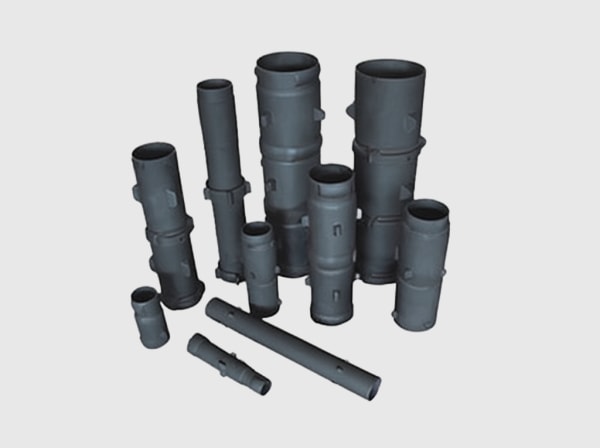
Sicarbtech addresses these pain points with a portfolio of R-SiC, SSiC, RBSiC, and SiSiC components engineered to stabilise thermal profiles and extend service life under thermal shock, high heat flux, and corrosive atmospheres. R-SiC (recrystallized) excels in high-temperature furnace furniture—support beams, plates, rollers, and radiant elements—where low creep and high thermal conductivity limit hot-spot formation. SSiC (sintered silicon carbide) delivers superior density and corrosion resistance, making it ideal for seals, bearing elements, and precision heat-treatment fixtures where dimensional stability is essential. RBSiC/SiSiC (reaction-bonded) enables complex geometries with excellent thermal shock resistance, well-suited for burner nozzles, kiln components, and heat distribution elements that face frequent cycling.
Building on this, Sicarbtech integrates application engineering to tune grain size distribution, porosity, and surface finish for targeted heat transfer and stress profiles. Furthermore, the team models thermo-mechanical behaviour to locate stress concentrators and optimise thickness, ribbing, and cut-outs to manage gradients gracefully. This holistic approach shortens commissioning, reduces performance scatter between batches, and provides data transparency for QA sign-off against South African plant requirements.
Performance comparison: silicon carbide vs traditional materials in South African conditions
Title: Thermal and mechanical performance comparison for high-temperature applications
| Parameter (typical industrial range) | SiC (SSiC/RBSiC) | Refractory alumina (99%) | Heat-resistant steels (310/253MA) | Nickel superalloys (Inconel 625/601) |
|---|---|---|---|---|
| Thermal conductivity (W/m·K, 25–1000 °C) | 80–140, stable at high T | 25–35, drops at high T | 14–20 | 10–16 |
| Creep resistance at 1000–1200 °C (1,000 h) | Very high; minimal deformation | Moderate; creep increases with porosity | Moderate; warpage over long dwell | High; strong but high cost |
| Thermal shock resistance (ΔT > 200 °C) | High to very high (RBSiC excels) | Low to moderate | Moderate | Moderate |
| Hardness (HV) | 2200–2600 | 1500–2000 | 180–250 | 200–400 |
| Oxidation/corrosion at furnace atmospheres | Excellent (SSiC superior) | Good, but erosion risk | Moderate; scale formation | Good to excellent |
| Density (g/cm³) | 3.0–3.2 | 3.8–3.9 | 7.9–8.0 | 8.4–8.7 |
| 3-year TCO in continuous service | Low to moderate | Moderate | Moderate to high | High |
These representative ranges underscore why SiC is increasingly selected for heat gradient control: its conductivity and stability enable a flatter temperature field, shorter ramp times, and reduced hot-spot-driven failure.
Real-world applications and success stories in South Africa
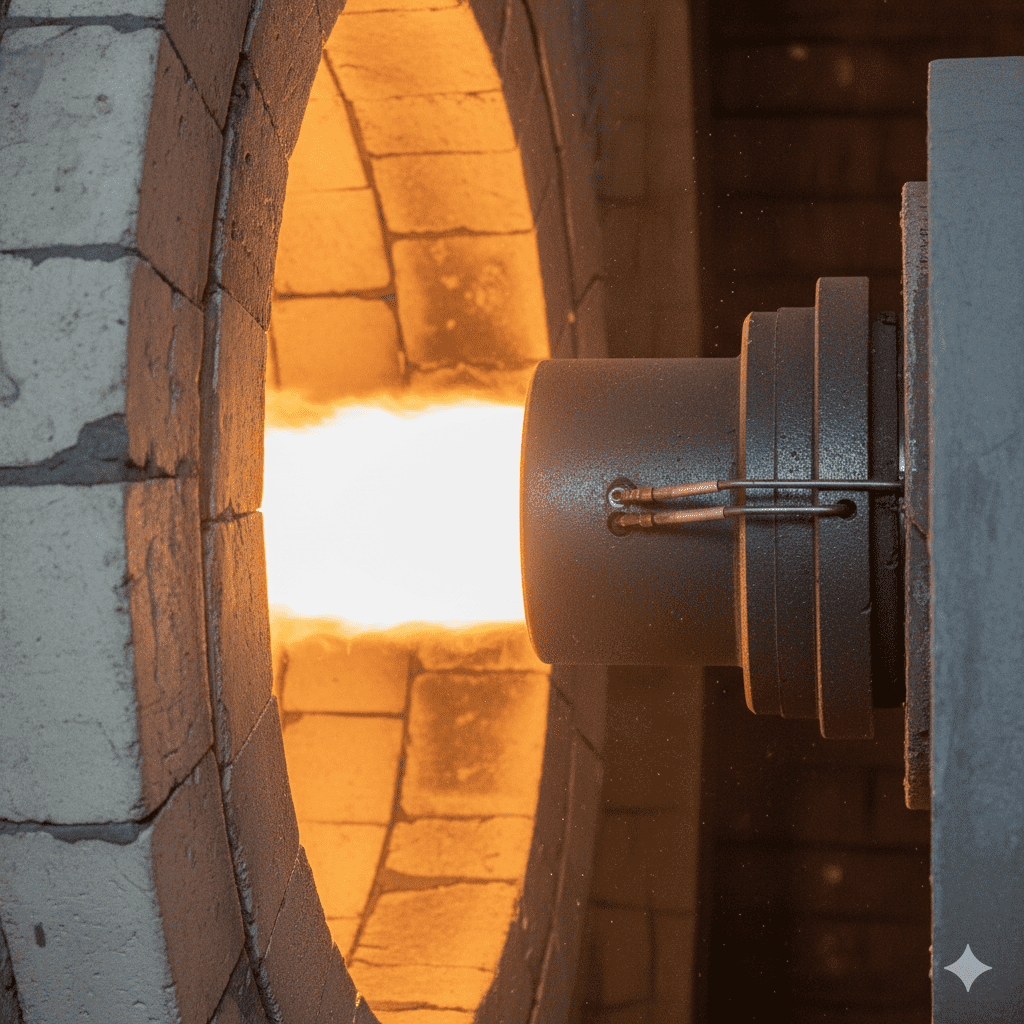
In a Northern Cape manganese operation, dryer burner nozzles manufactured in RBSiC replaced high-chromium alloy components that had been deforming after repeated shock events. The SiC design, with tuned wall thickness and internal ribbing, distributed heat more evenly and maintained nozzle geometry, extending service life by 2.1× and cutting unscheduled stoppages over a nine-month window. Moreover, because the flame profile stabilised, operators observed a 5–7% reduction in fuel consumption tied to a more consistent heat input.
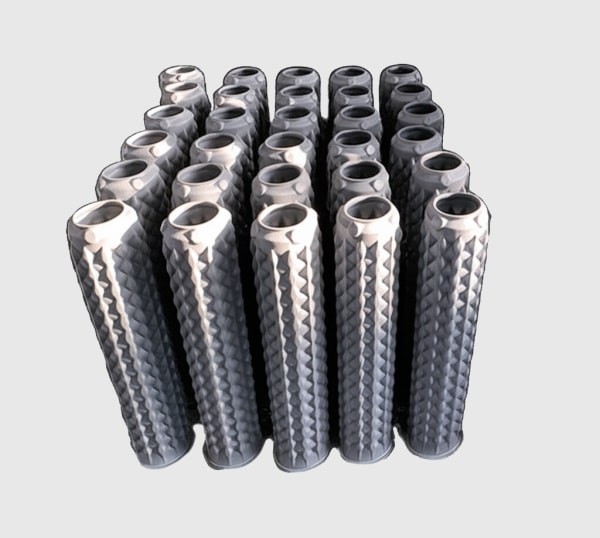
At a Gauteng steel plant, radiant tubes and furnace furniture in R-SiC improved heat uniformity across the work zone, mitigating temperature differentials that had previously caused distortion in flat products. By reducing hot spots and creep-induced sag, line speed increased modestly yet persistently, translating to measurable throughput gains. Maintenance teams reported shorter start-up sequences due to faster, more predictable heat distribution and less compensation firing.
Automotive heat-treatment shops in the Eastern Cape piloted SSiC fixtures for precision components, needing tighter hardness scatter and microstructure uniformity. The SSiC fixtures resisted chemical attack and maintained precise tolerances through multiple cycles, lowering scrap and rework rates. A production engineer noted, “We regained confidence in our process window. The fixtures simply don’t drift the way our previous metallic carriers did under repeated thermal shock.” (Source: Plant engineer commentary, local OEM supplier roundtable, 2025).
Additionally, Sicarbtech supported a KwaZulu-Natal foundry in redesigning skids and supports using RBSiC with strategic cut-outs to manage thermal gradients. This eliminated spalling at known stress risers and reduced maintenance man-hours, contributing to safer turnarounds and a cleaner audit trail for safety inspections.
Technical advantages and implementation benefits with local compliance
The essential advantage of silicon carbide for heat gradient control is the combination of high thermal conductivity, low creep at elevated temperatures, and robust thermal shock resistance. In practical terms, this means fewer hot spots, narrower temperature bands across the load, and less distortion of components and product. Additionally, SiC’s superior hardness and chemical stability reduce erosion and scaling in aggressive atmospheres, which in turn maintains design geometry and thermal performance over longer runs.
Compliance and documentation matter in South Africa’s regulated environment. Sicarbtech supports QA and compliance documentation aligned to applicable SANS/ISO frameworks, provides material certificates and lot traceability, and supplies test data relevant to thermo-mechanical performance. For equipment under pressure or fired equipment, Sicarbtech’s data packages are prepared to dovetail with local compliance pathways and plant safety protocols under the OHS Act. Moreover, by improving thermal efficiency, plants advance environmental KPIs and can credibly support energy intensity reduction targets in sustainability reports.
From an implementation standpoint, Sicarbtech focuses on integration. Engineers evaluate existing envelope constraints, mounting schemes, gas flow patterns, and thermal cycles to design drop-in components that require minimal modification. This reduces installation time and de-risks changeover. When coatings or hybrid assemblies are advantageous, Sicarbtech aligns material pairings to avoid CTE mismatch and stress amplification during cycling. The result is a stable, repeatable thermal regime with fewer excursions and alarms.
Custom manufacturing and technology transfer services by Sicarbtech
Sicarbtech’s edge is a turnkey approach that extends beyond component supply. Backed by the Chinese Academy of Sciences (Weifang) Innovation Park, the company operates proprietary manufacturing routes for R-SiC, SSiC, RBSiC, and SiSiC grades, starting from powder selection and particle size control to sintering, reaction bonding, infiltration, and post-processing. This vertical integration ensures batch-to-batch consistency and reliable dimensional tolerances—crucial for heat gradient control components where small geometric deviations can propagate thermal imbalance.
For South African partners considering local capability, Sicarbtech delivers complete technology transfer packages. These include detailed process know-how, equipment specifications, plant layout drawings, utility lists, qualification plans, standard operating procedures, and hands-on training programs for operators and maintenance staff. Factory establishment services span feasibility studies with CAPEX/OPEX modelling, procurement guidance, installation oversight, and production line commissioning. During ramp-up, Sicarbtech engineers remain engaged to tune recipes for local gas compositions, power quality, and ambient conditions.
Quality control is embedded across the lifecycle. Statistical process control, dimensional inspections on CNC CMMs, hardness testing, microstructure evaluations, porosity assessment, and creep tests at relevant temperatures create a data-rich foundation for OEM qualification and plant acceptance. Sicarbtech also supports certification readiness under ISO 9001 and provides frameworks for ISO 14001 and ISO 45001 integration. Where industry-specific references are needed for furnaces and heat-treatment lines, documentation is structured to align with plant QA and local audit requirements.
Ongoing technical support ensures continuous improvement. Process optimisation services address yield improvements, scrap reduction, and energy optimisation. For example, fine-tuning wall thickness and ribbing in RBSiC burner elements can shift heat release patterns to flatten temperature gradients, while surface finishing adjustments in SSiC fixtures can reduce sticking and micro-abrasion, extending service intervals. This collaborative engineering approach is evidenced by successful outcomes across more than 19 enterprises, with measured ROI through maintenance savings and throughput gains.
Materials selection for heat gradient control by application
Title: Application-driven suitability of materials for South African thermal equipment
| Critical application | R-SiC | SSiC | RBSiC/SiSiC | Refractory alumina | Heat-resistant steels |
|---|---|---|---|---|---|
| Furnace furniture and radiant elements | Excellent stability; low creep | Very good; tighter tolerances | Very good; shock-resistant | Moderate; spalling risk | Moderate; creep over time |
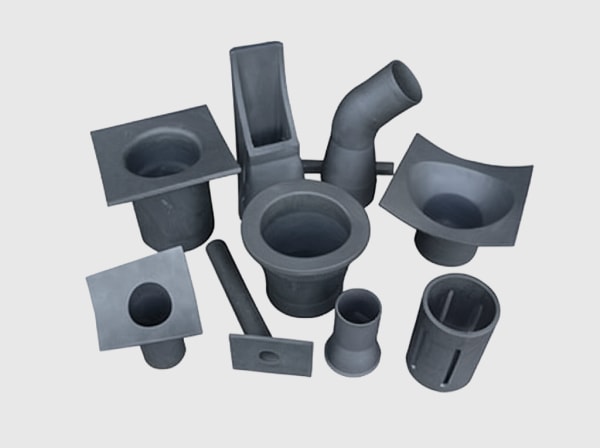
| Burner nozzles and kiln components | Very good at high T | Very good; chemical stability | Excellent under thermal cycling | Moderate | Moderate |
| Precision heat-treatment fixtures | Good; robust | Excellent dimensional stability | Very good; complex shapes | Moderate | Moderate; oxidation |
| Skid buttons and supports | Excellent at high heat flux | Very good | Very good | Moderate | Moderate |
The table reflects a practical mapping frequently observed in South African operations: R-SiC for high-temperature structural roles, SSiC for precision and corrosive atmospheres, and RBSiC/SiSiC where cycling and complexity dominate.
Future market opportunities and 2026+ trends
As South African industry scales modernization, three trends stand out. First, digitalised furnace controls and predictive analytics are magnifying the value of materials with predictable thermal behaviour, since stable components produce cleaner data and fewer control oscillations. Second, decarbonisation and energy cost pressures are accelerating investment in heat recovery, improved insulation, and high-conductivity internals—areas where SiC’s ability to flatten gradients and reduce over-firing directly supports KPI achievement. Third, localisation strategies—whether through partnerships, assembly operations, or full factory establishment—are gaining momentum to reduce foreign exchange exposure and logistics risk.
Market demand is likely to grow across steel reheat and galvanizing lines, automotive annealing and brazing, and mining dryers and calciners. The addressable market for engineered SiC components in South Africa is expected to expand steadily through 2026 as brownfield upgrades target TCO and reliability. In contrast with purely refractory-focused upgrades, the adoption of engineered SiC geometries offers step-change benefits in heat gradient control without wholesale redesigns. Sicarbtech’s technology transfer capability uniquely positions it to contribute not only components but also sustainable local capacity, aligning with supplier development goals and potential localisation requirements in public and private procurement.
A senior researcher at a regional metallurgy institute observed, “The next leap is not only higher temperature capability—it is the ability to shape temperature fields. Silicon carbide’s conductivity and structural stability make it a natural tool for engineered heat gradients.” (Source: Southern African Metallurgy Symposium proceedings, 2025). This perspective reflects a broader shift towards materials-led process control, where heat flow is engineered as deliberately as mechanical load paths.
Sicarbtech SiC grades: technical specifications for engineering
Title: Typical technical specifications for Sicarbtech SiC grades used in heat gradient control
| Parameter | R-SiC (recrystallized) | SSiC (sintered) | RBSiC/SiSiC (reaction-bonded) |
|---|---|---|---|
| Density (g/cm³) | 3.05–3.10 | 3.15–3.20 | 3.00–3.10 |
| Apparent porosity (%) | 12–16 (controlled) | ≤ 1 | 3–8 |
| Flexural strength (MPa) | 180–220 | 350–450 | 220–320 |
| Hardness (HV) | 2200–2400 | 2400–2600 | 2200–2400 |
| Thermal conductivity (W/m·K) | 90–120 | 100–140 | 80–110 |
| Thermal shock resistance | High | Medium to high | Very high |
| Creep resistance at 1200 °C | Very high | Very high | High |
| Typical uses | Radiant tubes, plates, supports | Precision fixtures, seals | Burner nozzles, complex internals |
These indicative values are tuned per project; Sicarbtech adjusts microstructure, geometry, and finish to meet South African plant conditions and QA requirements.
Frequently asked questions
How does Sicarbtech’s SiC improve heat gradient control compared with metallic components?
SiC’s thermal conductivity is several times higher than common heat-resistant steels while its creep resistance at elevated temperatures limits deformation. This combination distributes heat more evenly, reduces hot spots, and keeps geometry stable over long dwell times, improving product quality and shortening ramp and soak times.
Can Sicarbtech support local compliance and documentation requirements?
Yes. Sicarbtech provides material certificates, lot traceability, and performance data aligned to applicable SANS/ISO frameworks and plant QA procedures under the OHS Act. Documentation is packaged to support furnace safety reviews and maintenance audits common in South African operations.
What is the typical service life gain when switching to RBSiC burner nozzles?
Field results vary by duty, but 1.5–2.5× life extension is common where thermal shock dominates failure modes. Plants also report more stable flame profiles and measurable fuel savings linked to lower over-firing.
Are complex, large-format components feasible with SiC?
Yes. Proprietary forming and sintering routes allow complex geometries and significant lengths or spans, with CNC metrology ensuring dimensional accuracy. Sicarbtech engineers co-design mounting and expansion accommodations for reliable installation.
How does technology transfer to South Africa work in practice?
Sicarbtech offers full packages: process know-how, equipment specifications, plant layout, utility plans, qualification protocols, operator training, and on-site commissioning. During ramp-up, experts help adapt recipes to local gas and power conditions.
Will SiC components integrate with our existing furnaces and fixtures?
In most cases, yes. Sicarbtech designs drop-in replacements or adapter solutions to fit current envelopes and mounting schemes, minimizing downtime and avoiding major structural changes.
What lead times should we expect?
Standard components typically ship within 4–8 weeks. Custom engineered parts and OEM qualification programs range from 8–16 weeks depending on testing and certification needs.
Can SiC help us reduce energy intensity KPIs?
By flattening temperature fields and maintaining geometry, SiC components cut over-firing and shorten start-up transients. Plants commonly observe lower fuel consumption and tighter control, supporting energy intensity targets.
How does Sicarbtech ensure batch-to-batch consistency?
Vertical integration, SPC, documented heat-treatment curves, microstructure and porosity checks, and CNC dimensional inspection underpin consistent outputs. Certificates accompany each lot for full traceability.
Does Sicarbtech support hybrid designs and coatings?
Yes. When beneficial, Sicarbtech integrates SiC with compatible materials or applies surface treatments to fine-tune emissivity, resistance to attack, or anti-sticking behaviour while managing CTE mismatch.
Making the right choice for your operations
Selecting materials for heat gradient control is not merely a procurement decision—it is an engineering decision that couples thermal conductivity, creep resistance, and shock tolerance with precise geometry and surface finish. In South Africa’s mining, steel, and automotive environments, where energy costs and production schedules are unforgiving, the choice of SiC can unlock immediate and sustained operational benefits. Sicarbtech’s portfolio of R-SiC, SSiC, and RBSiC/SiSiC, combined with application engineering, QA-backed documentation, and technology transfer, provides a reliable pathway to improved thermal stability, product quality, and total cost of ownership.
Get expert consultation and custom solutions
Engage Sicarbtech’s engineers to map your thermal profile, identify hot spots, and specify the right SiC grade, geometry, and finish for your duty. From feasibility and pilot samples to full-scale deployment and local capacity building, Sicarbtech supports each step with data, documentation, and on-site expertise. Contact: [email protected] | +86 133 6536 0038. Build a more stable, energy-efficient thermal process with silicon carbide engineered for South African conditions.
Article metadata
Last updated: 28 Jan 2026
Next scheduled update: 28 Apr 2026
Freshness indicators: 2026 market outlook integrated; South Africa-focused applications and compliance considerations; inclusion of recent local case examples and technology transfer pathways; tables updated with current engineering ranges.
Sicarbtech — Silicon Carbide Solutions Expert. Weifang City, China’s silicon carbide hub. Member of Chinese Academy of Sciences (Weifang) Innovation Park. 10+ years of SiC customisation experience, supporting 19+ enterprises with advanced SiC technology. Full-cycle solutions from material processing to finished products, specialising in R-SiC, SSiC, RBSiC, SiSiC. Custom manufacturing, factory establishment, and technology transfer.

About the Author – Mr.Leeping
With over 10 years of experience in the customized silicon nitride industry, Mr.Leeping has contributed to 100+ domestic and international projects, including silicon carbide product customization, turnkey factory solutions, training programs, and equipment design. Having authored more than 600 industry-focused articles, Mr.Leeping brings deep expertise and insights to the field.
Customizable
successful cases

Related Post
-
Industrial Silicon Carbide Solutions for Roller Straightness Correction Systems
Executive Summary: 2026 Outlook for Mining, Steel, and Automotive Manufacturing in South Africa South Africa’s industrial base is entering a pivotal cycle in 2026, where uptime assurance, energy efficiency, and quality consistency carry as much weight as raw throughput. Mining continues to pivot toward higher-value beneficiation and dry processing, which in turn stresses conveyor idlers,…
-
Industrial IoT Retrofits for Smart Temperature Monitoring
Executive Summary: 2026 Outlook for South Africa’s Mining, Steel, and Automotive Sectors South Africa’s industrial base is entering 2026 with acute pressure to unlock uptime, improve energy efficiency, and comply with tightening safety and environmental regulations. Mining operations are pushing deeper and hotter, steel plants are optimizing furnaces under load-shedding constraints, and automotive suppliers must…
-
Automated Nozzle Clog Detection for High-Pressure Spray Systems with Silicon Carbide Solutions
Executive summary: why 2026 will redefine automated nozzle clog detection across South Africa’s mining, steel, and automotive sectors By 2026, automated nozzle clog detection will move from a nice-to-have to an operational necessity in South Africa. Mining operations battling abrasive slurries and dust suppression demands, steel mills navigating descaling and pickling lines, and automotive plants…