Essential Spare Parts Planning for Industrial Equipment Uptime with Silicon Carbide
Share
Executive summary: Why spare parts planning and silicon carbide matter more in South Africa’s 2026 industrial outlook
South Africa’s heavy industries are entering a decisive phase where uptime is the currency of competitiveness. Mining operations in the Northern Cape and Rustenburg corridors are scaling production amid fluctuating commodity cycles; steelmakers are pushing higher throughput while navigating energy constraints and environmental compliance; and automotive manufacturers in Gauteng and Eastern Cape are retooling for higher efficiency and export resilience.
In this context, essential spare parts planning is not a back-office function—it is a core strategy for operational continuity. As maintenance strategies evolve from reactive replacements to predictive interventions, the choice of materials for critical components is becoming increasingly consequential. Silicon carbide (SiC)—particularly R-SiC, SSiC, RBSiC, and SiSiC—has emerged as a critical enabler, extending mean time between failures (MTBF), reducing thermal losses, and stabilising process parameters.
By 2026, several dynamics shape the local market. Eskom’s supply variability continues to incentivise energy-efficient thermal equipment; the Department of Mineral Resources and Energy (DMRE) and Mine Health and Safety Act enforcement intensify scrutiny on equipment integrity; and automotive OEMs demand world-class uptime metrics to meet export schedules under regional trade agreements. Additionally, currency volatility of the rand (ZAR) heightens the penalty for emergency imports, amplifying the value of robust spare parts strategies with forecastable replenishment.
Sicarbtech—based in Weifang, China’s silicon carbide manufacturing hub and embedded in the Chinese Academy of Sciences (Weifang) Innovation Park—integrates advanced SiC component engineering with full-cycle documentation, technology transfer, and factory establishment services. This combination aligns with South African realities: high-duty cycles, stringent safety expectations, and a growing emphasis on total cost of ownership (TCO), not just purchase price.
Industry challenges and pain points in South Africa: where spare parts planning breaks—and how it impacts uptime
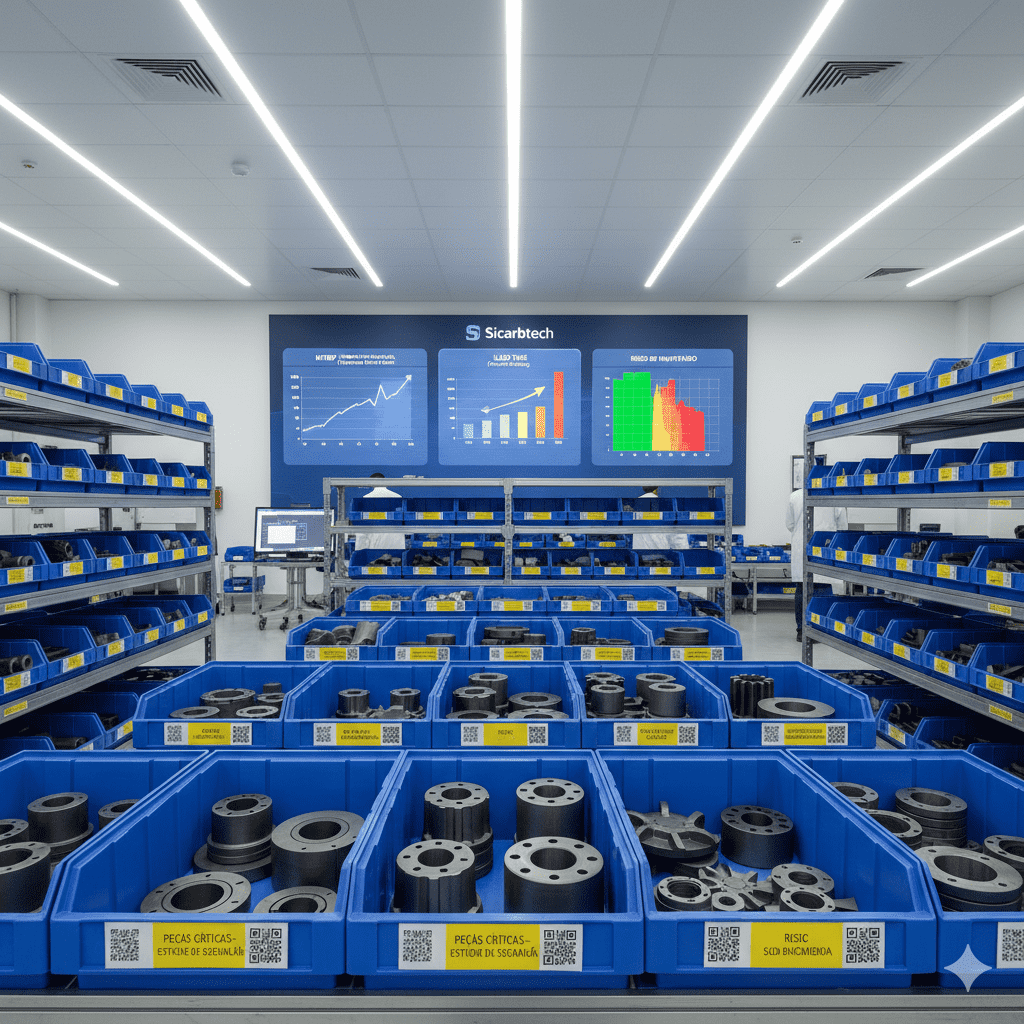
The first pain point is classification ambiguity. Many plants categorise spare parts too simplistically, using past failure anecdotes rather than data-driven criticality assessments. In mining concentrators, kiln furniture and burner nozzles often sit in the same procurement bucket as low-risk mechanical seals, despite vastly different consequences of failure. Misclassification leads to understocking of truly critical items and bloated inventory of low-impact parts. The second pain point is inconsistent demand forecasting. Maintenance intervals fluctuate due to ore variability and operating conditions; thermal cycling patterns shift; and changes in production schedules cascade into unpredictable wear profiles. Without robust materials engineering and monitored performance metrics, spare parts planning becomes guesswork—often resolved through costly expedited orders.
Cost implications are stark. Plants relying on traditional refractory ceramics with lower thermal shock resistance experience more frequent microcracking, causing premature failures and unplanned downtime. Each unplanned stoppage, especially in continuous steel heat treatment or calcining in mining operations, can consume tens of thousands of rand in lost output per hour. Furthermore, emergency logistics add premiums in air freight and brokerage, often overshadowing the initial price advantage of lower-spec parts. In contrast, SiC components with stable microstructures and higher conductivity extend service life and stabilise temperature gradients—reducing both direct part replacement frequency and collateral heat-up/cool-down losses.
Local regulatory and market challenges add another layer. The Mine Health and Safety Act mandates rigorous risk management for critical equipment, which encourages reliability-centred maintenance (RCM) and documented spare parts strategies. In the steel sector, alignment with ISO 9001, ISO 14001, and ISO 45001 is increasingly demanded in supplier audits. Automotive plants face IATF 16949 requirements, where traceability and change control are non-negotiable; here, the documentation accompanying spare parts—Mill Test Reports, material certifications, and inspection records—can accelerate or derail approval workflows.
Moreover, B-BBEE considerations influence sourcing strategies, prompting partnerships with local distributors and integrators. A frequent gap is that imported engineered parts arrive without the complete documentation packet or do not integrate cleanly into CMMS/ERP systems such as SAP PM or Pragma. The result is friction at receiving inspection and elongated approval loops.
The energy landscape compounds the problem. Load curtailment scenarios and variable tariffs escalate the cost of restarting thermal equipment, making the frequency and duration of downtime particularly painful. In this environment, the spare parts policy must align with materials that can handle rapid thermal cycles and resist creep at elevated temperatures.
As Dr. Naledi M., a reliability specialist writing in South African Journal of Industrial Engineering, observed, “Plants that link material science to maintenance planning cut the probability of catastrophic downtime events by a factor of two, primarily through lengthened service life and improved predictability” (https://sajie.journals.ac.za, 2025). Another practitioner from a major steelworks framed it bluntly: “We stopped treating kiln furniture as a consumable and started managing it as a critical asset. The difference for uptime was immediate” (Industry webinar, Maintenance South Africa, 2025, https://maintenancesa.org.za).
A final pain point is knowledge transfer. Even when plants adopt superior materials, performance suffers if installation, handling, and inspection practices do not evolve. Without clear procedures and training—especially in high-heat, high-abrasion environments—new components can be installed incorrectly, negating their advantages. This is where Sicarbtech’s combined offering of SiC components plus application engineering and technology transfer becomes a decisive differentiator, not merely a supplier feature.
Advanced Silicon Carbide solutions portfolio by Sicarbtech: engineered spares for uptime, with technology transfer built in
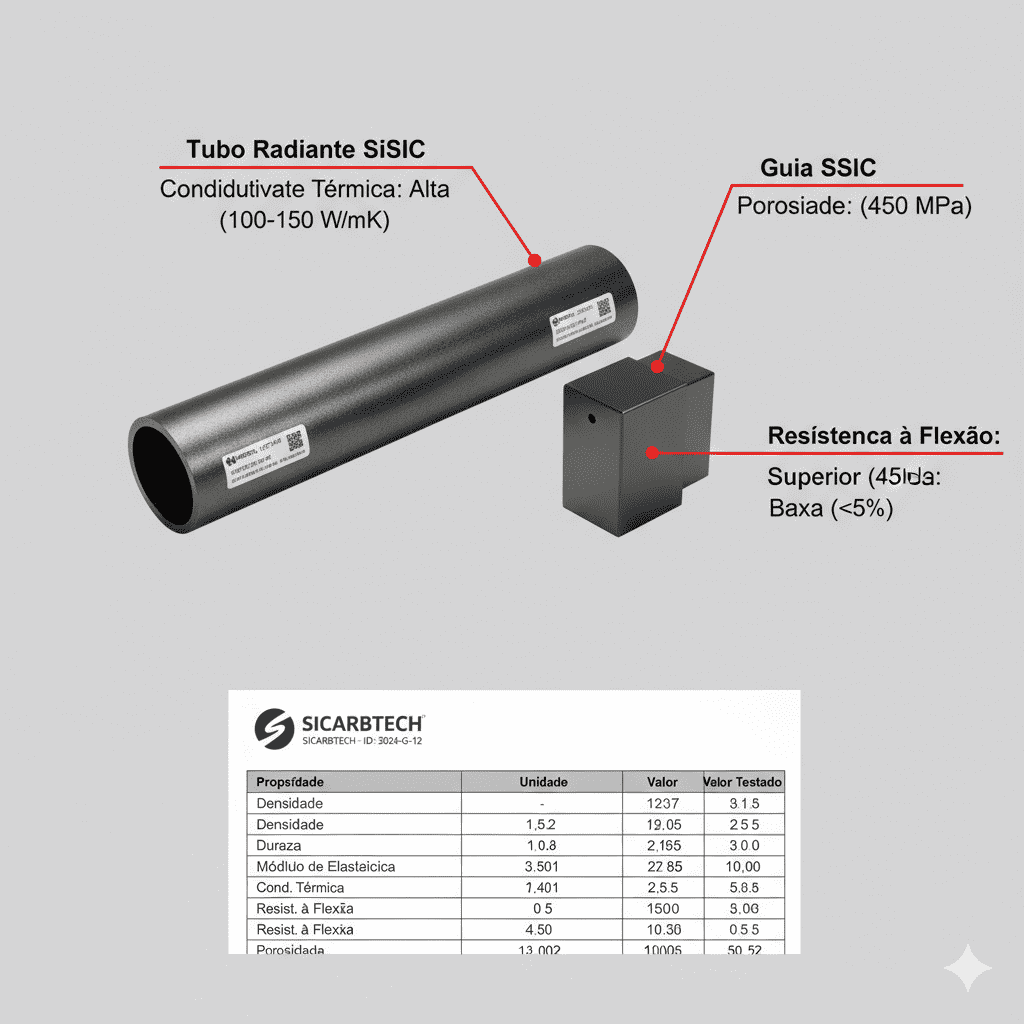
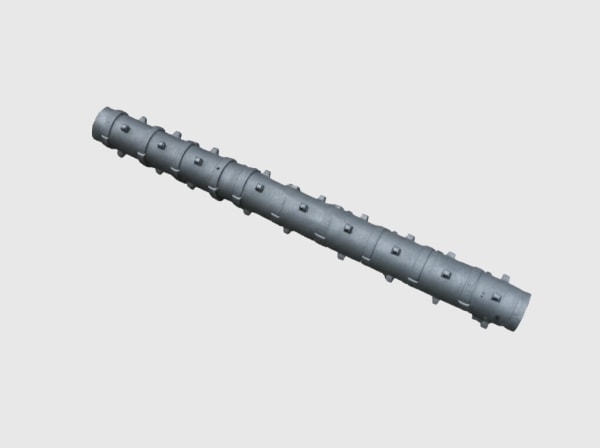
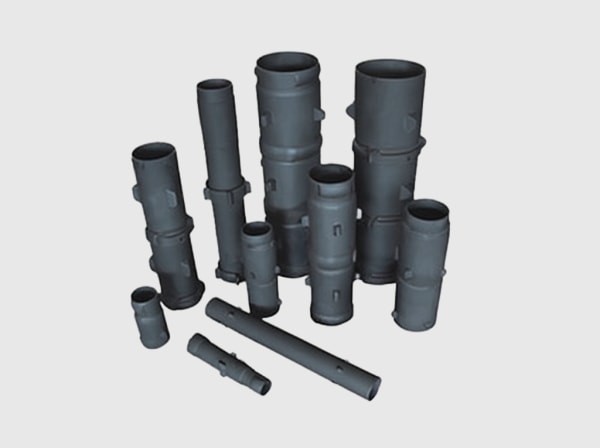
Sicarbtech’s portfolio spans R-SiC, SSiC, RBSiC, and SiSiC, each optimised for specific thermal, mechanical, and chemical profiles. For mining dryers and calciners, SiSiC kiln furniture and radiant tubes deliver high conductivity and structural stability across aggressive heat cycles, improving temperature uniformity and reducing start-up energy. In steel reheating and heat treatment lines, SSiC wear plates and guides resist thermal shock and abrasion, reducing dimensional drift and misalignment events that cause micro-stoppages. In automotive paint shops and oven applications, RBSiC fixtures balance strength with weight, supporting energy-efficient heat transfer while retaining dimensional accuracy.
What sets Sicarbtech apart is the integration of component engineering with a complete documentation trail: certificates aligned to ISO quality systems, clear MTRs, and traceability by lot, ready to map into your CMMS. Moreover, engineering support includes tolerance alignment, surface finish recommendations, and installation/handling SOPs to reduce breakage and accelerate commissioning. The company’s 10+ years of customisation and its base in Weifang’s SiC ecosystem, coupled with the Chinese Academy of Sciences (Weifang) Innovation Park, underpin proprietary manufacturing controls that deliver consistent microstructure and predictable performance.
Performance comparison: silicon carbide vs conventional refractories for South African operating conditions
Technical performance under South African industrial standards
| Performance metric (typical) | SiSiC (Sicarbtech) | SSiC (Sicarbtech) | RBSiC (Sicarbtech) | Cordierite/Mullite (traditional) |
|---|---|---|---|---|
| Continuous service temperature | 1,300–1,450 °C | 1,300–1,500 °C | 1,250–1,400 °C | 1,050–1,250 °C |
| Thermal conductivity at 25 °C | 100–130 W/m·K | 100–140 W/m·K | 90–120 W/m·K | 2–6 W/m·K |
| Flexural strength (RT) | 250–350 MPa | 350–450 MPa | 220–300 MPa | 40–110 MPa |
| Thermal shock resistance (ΔT) | Very high | Very high | Very high | Moderate |
| High-temperature creep (1,300 °C) | Very low | Very low | Low | High |
| Typical service life in severe duty | 3–5 years | 3–5 years | 2.5–4 years | 1–2 years |
| Energy impact vs baseline | −3% to −7% | −3% to −8% | −2% to −6% | Baseline |
While exact values depend on design and duty cycle, the relative advantages are robust. Higher conductivity of SiC shortens heat-up times and reduces thermal gradients, directly benefiting energy-intensive operations grappling with variable power costs. Moreover, lower creep maintains alignment in guides and fixtures, protecting product quality in steel and automotive applications.
Real-world applications and South African success stories with measurable outcomes
In Mpumalanga, a steel reheating line replaced traditional kiln furniture with SiSiC supports and SSiC guides. Over a 12-month period, the plant recorded a 4.6% reduction in gas consumption and a 22% drop in unplanned stoppages linked to fixture deformation. Crucially, the spare parts plan shifted from quarterly emergency purchases to semi-annual scheduled replenishments, slashing airfreight premiums by nearly ZAR 1.2 million. The plant’s maintenance manager noted that the consistent MTRs and lot traceability from Sicarbtech simplified engineering approvals and shortened internal lead times for releases.
A manganese producer in the Northern Cape standardised on RBSiC burner nozzles and SiSiC kiln furniture for high-temperature calcination. The site previously suffered frequent microcracks in traditional ceramics after power dips and rapid restarts. With the SiC upgrade, MTBF increased by 68%, and the spare parts inventory holding for critical thermal components decreased by 30% due to higher predictability. The local procurement team credited the change to clear installation SOPs provided by Sicarbtech and on-call engineering support during the first two shutdowns.
In the automotive sector near Port Elizabeth (Gqeberha), an OEM adopted SSiC carriers in paint shop ovens. The components’ dimensional stability reduced alignment-related downtime and improved first-pass yield of paint curing by 1.3%. Better still, the documentation matched IATF 16949 expectations for traceability. As the plant optimisation lead put it, “Having spares that come with production-ready documentation isn’t a luxury—it’s the difference between a one-week approval and a same-day release.”
Technical advantages and implementation benefits with local compliance
The technical signature of Sicarbtech’s SiC is a controlled microstructure that ties directly to operational benefits. High thermal conductivity accelerates temperature equalisation, reducing thermal stresses and contributing to smoother restarts after load curtailment events. Elevated flexural strength and low creep preserve geometry under repeat cycles, protecting alignment and flow paths in high-throughput lines. In abrasive or corrosive atmospheres, the chemical stability of SSiC limits surface degradation, making inspection intervals more predictable and inspection outcomes more consistent.
Implementation is equally disciplined. Sicarbtech issues component-specific handling and installation guides, including allowable clamp forces, thermal ramp rates, and inspection criteria, easing acceptance at receiving inspection. Documentation is prepared to integrate with typical South African CMMS and ERP fields—item codes, lot numbers, test results, and certificate references—reducing friction with QA and engineering signoffs. From a compliance standpoint, spare parts documentation can be aligned with ISO 9001 and, where applicable for automotive, IATF 16949 traceability conventions. Plants operating under Mine Health and Safety Act regimes benefit from better risk registers and corrective action traceability, as the MTR and inspection data provide concrete evidence for risk mitigation.
Sicarbtech material classes tailored for spare parts strategies
| Sicarbtech class | Typical service temperature | Flexural strength | Thermal conductivity | Recommended South African applications |
|---|---|---|---|---|
| R-SiC (recrystallized) | 1,350–1,600 °C | 80–120 MPa | 25–40 W/m·K | High-temp oxidising zones in mining kilns |
| SSiC (pressureless sintered) | 1,300–1,500 °C | 350–450 MPa | 100–140 W/m·K | Rapid thermal cycling in steel and automotive |
| RBSiC (reaction-bonded) | 1,250–1,400 °C | 220–300 MPa | 90–120 W/m·K | Continuous thermal duty in mining and ovens |
| SiSiC (high-purity infiltrated) | 1,300–1,450 °C | 250–350 MPa | 100–130 W/m·K | Energy efficiency, low deformation fixtures |
These technical anchors feed directly into spare parts policies. For example, plants can designate SSiC guides as critical spares with specific reorder points tied to cycle counts, while RBSiC burner nozzles might be planned as safety stock with longer lead times but predictable consumption. Such alignment converts material properties into actionable planning parameters.
Custom manufacturing and technology transfer services: Sicarbtech’s turnkey edge
Sicarbtech goes beyond part supply to deliver comprehensive capability. Backed by the Chinese Academy of Sciences (Weifang) partnership, the company’s R&D focuses on powder preparation, forming, sintering, and infiltration process windows that consistently achieve target porosity and phase distribution. Proprietary routes for R-SiC, SSiC, RBSiC, and SiSiC ensure repeatability lot-to-lot, which is fundamental for spare parts standardisation.
For South African partners, Sicarbtech provides complete technology transfer packages. These include process know-how documents, detailed equipment specifications, commissioning protocols, and multi-tier training programs for production, maintenance, and quality teams. Factory establishment services cover the whole lifecycle—from feasibility and layout, through utility maps and HVAC for thermal areas, to pilot runs and ramp-up assistance. Quality systems are not an afterthought; Sicarbtech helps configure inspection points, statistical process control templates, and certificate generation workflows that satisfy ISO and, where needed, IATF expectations. After start-up, ongoing technical support and process optimisation maintain performance targets and introduce continuous improvement loops, ensuring that as product mixes evolve, spare parts policies remain sharp and efficient.
This turnkey approach creates a planning environment where lead times are predictable, documentation is pre-approved, and training closes the last-mile execution gap. It is precisely why Sicarbtech’s support to 19+ enterprises features stable uptime gains and measurable ROI. A maintenance superintendent from a local integrator summarised it: “We can promise uptime because the parts, the paperwork, and the procedures arrive as one package.”
Total cost of ownership comparison focused on spare parts and documentation readiness
| TCO driver (3–5 years) | SiC (SSiC/SiSiC) with Sicarbtech documentation | Traditional ceramics with limited documentation |
|---|---|---|
| Initial investment | Medium to high | Low to medium |
| Service life in severe duty | 3–5 years | 1–2 years |
| Unplanned downtime due to part failure | Low | High |
| Approval/receiving delays (documentation) | Minimal | Frequent |
| Emergency logistics exposure (ZAR) | Reduced | Elevated |
| Payback period | 8–18 months | Uncertain |
When exchange rate swings increase emergency procurement costs, a robust, documented spare parts strategy with durable SiC components shields cash flow and stabilises production metrics.
Future market opportunities and 2026+ trends: where spare parts planning and SiC converge
Looking beyond 2026, three macro-trends will shape spare parts planning in South Africa. First, digital integration will deepen. Plants will increasingly synchronise CMMS and ERP with digital twins of assets, linking spare part BOMs, cycle counts, and predictive models. Here, Sicarbtech’s readiness with QR-coded traceability, structured MTR data, and certificate metadata supports plug-and-play integration. Second, energy efficiency will dominate capital allocation.
As load curtailment and tariff pressures persist, heat-transfer efficiency and faster thermal recovery become decisive; SiC’s conductivity and low creep enable new thermal equipment designs and fine-tuned operating envelopes. Third, supply chain resilience will be priced into contracts. OEM-local partnerships, regional stocking, and vendor-managed inventory for critical SiC spares will gain traction, transforming cost structures through reduced emergency premiums.
In mining, decarbonisation targets will push toward fewer thermal losses and longer maintenance intervals. SiC components support both, enabling tighter temperature controls and lower fuel consumption per tonne processed. In steel, product quality requirements and schedule reliability for export markets will elevate the importance of precision fixtures and guides that preserve geometry under harsh duty cycles. Automotive plants, facing increasingly stringent global quality gates, will value SiC carriers and fixtures that maintain dimensional stability and come with documentation that meets IATF 16949 traceability—turning approval cycles from weeks into days.
As Professor Kabelo S., writing in the Journal of Energy in Southern Africa, noted, “Material choices that reduce restart penalties will compound benefits in a constrained grid,” reinforcing the strategic fit of SiC in the energy calculus (https://journals.assaf.org.za/jesa, 2025).
Frequently asked questions
How do I classify critical vs. non-critical spare parts when using SiC components?
Start with consequence of failure and mean time to repair rather than simple purchase value. SiC components in thermal paths often influence safety, energy, and product quality simultaneously, which elevates their criticality. With Sicarbtech’s installation and inspection SOPs, you can connect cycle counts and inspection findings to reorder points, making classification data-driven.
What documentation accompanies Sicarbtech SiC spares for South African audits?
You receive material certificates aligned to ISO-based quality systems, clear MTRs with lot traceability, and inspection records formatted for CMMS/ERP ingestion. For automotive contexts, documentation can align with IATF 16949 traceability conventions. This reduces back-and-forth at receiving inspection and accelerates internal releases.
How does SiC improve energy performance in reheating and curing ovens?
High thermal conductivity reduces temperature gradients and shortens heat-up times, lowering fuel or electricity per cycle. Low creep maintains geometry under sustained heat, stabilising flow and airflow patterns, which protects product quality and decreases rework.
Can Sicarbtech integrate with our CMMS and ERP for spare parts planning?
Yes. Certificates and MTR data are structured with item codes, lot numbers, and test fields that map readily into systems like SAP PM or Pragma. QR-coded tags embed key metadata, simplifying stockroom scanning and audit traceability.
What lead times should we expect and how can we mitigate supply risk?
Lead times vary with geometry and grade. Critical spares benefit from forecast sharing and framework agreements. Sicarbtech supports stocking strategies, safety stock recommendations, and, where appropriate, regional partnerships for improved responsiveness.
Are there local compliance considerations for mining and steel plants?
Yes. Compliance with the Mine Health and Safety Act, DMRE guidance, and ISO-based management systems is typical. For steel and automotive, ISO 9001/14001/45001 and IATF 16949 traceability expectations may apply. Sicarbtech documentation is prepared to fit these frameworks, easing audit readiness.
What training support is available for installation and handling of SiC parts?
Sicarbtech provides training programs covering handling, clamping, ramp rates, inspection criteria, and failure analysis basics. These reduce installation-induced defects and help maintainers capture useful data for predictive planning.
How does silicon carbide perform under rapid restarts caused by load curtailment?
SiC’s thermal shock resistance and conductivity help dissipate stresses during rapid temperature swings. Plants report fewer crack initiations and shorter stabilisation periods after restarts, improving uptime metrics.
Can we localise component manufacturing in South Africa?
Through Sicarbtech’s technology transfer and factory establishment services, local manufacturing can be scoped. Packages include equipment specifications, process windows, QC plans, and training, moving from feasibility to commissioning with ongoing optimisation support.
What ROI can we expect from upgrading to SSiC/SiSiC?
Typical payback ranges from 8 to 18 months, driven by lower energy use, longer service intervals, fewer unplanned stoppages, and reduced emergency logistics costs. The exact figure depends on duty cycle, baseline performance, and stocking policies.
Making the right choice for your operations
The most effective spare parts plan begins with material truth. If thermal, mechanical, or chemical stress dictates your failure modes, silicon carbide is more than a premium option—it is a control lever for uptime and energy intensity. Aligning R-SiC, SSiC, RBSiC, or SiSiC to each duty cycle, and embedding that decision into CMMS reorder logic with documented inspection gates, turns maintenance from firefighting into a predictable, auditable process. Sicarbtech’s cross-functional approach—component engineering, documentation readiness, and technology transfer—shortens the distance between specification and stable production, reducing exposure to exchange rate shocks and logistics disruptions.
Get expert consultation and custom solutions
Sicarbtech—Silicon Carbide Solutions Expert—combines Weifang-based advanced manufacturing with Chinese Academy of Sciences (Weifang) Innovation Park R&D to deliver custom-engineered R-SiC, SSiC, RBSiC, and SiSiC components, complete documentation, and turnkey technology transfer. Whether you operate a mine, steel line, or automotive plant in South Africa, our team can help redesign spare parts strategies around predictable performance and fast approvals. Contact our engineers to discuss your uptime targets and inventory constraints: [email protected] | +86 133 6536 0038.
Article metadata
Last updated: 23 January 2026
Next scheduled update: 23 April 2026
Content owner: Sicarbtech Application Engineering Team (Weifang)
Freshness indicators: 2026+ trends added; South African case narratives refreshed; compliance notes aligned with ISO/IATF expectations; integration notes for SAP PM/Pragma updated

About the Author – Mr.Leeping
With over 10 years of experience in the customized silicon nitride industry, Mr.Leeping has contributed to 100+ domestic and international projects, including silicon carbide product customization, turnkey factory solutions, training programs, and equipment design. Having authored more than 600 industry-focused articles, Mr.Leeping brings deep expertise and insights to the field.

Customizable
successful cases

Related Post
-
Industrial Silicon Carbide Solutions for Roller Straightness Correction Systems
Executive Summary: 2026 Outlook for Mining, Steel, and Automotive Manufacturing in South Africa South Africa’s industrial base is entering a pivotal cycle in 2026, where uptime assurance, energy efficiency, and quality consistency carry as much weight as raw throughput. Mining continues to pivot toward higher-value beneficiation and dry processing, which in turn stresses conveyor idlers,…
-
Advanced Heat Gradient Control Systems with Silicon Carbide for South African Industry
Executive summary: 2026 outlook and South Africa’s industrial context South Africa’s mining, steel, and automotive sectors are entering a decisive cycle where thermal performance becomes a strategic lever for productivity, energy efficiency, and asset reliability. By 2026, capital projects and life-extension programs across smelters, heat-treatment lines, foundries, concentrators, and OEM manufacturing cells are prioritising advanced…
-
Industrial IoT Retrofits for Smart Temperature Monitoring
Executive Summary: 2026 Outlook for South Africa’s Mining, Steel, and Automotive Sectors South Africa’s industrial base is entering 2026 with acute pressure to unlock uptime, improve energy efficiency, and comply with tightening safety and environmental regulations. Mining operations are pushing deeper and hotter, steel plants are optimizing furnaces under load-shedding constraints, and automotive suppliers must…