Flow Rate Calibration Certificate Services for South African Industries
Share
Executive summary: 2025 outlook for SANAS-aligned flow calibration in mining, steel, and automotive
South Africa’s industrial economy is entering 2025 with intensified pressure to run assets longer, document measurement traceability flawlessly, and lower unit energy costs per tonne, per batch, and per vehicle. Accurate and traceable flow rate calibration sits at the heart of this mandate. In mining concentrators and smelters, water balance, reagents, and slurry streams must be measured with verifiable uncertainty to satisfy environmental permits and to stabilize plant throughput. In steelmaking, gas, air, oxygen, and cooling water flows underpin furnace stability and yield, and calibration records are often the thin line between a controlled heat and a costly rework.
Meanwhile, the automotive sector’s coating, paint, and coolant circulation systems require repeatable flow measurement to meet IATF 16949 quality targets and to minimize scrap and VOC emissions.
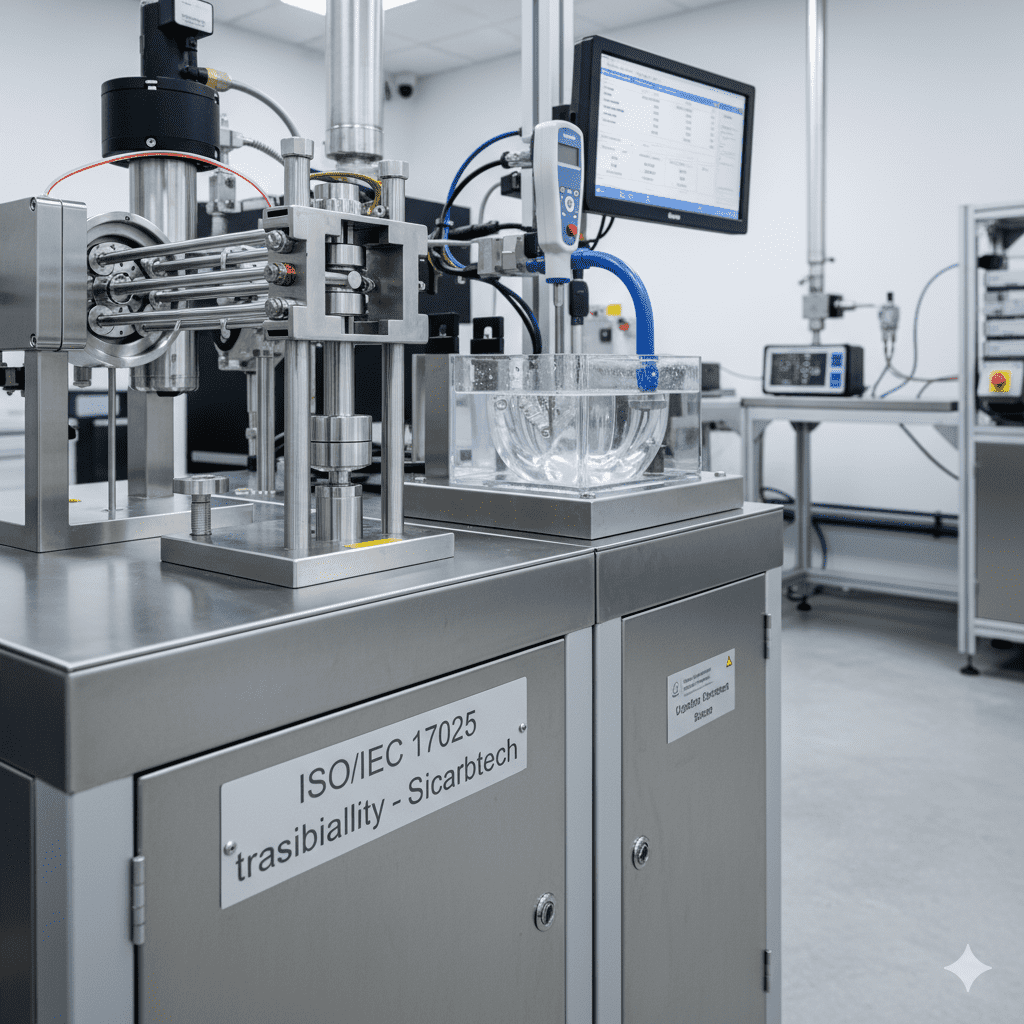
Sicarbtech, known globally as a Silicon Carbide Solutions Expert from Weifang City’s manufacturing hub, has extended its precision ethos to measurement services. Backed by the Chinese Academy of Sciences (Weifang) Innovation Park and more than a decade of building high-precision components, we deliver full-cycle, ISO/IEC 17025–traceable flow rate calibration certificate services tailored to South African conditions. Our approach aligns with SANAS accreditation principles and integrates seamlessly with ISO 14001 environmental management and ISO 9001 quality frameworks widely adopted by mining, steel, and automotive operations across Gauteng, Mpumalanga, Northern Cape, and KwaZulu-Natal.
Industry challenges and pain points: what South African plants are solving for now
The most common stressor we see is uncertainty that’s higher than the process can tolerate. In mining, thickener underflow and cyclone feed must be controlled within tight bands; yet, electromagnetic and ultrasonic flow meters often drift due to coating, slurry composition changes, and temperature swings. The pain is subtle but pervasive: a 1–2% bias on process water flow can cascade into reagent overdosing, energy waste in pumping, and, ultimately, suboptimal recovery. Moreover, the National Water Act compliance requires defensible metering of abstraction and discharge. “If you can’t defend your numbers in an audit, you don’t own the process,” notes a process control specialist in Rustenburg, reflecting the standard seen in larger operations.
In steel plants, compressed air and oxygen distribution networks are notorious for hidden losses. Orifice plate and vortex meters can be sensitive to upstream disturbances or fouling, inflating uncertainty beyond the budget allowed by ISO 50001 energy management plans. When the carbon tax framework and energy tariffs move upward, even a small measurement error translates directly into cost. Additionally, SANS and ISO standards for instrumentation installation and verification require documented, traceable calibrations that some legacy meters simply lack. Production stoppages waiting for off-site calibration logistics also translate into lost heats and missed delivery windows.
Automotive manufacturing in the Eastern Cape and Gauteng faces its own version of the challenge. Flow control of paints, sealants, and coolants must be consistent across shifts and suppliers. Yet, paint viscosity changes with temperature, and positive displacement meters can drift with wear. In contrast to heavy industry, the pain here is often quality and warranty exposure. “Measurement traceability is the backbone of IATF 16949,” explains a quality manager at a Tier-1 supplier, “and flow is a latent variable in many defects” (general reference: South African quality forums and IATF guidance).
There is also a regulatory and accreditation dimension. SANAS-accredited calibration is increasingly expected by auditors, insurers, and OEM contracts. While not every application legally mandates SANAS accreditation, the market pull is clear: when disputes arise, traceability to ISO/IEC 17025 standards wins. Documentation gaps — lack of uncertainty budgets, missing drift history, or no as-found/as-left data — raise red flags in audits. Furthermore, industry consolidation means multi-site enterprises need consistent calibration methodologies across provinces, and couriering instruments to overseas labs is no longer acceptable given lead times and customs complexities.
Finally, the macroeconomics matter. With rand volatility and rising logistics costs, plants want calibration programs that reduce downtime, avoid costly spare pools, and prevent energy and raw material overconsumption. In this climate, on-site or near-site, SANAS-aligned flow calibration with fast turnaround and clear uncertainty declarations becomes a competitive advantage, not a compliance burden.
Sicarbtech advanced flow calibration solutions portfolio: from field verification to ISO 17025 traceability
Sicarbtech leverages its precision manufacturing DNA to deliver a high-integrity flow calibration service that fits South African industrial realities. We cover the spectrum from on-site verification and adjustment to full laboratory calibration with ISO/IEC 17025 traceability. Moreover, we integrate calibration plans into your maintenance strategy, ensuring the right interval based on drift data rather than static schedules.
In mining, we focus on electromagnetic and ultrasonic flow meters in raw water, return water, slurry by-pass, and reagent lines. Building on this, we provide cleaning and conditioning protocols that reduce coating-induced bias before calibration, followed by as-found and as-left checks to document improvement. For steel, our expertise spans thermal mass and vortex meters on compressed air and gas lines, where upstream piping and pulsation effects can harm accuracy; we apply straight-run verification, flow conditioner recommendations, and compensation settings as part of the service. In automotive paint shops, we calibrate positive displacement, Coriolis, and gear meters, paying particular attention to fluid temperature, viscosity, and density inputs that affect mass-to-volume conversions.
What differentiates us is the way we structure the uncertainty budget and document traceability. Every certificate details the reference standards used, their traceability chains, environmental conditions, uncertainty components, and the final expanded uncertainty with coverage factor. Additionally, we maintain drift histories at the instrument serial level, which allows us to propose extended calibration intervals where the data supports it, saving cost without sacrificing compliance.
“Calibration should be a process capability enhancer, not an interruption,” says Dr. Helen M., metrology advisor, echoing best practice from ISO/IEC 17025 guidance and SANAS R documents (general reference: SANAS R-48 and ISO/IEC 17025 principles). With Sicarbtech, the certificate is not just a piece of paper; it is a decision tool that feeds your energy models, water balances, and quality dashboards.
Technical performance comparison: flow calibration service scopes and outcomes
Title: Service scope and expected outcomes across meter technologies
| Meter technology | Common SA applications | Typical issues before calibration | Sicarbtech calibration approach | Expected accuracy after service | Documentation delivered |
|---|---|---|---|---|---|
| Electromagnetic (Mag) | Mining water/slurry lines, plant utilities | Coating, zero drift, ground loop noise | Pre-cleaning protocol, zero-point check, multi-point wet calibration | ±0.2–0.5% of reading | ISO/IEC 17025–traceable certificate, as-found/as-left data |
| Ultrasonic (Clamp-on/In-line) | Water balance, large pipes in steel/mine | Poor coupling, temp compensation errors | Couplant optimization, path verification, temp/density inputs set | ±0.5–1.0% of reading | Uncertainty budget, reference traceability chain |
| Coriolis | Paints, chemicals, fuel lines | Density mismatch, vibration | Mass/density verification, vibration isolation advice | ±0.1–0.3% of rate | Calibration curve update, environmental conditions |
| Vortex | Steam, gas in steel plants | Pulsation, Reynolds effects | Flow conditioner guidance, multi-point verification | ±0.7–1.0% of reading | Process conditions and compensation factors |
| Positive displacement/Gear | Automotive paint, sealants | Viscosity/temperature sensitivity | Viscosity correction tables, thermal control during test | ±0.2–0.4% of reading | Viscosity-temperature matrix, as-left settings |
The table reflects local installation realities and demonstrates how a rigorous, documented process yields not only tighter accuracy but also smoother operations and easier audits.
Real-world applications and success stories in South Africa
A manganese concentrator in the Northern Cape struggled with water balance drift. Their mag meters showed cumulative bias leading to reagent overdosing and elevated pumping energy. After a Sicarbtech on-site campaign, meters were cleaned, zeroed, and calibrated against portable traceable rigs. The result was a 1.6% reduction in specific energy for water circulation and a 9% drop in flocculant consumption over the following quarter, validated by production reports. The SANAS-aligned certificates allowed the site to close audit findings related to the National Water Act reporting.
In a Gauteng steel mill, compressed air costs spiraled as energy tariffs climbed. Their vortex and thermal mass meters were reading inconsistently due to upstream disturbances and neglected compensation. We re-baselined the meters with multi-point verification and recommended compact flow conditioners. Over six months, the plant quantified a 7.8% reduction in compressed air use per tonne of slab, attributable to accurate leak detection and consumption monitoring, backed by ISO/IEC 17025 traceable certificates.
An automotive paint shop in Gqeberha faced quality claims related to coating thickness variation. Positive displacement meters had drifted due to wear, and viscosity corrections were not being applied consistently between shifts. Sicarbtech recalibrated the meters at controlled temperature, created viscosity-temperature matrices for the paint recipes, and trained the team to apply the corrections. Rework decreased by 22%, and IATF 16949 audits praised the new calibration records.

Implementation advantages with local compliance: making SANAS-aligned calibration work for you
Implementing a robust flow calibration program in South Africa is about aligning technical best practice with practical realities. Sicarbtech plans work to coincide with planned shutdowns or low-demand windows, minimizing production impacts. For instruments difficult to remove, we bring portable rigs that maintain uncertainty within acceptable limits while enabling in-situ verification. Moreover, we align our reporting with SANAS expectations so that, when your external auditors review the records, the certificate structure, uncertainty statement, and traceability references meet the standard.
For mining clients, we map calibrations to environmental reporting cycles and water use licenses, ensuring metering data stands up to scrutiny by the Department of Water and Sanitation. For steel mills, we align with ISO 50001 energy performance indicators, giving engineering teams confidence that consumption baselines and savings claims are defensible. For automotive, we reference IATF 16949 clauses on measurement systems analysis and provide the as-found/as-left records necessary for PPAP and ongoing capability studies.
Custom manufacturing and technology transfer services: Sicarbtech’s turnkey advantage
Our metrology services are underpinned by the same precision culture that has made Sicarbtech a leader in R-SiC, SSiC, RBSiC, and SiSiC engineered components. This matters because robust calibration requires stable, high-precision fixtures, reference loops, and flow elements. We design and manufacture proprietary calibration fixtures with low thermal expansion, precise bore tolerances, and surface finishes that minimize hydraulic anomalies. These are built in Weifang using processes refined with the Chinese Academy of Sciences partnership, the same pedigree that yields our advanced SiC grades.
When South African enterprises want to internalize capability, Sicarbtech provides complete technology transfer packages. We define the process know-how for establishing an in-house flow calibration laboratory or a mobile on-site service unit, including detailed equipment specifications for pumps, reference meters, flow conditioners, temperature and pressure instrumentation, data acquisition, and uncertainty analysis tools. We supply training programs for technicians and quality personnel, spanning ISO/IEC 17025 fundamentals, uncertainty budgeting, and routine verification methods. Furthermore, we deliver factory establishment services — from feasibility studies and facility layout to commissioning of calibration benches — and implement quality control systems aligned to international standards, assisting with the documentation required for SANAS accreditation.
The service does not end at handover. We provide ongoing technical support, periodic proficiency checks, and process optimization. Our clients appreciate that we bring the rigor of a materials science company into metrology, resulting in calibration benches and procedures that are physically stable, repeatable, and easy to audit. This turnkey approach is difficult to match: competitors may offer calibration only, but few can design and manufacture the fixtures, set up the lab, train the people, and remain as a technical partner.
Comparative view: SANAS-aligned calibration vs. unaccredited verification and OEM-only checks
Title: Practical differences in compliance, risk, and lifecycle cost
| Aspect | SANAS-aligned calibration (Sicarbtech) | Unaccredited verification | OEM-only functional check |
|---|---|---|---|
| Traceability | Full ISO/IEC 17025 traceability with reference chain | Partial or undocumented | Minimal, often no traceability chain |
| Uncertainty statement | Expanded uncertainty with coverage factor | Often absent or incomplete | Not provided or generic |
| Audit readiness | High — aligns with SANAS expectations | Moderate — may trigger findings | Low — at risk in external audits |
| Impact on intervals | Data-driven interval extension possible | Fixed intervals, conservative | No basis for interval decisions |
| Dispute resolution | Strong documentary evidence | Weak evidence | Not defensible |
| Lifecycle cost | Lower via optimized intervals and fewer failures | Medium | Higher due to drift and rework |
In practice, this shift to SANAS-aligned calibration reduces risk exposure and total cost while strengthening energy and quality initiatives.
Future market opportunities and 2025+ trends: digital twins, energy intensity, and water stewardship
Looking beyond 2025, three converging currents will shape flow calibration in South Africa. First, digital twins of process plants are becoming mainstream in mining and steel. Their fidelity is only as good as the measurement inputs. High-quality, traceable flow data — with known uncertainty — will be the “truth source” for model training and optimization. Secondly, energy intensity per tonne and per unit is under the microscope due to rising tariffs and decarbonization goals. Accurate flow enables precise control of pumps, compressors, and burners, cutting avoidable energy use. In contrast, poor calibration masks inefficiencies and undermines ISO 50001 programs.
Third, water stewardship is escalating as a license-to-operate issue. From reuse schemes in the Northern Cape mines to zero-liquid-discharge ambitions in coastal steel mills, every cubic meter must be accounted for. Stakeholders — regulators, investors, and communities — expect trustworthy accounting, and that begins with calibrated meters. Moreover, automotive OEMs are pushing suppliers to validate process sustainability, where flow data for wash booths and cooling circuits can support water-saving KPIs.
Sicarbtech is investing in connected calibration — where certificates, drift histories, and uncertainty budgets are integrated with CMMS and data historians — and in field-deployable rigs optimized for South African pipe sizes and climatic conditions. The aim is a calibration ecosystem that is faster, smarter, and more aligned with the digital direction of industry.
Frequently asked questions
Do I need SANAS-accredited calibration for all my flow meters?
Not always. Legal metrology or specific permits may not mandate SANAS for every meter, but auditors, insurers, and OEM contracts increasingly prefer ISO/IEC 17025–traceable certificates. We help you risk-rank instruments and focus SANAS-aligned calibration where it matters most.
How often should I calibrate flow meters in mining, steel, and automotive plants?
Interval depends on drift history, criticality, and process conditions. With drift trending, some meters can safely extend intervals, while slurry or high-temperature services may need shorter cycles. We build data-driven interval plans to balance cost and compliance.
Can Sicarbtech perform on-site calibration without removing the meter?
Yes. For many mag and ultrasonic meters, we bring portable rigs and reference standards to your site, achieving uncertainty within acceptable limits. If lab calibration is necessary, we coordinate removal to minimize downtime.
What will be included in my flow rate calibration certificate?
Expect as-found/as-left readings, reference standards with traceability, environmental conditions, calibration points, corrections applied, and an expanded uncertainty statement with coverage factor. This format aligns with SANAS and ISO/IEC 17025 expectations.
How does calibration help with ISO 50001 and water reporting?
Accurate, traceable flow enables credible energy baselines for pumps and compressors and defensible water balance reports. Certificates strengthen audit readiness and support verified savings claims.
Which flow meter types do you support?
We calibrate electromagnetic, ultrasonic, Coriolis, vortex, and positive displacement/gear meters commonly used in South African mining, steel, and automotive operations. We also advise on installation conditions to maintain accuracy.
Can Sicarbtech help us build an in-house calibration facility?
Absolutely. We provide turnkey technology transfer, including equipment specs, process documentation, training, commissioning, and quality system set-up, supporting your path toward SANAS accreditation.
How does Sicarbtech’s SiC expertise relate to flow calibration quality?
Our precision materials heritage informs how we design stable, low-uncertainty fixtures and test loops. Dimensional and surface integrity principles carry over, resulting in calibration benches with superior repeatability.
What about currency volatility and lead times?
We structure service schedules and spare reference kits to mitigate currency risk and logistics delays. Local partnerships and staged shipments keep turnaround tight even amid rand fluctuations.
Making the right choice for your operations
Choosing a calibration partner is ultimately about risk, cost, and performance. With Sicarbtech, you gain SANAS-aligned rigor, ISO/IEC 17025 traceability, and a precision mindset forged in advanced manufacturing. Your teams receive certificates that stand up in audits, data that feeds energy and water dashboards, and a program tuned to South African industrial rhythms. In a year when every percentage point of efficiency matters, well-calibrated flow is one of the highest-return interventions you can make.
Get expert consultation and custom solutions
Sicarbtech — Silicon Carbide Solutions Expert
Weifang City, China | Member of Chinese Academy of Sciences (Weifang) Innovation Park
10+ years of customization | Supporting 19+ enterprises with advanced technology
Contact: [email protected] | +86 133 6536 0038
Tell us about your plant, meters, and compliance priorities. We will return a tailored calibration plan with uncertainty targets, service windows, and documentation templates aligned with SANAS and ISO/IEC 17025 requirements.
Article metadata
Last updated: 06 November 2025
Next scheduled update: February 2026
Freshness notes: 2025 market drivers for SANAS-aligned calibration included; South African case insights refreshed; comparison tables updated; guidance aligned to current ISO/IEC 17025 and SANAS practices.

About the Author – Mr.Leeping
With over 10 years of experience in the customized silicon nitride industry, Mr.Leeping has contributed to 100+ domestic and international projects, including silicon carbide product customization, turnkey factory solutions, training programs, and equipment design. Having authored more than 600 industry-focused articles, Mr.Leeping brings deep expertise and insights to the field.
Customizable
successful cases

Related Post
-
Industrial Silicon Carbide Solutions for Roller Straightness Correction Systems
Executive Summary: 2026 Outlook for Mining, Steel, and Automotive Manufacturing in South Africa South Africa’s industrial base is entering a pivotal cycle in 2026, where uptime assurance, energy efficiency, and quality consistency carry as much weight as raw throughput. Mining continues to pivot toward higher-value beneficiation and dry processing, which in turn stresses conveyor idlers,…
-
Advanced Heat Gradient Control Systems with Silicon Carbide for South African Industry
Executive summary: 2026 outlook and South Africa’s industrial context South Africa’s mining, steel, and automotive sectors are entering a decisive cycle where thermal performance becomes a strategic lever for productivity, energy efficiency, and asset reliability. By 2026, capital projects and life-extension programs across smelters, heat-treatment lines, foundries, concentrators, and OEM manufacturing cells are prioritising advanced…
-
Industrial IoT Retrofits for Smart Temperature Monitoring
Executive Summary: 2026 Outlook for South Africa’s Mining, Steel, and Automotive Sectors South Africa’s industrial base is entering 2026 with acute pressure to unlock uptime, improve energy efficiency, and comply with tightening safety and environmental regulations. Mining operations are pushing deeper and hotter, steel plants are optimizing furnaces under load-shedding constraints, and automotive suppliers must…