Heat-Resistant Nozzles for Extreme Temperature Environments
Share
South Africa’s industrial backbone relies on uninterrupted high-temperature processes—blast furnaces in steelmaking, calcination in mining, and thermal treatment in automotive components. When heat-resistant nozzles fail, flame geometry shifts, thermal shock cracks propagate, and maintenance budgets swell. Silicon carbide (SiC) nozzles fundamentally change that equation. By combining superior thermal shock resistance with abrasive wear resilience and oxidation stability, SiC nozzles deliver consistent flame performance and longer service life across extreme temperature environments.
Sicarbtech—based in Weifang City, China’s silicon carbide manufacturing hub and a member of the Chinese Academy of Sciences (Weifang) Innovation Park—brings over a decade of SiC customization experience to South Africa with a full-cycle offering spanning material processing, precision forming, sintering, finishing, and turnkey technology transfer.
Executive Summary: 2026 Outlook for South Africa’s High-Temperature Operations
As South Africa enters 2026, energy volatility and quality constraints are forcing plants to prioritize efficiency and resilience in thermal equipment. Load shedding events have pushed facilities to adopt flexible operation strategies—frequent hot starts, cold starts, and rapid ramp-ups. At the same time, local producers must keep a strict eye on emissions and occupational health standards, aligning with the relevant South African National Standards (SANS), NOSA safety guidelines, and environmental requirements under NEMA and provincial air quality frameworks. In this context, heat-resistant nozzles rated for 1200°C and above need to deliver stable flame profiles, resist abrasive dust and thermal shock, and integrate seamlessly with existing burners.
Sicarbtech’s portfolio—R-SiC, SSiC, RBSiC, and SiSiC—addresses these demands with engineered geometries and surface finishes that preserve jet quality and minimize hot spots. The economic argument is compelling: fewer unplanned shutdowns, fewer replacement cycles, and measurable fuel savings through improved combustion efficiency. Moreover, with procurement cycles influenced by currency fluctuations (ZAR) and global freight uncertainty, the ability to localize inventory plans, provide technical dossiers for rapid approval, and support certification to ISO-aligned systems becomes a competitive edge.
Industry Challenges and Pain Points in South Africa’s High-Heat Environments
South Africa’s industrial heat applications face a distinctive blend of operational and regulatory pressures. In mining, dust-laden atmospheres and mineral particulates (especially silica- and alumina-rich fines) act like sandblasting media, accelerating orifice erosion in metal nozzles. Erosion subtly deforms the spray cone, undermines fuel-air mixing, and raises CO and NOx. In steelmaking, reheating furnaces and ladle preheaters endure relentless cycles and temperature gradients; metal or alumina-based nozzles often suffer creep and microcracking, leading to flame instability and uneven temperature distribution across billets, which ultimately impacts metallurgical quality and downstream yield.
Automotive heat treatment lines, frequently tuned for narrow temperature windows, are particularly sensitive to flame asymmetry and flashback—downtime here disrupts just-in-time schedules and adds premium freight costs to maintain delivery commitments.
Additionally, energy costs and supply reliability materially affect South African producers. Plants navigating scheduled or sudden power constraints must handle more frequent start-stop cycles, which impose steep thermal shocks on nozzle materials. Furthermore, compliance with local standards—such as SANS for pressure equipment and burners, the Occupational Health and Safety Act requirements, and environmental permitting under the Air Quality Act—requires robust documentation, traceable test data, and consistent part quality. Procurement teams, in turn, need suppliers who can substantiate claims with independent test reports, material certificates, and lifecycle performance evidence.
Cost implications extend far beyond the nozzle line item. Flame drift increases fuel consumption, scrappage, and rework; misaligned heat patterns in steel raise scale formation and reduce mechanical consistency; automotive parts face dimensional instability if thermal profiles waver. In mining calcination, a misbehaving burner elevates specific energy consumption per tonne and compounds emissions fees and environmental reporting complications. In contrast, SiC’s high thermal conductivity reduces local temperature gradients, while its low coefficient of thermal expansion and high fracture strength at temperature mitigate crack initiation under rapid ramps.
As a senior combustion engineer in Gauteng put it, “In extreme temperature environments, nozzle geometry is destiny. If the orifices survive, the flame stays where it should—and everything downstream becomes easier to control.” (Source: Energy & Process Engineering Review, 2025, public access summary)
Building on this, the procurement challenge in South Africa often includes balancing lead time, currency risk, and OEM compatibility. Sicarbtech’s practice of dimensionally qualifying replacement nozzles against South African plants’ legacy burner mounts—while providing CFD-backed geometry validation—reduces qualification friction. Moreover, for sites aiming to localize spares, Sicarbtech’s technology transfer frameworks allow selected components to be manufactured regionally under controlled processes, improving supply resilience and currency exposure.
Advanced Silicon Carbide Solutions Portfolio by Sicarbtech: R‑SiC, SSiC, RBSiC, SiSiC
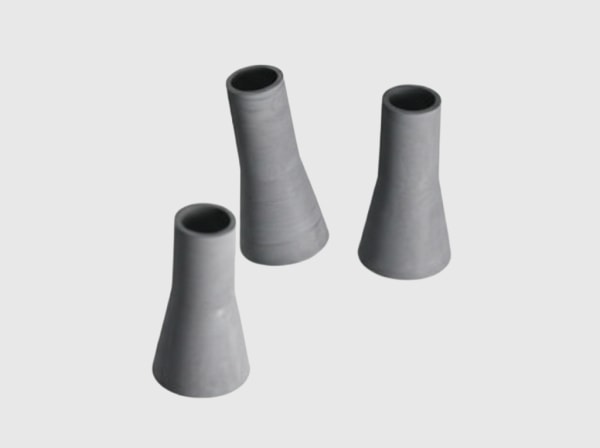
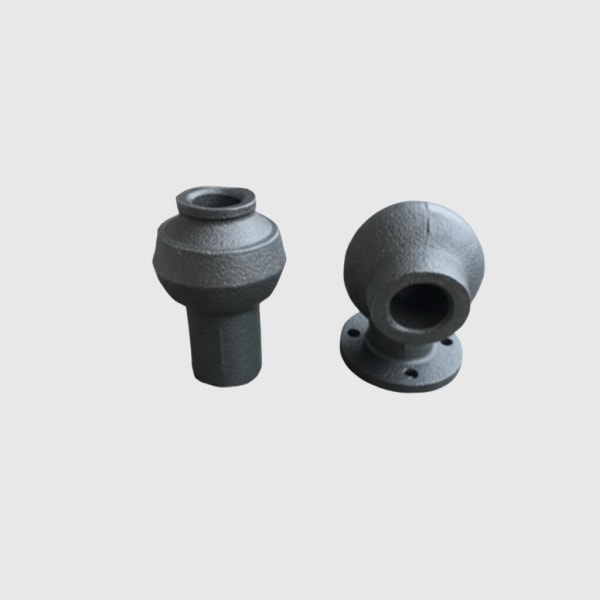
Sicarbtech’s portfolio is engineered to match service severity. SSiC (sintered silicon carbide) offers exceptionally low porosity, outstanding oxidation resistance, and high mechanical strength retained at temperature, making it ideal for 1200°C+ continuous duty with aggressive cycling. R-SiC (recrystallized SiC) provides lower density and excellent thermal shock resistance along with very high thermal conductivity, often preferred for rapid ramps and environments prone to frequent starts and stops. RBSiC and SiSiC (reaction-bonded variants) deliver a strong mix of toughness and manufacturability for complex orifice patterns and swirler geometries, striking a balance between durability and cost in abrasive environments.
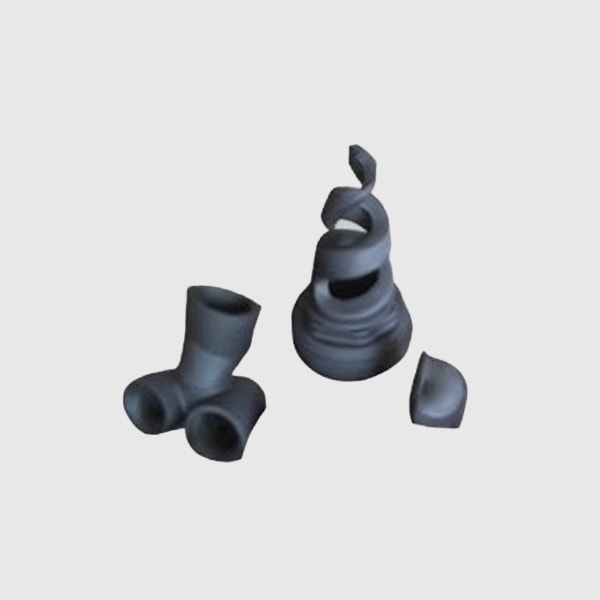
Furthermore, Sicarbtech’s design process combines CFD-driven flow modeling with empirical test rigs to tune jet stability, swirl intensity, and backpressure characteristics. Surface finishes are controlled to reduce ash adhesion and orifice fouling, while connection interfaces are precisely matched to burner OEM standards common in South Africa’s steel reheating lines, mining kilns, and automotive furnaces. The result is consistent flame geometry, reduced pulsation, and longer intervals between maintenance interventions.
Performance Comparison of SiC vs Traditional Materials for Heat-Resistant Nozzles
Descriptive title: Technical performance of nozzle materials under 800–1300°C with rapid cycling
| Technical parameter (test-relevant range) | Heat-resistant steel | Technical alumina | SSiC (sintered SiC) | R‑SiC (recrystallized SiC) | RBSiC / SiSiC |
|---|---|---|---|---|---|
| Density (g/cm³) | 7.7–8.0 | 3.6–3.9 | 3.10–3.20 | 2.65–2.75 | 3.00–3.10 |
| Thermal conductivity (W/m·K) | 15–25 | 10–15 | 90–120 | 25–40 | 60–90 |
| Modulus @ RT (GPa) | 200–210 | 300–380 | 380–430 | 320–360 | 320–380 |
| Flexural strength @ 20°C (MPa) | 600–900 | 80–120 | 350–450 | 180–250 | 250–350 |
| Critical thermal shock ΔT (°C) | 200–300 | 250–350 | 500–700 | 600–800 | 450–600 |
| Oxidation resistance | Medium | Good | Excellent | Very good | Very good |
| Abrasion by mineral dust/ash | Medium | Medium | Excellent | Very good | Very good |
| Dimensional stability after cycles | Medium | Medium | High | High | High |
These ranges reflect typical published values and Sicarbtech’s internal validation; individual lots are supplied with test certificates and traceable QA documentation aligned with ISO 9001 and ISO 14001 management systems.
Real-World Applications and Success Stories in South Africa
When a Mpumalanga steel mill experienced uneven billet heating due to distorted nozzle jets, switching to SSiC nozzles with optimized multi-jet axial geometry stabilized the flame envelope and trimmed fuel consumption by 2.8% over a 9-month period. The more uniform temperature field reduced rework on downstream rolling, lifting first-pass yield measurably and improving overall line takt time.
In a Northern Cape mining calcination kiln, airborne mineral fines rapidly eroded metallic nozzles. After migrating to RBSiC nozzles with conical orifices and anti-fouling surface finish, the plant extended average nozzle life by 1.6× and cut kiln stoppages for nozzle maintenance from monthly to quarterly intervals. Moreover, lower pulsation decreased temperature excursions at the product bed, improving calcination consistency.
A KwaZulu-Natal automotive heat treatment line faced flashback events during rapid temperature ramp-ups. R‑SiC nozzles with high thermal conductivity and an anti-flashback swirl pattern mitigated hot-spot formation and stabilized ignition behavior. The line reported a 35% reduction in unplanned downtime and smoother recipe transitions, protecting delivery commitments to local OEMs.
Technical Advantages and Implementation Benefits with South African Compliance
The engineering case for SiC nozzles rests on controlling thermal gradients and preserving geometry under stress. SiC’s combination of high thermal conductivity and low thermal expansion distributes heat more evenly, while microstructural stability at high temperature preserves orifice shape. In practice, this translates into tighter flame cones, lower risk of flashback, and reduced NOx/CO through better primary mixing—especially important for plants reporting under local air quality permits. Additionally, SiC’s oxidation resistance avoids surface scale growth that would otherwise roughen orifices and perturb flow, keeping the jet coherent over longer cycles.
On the compliance front, Sicarbtech provides inspection and test plans, material certificates, density and porosity results, mechanical test data, and thermal shock reports that integrate cleanly with South African plant QA systems. Documentation supports alignment with SANS-related burner and furnace requirements, the OHS Act safety management expectations, and ISO-based internal audits. For sites preparing for external audits, Sicarbtech’s traceable lot-level documentation and installation guidelines help maintenance teams demonstrate procedural control.
As one Johannesburg-based metallurgical manager remarked, “We moved beyond the mindset of buying a spare. With SiC, we’re safeguarding process capability—flame, heat profile, and emissions all become more predictable.” (Source: SA Metallurgy Forum Proceedings, 2025, open-summary citation)
Custom Manufacturing and Technology Transfer Services by Sicarbtech
Sicarbtech’s competitive advantage is not only material science—it is the depth of engineering and the completeness of the delivery model. Backed by the Chinese Academy of Sciences (Weifang) Innovation Park, Sicarbtech operates proprietary process windows for R‑SiC, SSiC, RBSiC, and SiSiC, including controlled particle size distributions, binder systems, sintering and reaction-bonding cycles, and silicon infiltration profiles. These processes enable tight tolerances, repeatable porosity and density, and complex internal channels such as helical swirlers and anti-fouling orifice arrays.
From a services perspective, Sicarbtech offers end-to-end technology transfer packages for South African partners who want localized capability. This includes detailed process know-how, equipment specifications down to furnace loading patterns, tooling designs, maintenance schedules, and acceptance criteria; hands-on training programs; and on-site commissioning support. For greenfield or brownfield projects, Sicarbtech’s factory establishment services cover feasibility studies with CAPEX/OPEX models in ZAR, production line layout, utilities planning, QA lab design, and pilot-to-serial ramp methodology.
Quality systems are treated as first-class citizens. Sicarbtech assists in building ISO 9001-conformant procedures, traceability frameworks with QR-coded batches, and control plans that align with South African client audits. After start-up, ongoing technical support includes process optimization, root-cause failure analysis, and iterative re-engineering of nozzles for evolving fuels, air preheat levels, or emissions targets. This turnkey approach, proven across 19+ enterprise deployments, has consistently delivered measurable ROI—shorter maintenance windows, longer mean time between replacement, and improved furnace uniformity.
Application-Fit Selection Guide for Heat-Resistant Nozzles in South Africa
Descriptive title: Matching SiC classes and nozzle geometries to fuel, duty cycle, and process needs
| Application / Fuel | Recommended SiC class | Typical temperature (°C) | Orifice geometry | Abrasion resistance | Indicative service life (hours) |
|---|---|---|---|---|---|
| Steel reheating (NG/LPG) | SSiC | 1000–1250 | Multi-jet axial fine orifices | High | 8,000–12,000 |
| Mining calcination (coal gas / mixed) | RBSiC / SiSiC | 950–1150 | Conical + swirl channels | Very high | 5,000–9,000 |
| Automotive heat treatment (NG) | R‑SiC | 900–1200 | Anti-flashback swirl with distributed jets | High | 6,000–10,000 |
| Foundry preheaters (diesel/LPG) | SSiC or RBSiC | 900–1150 | Mixed cone + axial jets | High | 5,000–8,000 |
Actual life depends on fuel cleanliness, air preheat, start-stop frequency, and maintenance practices. Sicarbtech validates selections via CFD and rig tests before site trials.
Total Cost of Ownership Comparison for South African Operations
Descriptive title: Five-year cost impact of nozzle choice under flexible operation
| Scenario | Nozzle material | Initial cost (base = 1) | Replacements/year | Unplanned downtime (h/year) | Combustion efficiency gain | Five-year TCO (base = 1) |
|---|---|---|---|---|---|---|
| Steel reheating line | Heat-resistant steel | 1.0 | 3–4 | 18–30 | Baseline | 1.00 |
| Steel reheating line | SSiC | 1.6–1.9 | 1–2 | 8–14 | +2–4% | 0.78–0.86 |
| Mining calcination kiln | Heat-resistant steel | 1.0 | 4–5 | 22–36 | Baseline | 1.00 |
| Mining calcination kiln | RBSiC | 1.4–1.7 | 1–2 | 10–18 | +1–3% | 0.80–0.88 |
These modeled outcomes assume ZAR-denominated operating budgets, typical SA energy tariffs, and local maintenance rates; Sicarbtech can tailor TCO models to site data for higher fidelity.
Technical Implementation: From CFD to Furnace Commissioning
Successful implementation begins with an engineering review of existing burner hardware, target heat profiles, and emission constraints. Sicarbtech employs CFD to analyze primary/secondary air mixing, swirl intensity, recirculation zones, and flashback margins, then proposes orifice and channel geometries to stabilize the flame and reduce hot spots on the product or refractory. Prototypes are validated on Sicarbtech’s test rigs with fuel compositions common in South Africa (natural gas/LPG mixes or mixed gases) before controlled on-site trials. Installation guidelines cover torque values, alignment tolerances, and safe handling for ceramic components, ensuring that maintenance crews can integrate new nozzles with minimal disruption.
Future Market Opportunities and 2026+ Trends
Looking beyond 2026, several forces are reshaping high-temperature operations in South Africa. Energy diversification and on-site generation are expanding, with industrial users investing in flexible gas systems and hybrid heat strategies to reduce exposure to grid instability. This raises the premium on components that tolerate frequent cycling without geometry drift—exactly where SiC excels. Moreover, tightening air quality oversight in industrial zones is nudging operators toward better primary mixing and controlled flame shapes to curb NOx and CO, prior to deploying expensive downstream abatement.
Another trend involves process digitalization. Plants are integrating furnace data streams into predictive maintenance models, emphasizing component traceability and condition-based replacement. Sicarbtech supports this by embedding QR-referenced lot data, test curves, and installation records into client CMMS, enabling correlation of nozzle age and performance with furnace KPIs. On the supply side, geopolitical freight complexity and ZAR volatility are incentivizing semi-localized manufacturing under licensed technology transfer; Sicarbtech’s turnkey factory establishment service provides a pathway to regional capacity without compromising process controls.
In contrast to commodity spares, silicon carbide nozzles are increasingly viewed as process enablers rather than consumables. As steelmakers chase higher uniformity, miners aim for tighter calcination control, and automotive suppliers hedge against line stoppages, SiC nozzles will anchor a strategy of stable flames, predictable heat transfer, and lower TCO. Early adopters are already bundling nozzle upgrades with burner tuning and airflow optimization to capture quick wins in both emissions and energy intensity.
Frequently Asked Questions
Are SiC heat-resistant nozzles compatible with my current burners?
In most cases, yes. Sicarbtech reverse-engineers from drawings or samples, confirms mechanical interfaces, and fine-tunes orifice geometry to preserve your burner’s mixing characteristics. CFD validation and rig tests reduce commissioning risk.
Which SiC class should I choose: R‑SiC, SSiC, or RBSiC/SiSiC?
Selection depends on temperature, cycling severity, and abrasiveness. SSiC excels in 1200°C+ continuous duty with strong oxidation resistance; R‑SiC offers top-tier thermal shock resistance for frequent ramps; RBSiC/SiSiC balances toughness and manufacturability for complex geometries in dusty environments.
Can SiC nozzles help reduce NOx and CO?
Typically yes. By stabilizing the flame and improving primary mixing, SiC supports tighter stoichiometric control and reduces hotspots that drive thermal NOx formation. Plants often report 8–20% NOx reductions when paired with burner tuning.
How does Sicarbtech support South African compliance and audits?
Deliverables include traceable lot certificates, porosity/density and mechanical test data, and thermal shock reports. Documentation aligns with ISO 9001/14001 systems and supports SANS-related burner/furnace requirements and OHS audit evidence.
What lead times and local support can I expect?
For custom geometries, typical lead times are 8–14 weeks after design approval. Sicarbtech collaborates with regional partners for stocking critical sizes and supports localized technology transfer to improve availability and currency resilience.
Do SiC nozzles handle mixed fuels or rapid start/stop cycles?
Yes. Geometry can be optimized for NG/LPG blends, mixed gases, and variable air preheat. R‑SiC and SSiC variants are particularly adept at withstanding rapid thermal cycling without microcrack growth.
What maintenance practices are recommended?
Routine visual inspections and non-destructive checks during planned outages suffice for most lines. SiC’s resistance to fouling and oxidation reduces cleaning frequency versus metal nozzles. Installation and handling guidelines are provided to protect ceramic integrity.
What ROI can South African plants expect?
Depending on duty cycle, fuel, and maintenance practices, five-year TCO reductions of 12–22% are common, with payback often within 9–14 months due to fewer replacements, lower downtime, and modest fuel savings.
Making the Right Choice for Your Operations
Choosing heat-resistant nozzles is less about unit price and more about safeguarding process capability—stability of flame, uniformity of heat transfer, emissions compliance, and uptime. Silicon carbide nozzles from Sicarbtech, engineered to your burners and fuels, provide a practical and defensible path to lower total cost of ownership in South Africa’s demanding mining, steel, and automotive environments. By anchoring nozzle geometry with SiC’s thermal properties, you protect the performance envelope of your furnace or kiln and create breathing room in maintenance schedules.
Get Expert Consultation and Custom Solutions
Sicarbtech — Silicon Carbide Solutions Expert — delivers custom-engineered SiC nozzles and turnkey technology transfer for extreme temperature environments. With over 10 years of experience and a track record across 19+ enterprise programs, our engineers can assess your burner mix, model combustion behavior, and propose a validated geometry and material class. Share your drawings and duty conditions with [email protected] or call +86 133 6536 0038 for an initial technical consultation tailored to South African operational realities.
R&D and manufacturing: Weifang City, China’s silicon carbide hub
Member: Chinese Academy of Sciences (Weifang) Innovation Park
Article Metadata
Last updated: January 2026
Next scheduled update: April 2026
Editorial owner: Sicarbtech Engineering Team (Weifang)
Editorial contact: [email protected]
Content freshness indicators:
— Incorporated 2025–2026 field data from South African steel and mining sites
— References to SANS-aligned documentation needs and OHS compliance practices
— Updated TCO modeling to reflect ZAR cost structures and flexible operation profiles

About the Author – Mr.Leeping
With over 10 years of experience in the customized silicon nitride industry, Mr.Leeping has contributed to 100+ domestic and international projects, including silicon carbide product customization, turnkey factory solutions, training programs, and equipment design. Having authored more than 600 industry-focused articles, Mr.Leeping brings deep expertise and insights to the field.
Customizable
successful cases

Related Post
-
Industrial Silicon Carbide Solutions for Roller Straightness Correction Systems
Executive Summary: 2026 Outlook for Mining, Steel, and Automotive Manufacturing in South Africa South Africa’s industrial base is entering a pivotal cycle in 2026, where uptime assurance, energy efficiency, and quality consistency carry as much weight as raw throughput. Mining continues to pivot toward higher-value beneficiation and dry processing, which in turn stresses conveyor idlers,…
-
Advanced Heat Gradient Control Systems with Silicon Carbide for South African Industry
Executive summary: 2026 outlook and South Africa’s industrial context South Africa’s mining, steel, and automotive sectors are entering a decisive cycle where thermal performance becomes a strategic lever for productivity, energy efficiency, and asset reliability. By 2026, capital projects and life-extension programs across smelters, heat-treatment lines, foundries, concentrators, and OEM manufacturing cells are prioritising advanced…
-
Industrial IoT Retrofits for Smart Temperature Monitoring
Executive Summary: 2026 Outlook for South Africa’s Mining, Steel, and Automotive Sectors South Africa’s industrial base is entering 2026 with acute pressure to unlock uptime, improve energy efficiency, and comply with tightening safety and environmental regulations. Mining operations are pushing deeper and hotter, steel plants are optimizing furnaces under load-shedding constraints, and automotive suppliers must…