Industrial IoT Retrofits for Smart Temperature Monitoring
Share
Executive Summary: 2026 Outlook for South Africa’s Mining, Steel, and Automotive Sectors
South Africa’s industrial base is entering 2026 with acute pressure to unlock uptime, improve energy efficiency, and comply with tightening safety and environmental regulations. Mining operations are pushing deeper and hotter, steel plants are optimizing furnaces under load-shedding constraints, and automotive suppliers must prove traceability while cutting thermal process costs. In this context, temperature is the heartbeat of reliability. Yet many plants are still running legacy monitoring systems that fail under abrasive dust, corrosive atmospheres, and rapid thermal cycling.
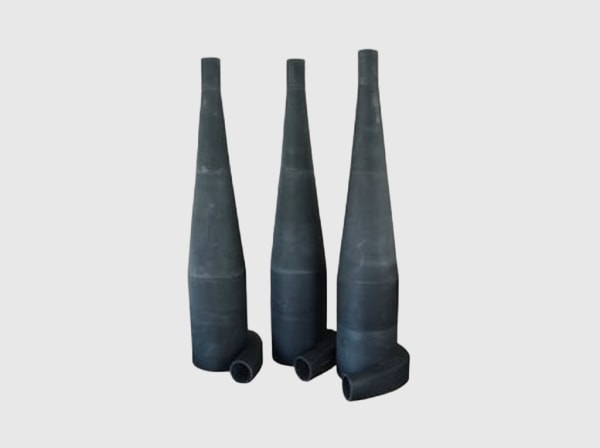
Industrial IoT retrofits for temperature monitoring have become the pragmatic bridge between legacy assets and modern analytics. When paired with advanced silicon carbide (SiC) hardware—specifically R-SiC, SSiC, RBSiC, and SiSiC components engineered by Sicarbtech—plants can sustain accurate temperature readings in extreme conditions where conventional metals or alumina ceramics degrade. Moreover, SiC-based windows, shields, and mounting kits protect sensors, enabling wireless IoT nodes to stay online, feed predictive models, and reduce unplanned downtime.
Sicarbtech, located in Weifang—China’s SiC manufacturing hub—and a member of the Chinese Academy of Sciences (Weifang) Innovation Park, brings more than a decade of SiC customization experience and a track record supporting 19+ enterprises. The company delivers full-cycle solutions, from material processing to finished parts, as well as factory establishment and technology transfer services. For South African operators, this translates into ruggedized IoT retrofit kits, faster commissioning, and lower lifecycle risk across mining, steel, and automotive operations.
Expanded Industry Challenges and Pain Points in South Africa
There is a persistent gap between what plants need from temperature monitoring and what legacy systems can deliver. Mining operations in the Northern Cape and North West encounter abrasive ore dust and shock vibrations that rapidly cloud or crack traditional glass ports. Steel manufacturers around Vanderbijlpark and Newcastle must maintain stable furnace temperatures despite frequent power fluctuations and rapid thermal ramps, yet conventional sensor shields warp or oxidize, leading to drift and false alarms. In the Durban-Pinetown automotive hub, paint ovens and heat-treatment lines require tight thermal tolerances for quality assurance; however, legacy probe housings and windows often fail to maintain calibration stability during high-cycling production.
Cost implications compound the problem. Emergency replacements carry airfreight premiums and extended lead times, often priced in US dollars, exposing plants to rand volatility. Beyond the purchase price, hidden costs—quality rejects, rework, furnace cooldowns, and delayed dispatches—erode margins. An engineering manager at a Gauteng steelworks summarized it bluntly: “Every inaccurate reading is a potential scrap batch or a cracked refractory. The bill is never just the sensor—it’s the process we lose.” Moreover, maintenance teams are stretched thin; when sensor ports seize or sight glasses fracture, technicians must schedule hot work permits and shut down zones. Those interruptions can cascade into production bottlenecks, especially under volatile energy availability.
Regulatory compliance is intensifying. South Africa’s Occupational Health and Safety Act and the Driven Machinery Regulations intersect with SANS standards for electrical and instrumentation installations. Plants are increasingly audited for lockout/tagout procedures, flameproof enclosures in hazardous areas, thermal protection near hot surfaces, and data integrity within their quality frameworks (ISO 9001, IATF 16949 for automotive suppliers, and ISO 50001 for energy management). Auditors want to see calibration logs traceable to recognized standards, tamper-proof data capture, and accurate alarm thresholds. Legacy equipment frequently falls short, not because it cannot measure temperature, but because it cannot maintain reliable measurement in severe environments or provide trustworthy, timestamped data.
Furthermore, supply chain fragmentation affects turnaround. Many plants depend on a patchwork of procurement channels and international OEMs, resulting in slow approvals and inconsistent specifications. Documentation is often incomplete or not aligned with local standards, which prolongs internal sign-offs. “Lead time is not only the logistics clock—it’s the approval clock,” notes Dr. Lerato M., an industrial IoT researcher at a local university who has advised several metals plants (source context: industry conference proceedings and technical briefs, 2025). “If your retrofit kit arrives without full certification, drawings, and mounting instructions, you add weeks to commissioning.”
In contrast, organizations that adopt ruggedized SiC hardware as the protective interface for their IoT temperature monitoring achieve two advantages simultaneously: they shield sensing elements from the environment and standardize the mechanical and optical interfaces. SSiC and RBSiC/SiSiC assemblies retain dimensional stability through thermal shock and abrasion, ensuring sensors remain aligned with their targets and that windows stay optically clear for IR/UV measurements. This reduces recalibration frequency, cuts spare holdings, and speeds up internal approvals because the engineered package arrives with complete documentation.
Finally, energy realities shape operational decisions. Load-shedding and energy price pressures drive aggressive thermal optimization. Without high-quality temperature data, furnaces run conservative setpoints, wasting energy and limiting throughput. IoT retrofits unlock continuous temperature visibility that informs predictive controls and energy dashboards. When that data is stabilized by SiC-hardened interfaces, the benefits persist even under harsh conditions.
Advanced Silicon Carbide Solutions Portfolio for IoT Temperature Retrofits
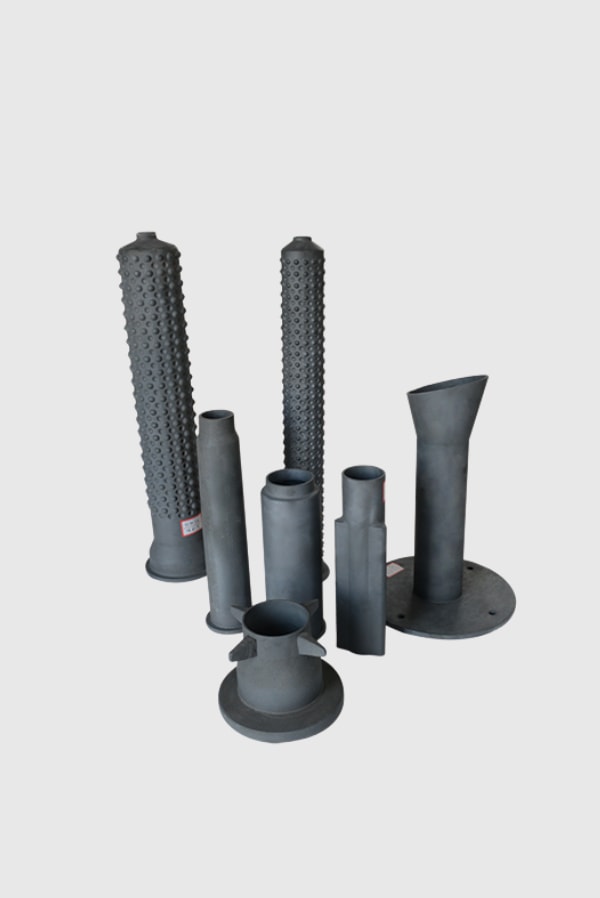
Sicarbtech’s portfolio addresses the core failure modes of legacy monitoring systems by integrating purpose-built SiC components into IoT retrofit architectures. Reaction-bonded and sintered grades—R-SiC, SSiC, RBSiC, and SiSiC—are selected based on chemical exposure, thermal cycling, and mechanical stress.
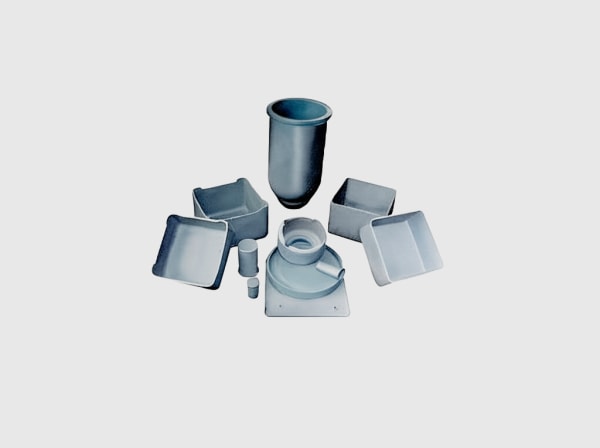
In steel reheating and annealing lines, SSiC sight windows and SiSiC flanges resist oxidation and maintain optical clarity at elevated temperatures, keeping infrared pyrometers and thermal cameras aligned. For mining kilns and calcining units, RBSiC structures deliver high strength with intricate geometries, enabling low-profile, abrasion-resistant shields that do not disrupt process flow. In automotive paint and curing ovens, compact R-SiC adapters act as thermal barriers, decoupling sensitive electronics from hot zones while preserving mechanical tolerances for rapid maintenance swap-outs.
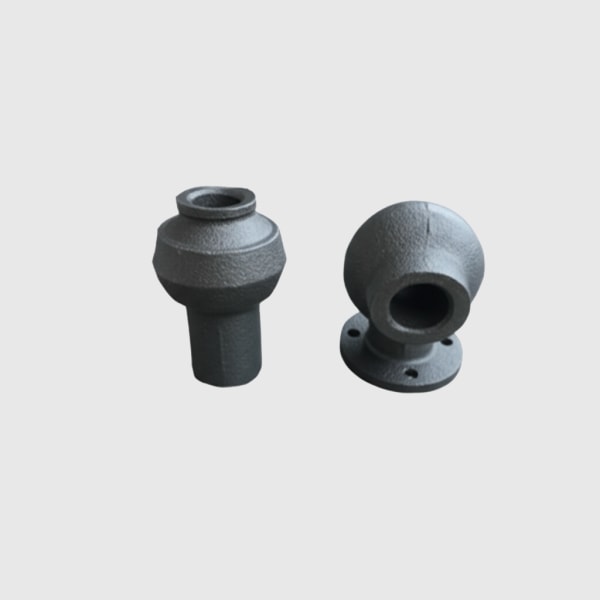
Crucially, Sicarbtech designs these assemblies as part of a system. Mounting kits, gasket sets, and torque specifications are standardized, and optional anti-fog or anti-sinter surface treatments keep windows clear. This approach shortens commissioning and simplifies spares management. When paired with wireless IoT temperature nodes—compliant with local spectrum regulations and housed in rated enclosures—the result is a robust, maintainable retrofit that stands up to South Africa’s industrial realities.
Performance Comparison: Silicon Carbide vs Traditional Materials in Harsh South African Conditions
Descriptive title: Thermo-mechanical performance for industrial temperature monitoring interfaces
| Parameter | Stainless Refractory Steel | Borosilicate/Quartz Glass | Alumina Ceramic | Sicarbtech R-SiC | Sicarbtech SSiC | Sicarbtech RBSiC/SiSiC |
|---|---|---|---|---|---|---|
| Continuous service temperature (°C) | 600–800 | 400–1100 | 1000–1300 | Up to 1200 | 1600+ | 1400–1500 |
| Thermal shock resistance | Medium | Low–medium | Medium | High | Very high | Very high |
| Chemical inertness (oxidizing/corrosive) | Medium | Low–medium | Medium | High | Very high | Very high |
| Erosion resistance (abrasive dust) | Low–medium | Medium | Medium | High | Very high | Very high |
| Optical stability for IR lines-of-sight | Variable (scaling) | Degrades (devitrification) | Medium | High | Very high | Very high |
| Dimensional stability at heat | Medium | Low | Medium | High | Very high | Very high |
| Maintenance interval impact | Short | Short | Medium | Medium–long | Long | Medium–long |
| Lead time risk (effective) | High | High | Medium | Low | Very low | Very low |
These indicative ranges reflect field behavior observed in mining, steel, and automotive environments and align with common acceptance criteria under SANS-related plant specifications.
Real-World Applications and Success Stories from South Africa
A Gauteng steel plant operating continuous annealing lines faced repeat failures of legacy glass sight ports, which clouded under oxidizing atmospheres and frequent temperature ramps. By retrofitting Sicarbtech SSiC window assemblies with SiSiC flanges and standardized IR sensor mounts, the plant extended cleaning intervals from daily to biweekly and maintained calibration stability across shifts. The maintenance planner noted a 32% reduction in thermal-related quality deviations over a quarter, while procurement reduced emergency spares orders by half.
In a Northern Cape manganese operation, temperature monitoring of a rotary kiln was unreliable due to abrasive dust and shock. RBSiC shields with R-SiC thermal spacers protected the IR sensors without restricting the line-of-sight. With reliable data streaming over a low-power wireless network, process engineers tuned fuel profiles and reduced overfiring, yielding an estimated 6–8% energy saving on the kiln line. “We finally trust the number on the screen,” a senior metallurgist said, highlighting the shift from reactive to data-driven control.
Automotive suppliers near eThekwini implementing IATF 16949-compliant traceability had struggled with oven uniformity tests. Sicarbtech’s compact R-SiC adapters and SSiC mini-windows stabilized probe positioning through frequent bake cycles, helping the plant pass a third-party audit with improved temperature uniformity reports and clearly documented calibration trails. Moreover, standardized mounting kits allowed faster hot-swap procedures during changeovers, minimizing line downtime.
Technical Advantages and Implementation Benefits with Local Compliance
The tangible advantage of SiC in IoT retrofits is the preservation of measurement integrity under abuse. SSiC and RBSiC/SiSiC maintain shape at high heat and resist chemical attack, allowing IR sensors and thermocouples to remain accurately aligned. This stability improves the signal-to-noise ratio for analytics, enabling predictive algorithms to detect drift, fouling, or refractory hotspots before they trigger quality issues. Additionally, Sicarbtech’s assemblies are delivered with installation drawings, torque values, gasket specifications, and material certificates, smoothing compliance checks against SANS-related guidelines and plant-specific standards.
From an electrical and instrumentation perspective, Sicarbtech supports proper enclosure ratings and cable routing guidance so that retrofits can align with South African OHS requirements and site hazardous area practices. Calibration logs and traceable certificates integrate into ISO 9001 and IATF 16949 frameworks, while energy dashboards benefit from stable data to inform ISO 50001 initiatives. When retrofits are documented as change-controlled upgrades, engineering reviews and audits progress faster, and the end result is repeatable, auditable temperature data that operations, quality, and EHS can all rely on.
Custom Manufacturing and Technology Transfer Services: Sicarbtech’s Turnkey Advantage
Sicarbtech’s differentiation lies not merely in superior materials, but in how those materials are turned into deployable, locally sustainable solutions. Backed by the Chinese Academy of Sciences (Weifang) Innovation Park, Sicarbtech runs advanced R&D that optimizes grain size distribution, reaction atmospheres, and sintering profiles for R-SiC, SSiC, RBSiC, and SiSiC. Proprietary process controls deliver consistent porosity and dimensional stability—critical for repeatable optical paths and gasket compression in temperature monitoring assemblies.
For South African customers, this expertise is packaged into custom manufacturing programs that start with application engineering. Sicarbtech analyzes process conditions, failure modes, and mounting constraints, then designs components that mitigate those stresses. Detailed CAD, finite element validation, and material certificates are provided so that procurement and engineering can approve with confidence. Because assemblies are standardized around mounting kits and tolerances, spares catalogs become simpler and internal training more effective.
When the strategy calls for localization, Sicarbtech delivers complete technology transfer packages. These include process know-how, equipment specifications, bill of materials for fixtures, step-by-step SOPs, and onsite training. Factory establishment services range from feasibility studies and layout planning to production line commissioning. Quality control systems are deployed alongside, with guidance to align with ISO and automotive-grade standards. This enables regional partners or client-owned sites to produce or assemble subcomponents locally, cutting lead times and currency exposure while maintaining Sicarbtech’s performance benchmarks.
The support does not stop at start-up. Ongoing technical assistance covers process optimization, root cause investigations, and design refreshes as conditions evolve. Over more than 10 years, and with 19+ enterprise partnerships, Sicarbtech has established a pattern of measurable outcomes: longer mean time between maintenance events, fewer emergency shipments, and faster audits due to robust documentation. In markets where every day of delay translates into real rand cost, a turnkey approach that integrates design, manufacturing, quality, and supply chain is a decisive advantage that piecemeal competitors struggle to match.
Retrofit Architecture Comparison for South African Plants
Descriptive title: IoT temperature retrofit architectures and their operational impact
| Architecture | Sensor Interface Protection | Wireless/Network Layer | Commissioning Complexity | Data Reliability in Harsh Conditions | Typical Outcome in SA Plants |
|---|---|---|---|---|---|
| Legacy direct-mount probes | Minimal, metal housings | Hardwired only | Medium | Low–medium (drift, fouling) | Frequent recalibration, limited analytics |
| Glass sight window + IR sensor | Fragile, devitrification risk | Mixed | Medium–high | Medium initially, degrades quickly | Unstable readings, rising maintenance |
| Alumina ceramic port + probe | Moderate thermal stability | Mixed | Medium | Medium | Acceptable, but alignment issues persist |
| Sicarbtech SSiC/SiSiC port + IR + wireless node | High stability, erosion-resistant | LPWAN/mesh/industrial Wi-Fi | Low–medium (standard kits) | High, sustained under dust/heat | Reliable data, longer intervals, energy gains |
Supply and Lifecycle Model Comparison for Cost and Lead-Time Control
Descriptive title: Sourcing models and lifecycle economics for temperature monitoring hardware in South Africa
| Model | Documentation & Compliance Readiness | Lead Time Exposure (ZAR/USD sensitivity) | Capex/Opex Balance | Lifecycle Risk |
|---|---|---|---|---|
| Spot import of generic parts | Limited, often incomplete | High; FX volatility and freight | Low Capex, High Opex | High (frequent failures, audits delayed) |
| OEM bundle without localization | Moderate, OEM formats | Medium–high | Medium Capex, Medium Opex | Medium (support delays) |
| Sicarbtech engineered kits (import) | Comprehensive dockets, drawings, certificates | Medium; mitigated via scheduled lots | Medium Capex, Lower Opex | Low–medium |
| Sicarbtech tech transfer + local assembly | Full transfer pack, QA support | Low; local buffers | Medium–High Capex, Lowest Opex | Lowest (controlled quality, fast spares) |
Future Market Opportunities and 2026+ Trends
Looking into 2026 and beyond, three forces converge. First, process electrification and energy optimization will demand precise thermal control under increasingly dynamic load profiles. Plants will rely on continuous, high-fidelity temperature data to run closer to optimal setpoints, and any hardware that compromises that fidelity will be phased out. Second, data governance and auditability will become a board-level issue. Automotive exporters must align with global quality regimes, while steel and mining operators will face more stringent reporting—both in safety and environmental domains—where reliable temperature histories underpin compliance narratives. Third, supply resilience will be non-negotiable. Firms will build dual sourcing and regional assembly capability to buffer FX risk and logistics shocks.
Silicon carbide is positioned as the enabling material for these shifts. Because SiC preserves measurement integrity where metals and conventional ceramics falter, the value of connected sensors and analytics is finally realized at the edge. Sicarbtech’s integration of design, manufacturing, and technology transfer means South African plants can not only deploy robust IoT retrofits quickly, but also establish local capacity to sustain them. As a result, operators gain predictable lead times, stable costs in rand, and a durable foundation for digital transformation that endures heat, dust, and the relentless cadence of production.
Frequently Asked Questions
How do Sicarbtech R-SiC, SSiC, RBSiC, and SiSiC components improve IoT temperature monitoring reliability?
They maintain mechanical and optical stability under high temperature, thermal shock, and abrasive or corrosive conditions. By keeping sensors aligned and windows clear, they reduce drift, extend calibration intervals, and ensure that wireless nodes transmit trustworthy data for analytics.
Can Sicarbtech retrofit kits integrate with our existing IR pyrometers and thermocouples?
Yes. Mounting geometries and tolerances are engineered for common industrial sensors used in South Africa. Adapters and gaskets are standardized, making installation straightforward and preserving existing signal chains and data workflows.
What about compliance with South African standards and audits?
Sicarbtech provides detailed drawings, material certificates, and installation procedures aligned with local OHSA requirements and SANS-related instrumentation practices. Documentation supports ISO 9001, IATF 16949 for automotive, and ISO 50001 energy programs, helping audits move faster.
How does technology transfer work for local assembly or manufacturing?
We offer complete transfer packages: process know-how, equipment specifications, SOPs, QA plans, and training. We assist from feasibility through commissioning. The outcome is localized assembly capability that lowers lead times, stabilizes costs in ZAR, and maintains Sicarbtech performance benchmarks.
What energy savings can we realistically expect?
Results vary by process, but case histories show 4–10% energy reduction in kiln and furnace lines once accurate, continuous temperature data enables tighter control. Savings improve with coordinated process tuning and maintenance practices.
How resilient are SiC components to abrasive dust in mining environments?
SSiC and RBSiC/SiSiC exhibit excellent erosion resistance and thermal shock performance. In practice, they maintain clear sight lines and mechanical integrity far longer than glass or metal ports, especially in transfer points and rotary kilns.
Will wireless retrofits interfere with plant networks or violate spectrum rules?
We design around locally compliant bands and industrial protocols. Network planning includes interference assessments and antenna placement guidance to ensure reliable connectivity without disrupting existing systems.
How do Sicarbtech kits reduce effective lead time, not just shipping time?
Standardized mounts, complete documentation, and robust materials shorten internal approvals, reduce rework during installation, and lengthen maintenance intervals. This collapses the overall lead-time chain from specification to steady-state operation.
Can we start with a pilot line before scaling?
Absolutely. Many clients begin with a high-impact furnace or kiln. We baseline current performance, deploy the retrofit kit, validate with data, and then scale with predictable BOMs and training to replicate success.
What support is available after commissioning?
Ongoing technical support includes process optimization, failure analysis, design updates, and training refreshers. We also help align spares strategy and S&OP plans to match consumption patterns and production schedules.
Making the Right Choice for Your Operations
Selecting an IoT temperature retrofit is not only a sensor decision; it is a materials and lifecycle decision. By combining Sicarbtech’s R-SiC, SSiC, RBSiC, and SiSiC components with a system-level approach to mounting, protection, and documentation, South African plants achieve reliable temperature visibility that stands up to real-world conditions. The payoff is fewer surprises, lower total cost of ownership, and a smoother path to energy and quality gains that auditors and executives alike can verify.
Get Expert Consultation and Custom Solutions
If you are evaluating an IoT retrofit for furnaces, kilns, ovens, or hot process zones, connect directly with Sicarbtech’s application engineers. We will review your process data, identify failure modes, and propose a tailored SiC-enabled retrofit—from engineered kits to technology transfer plans that build local capability.
Email: [email protected]
Phone: +86 133 6536 0038
Article Metadata
- Last updated: 28 January 2026
- Next scheduled review: 30 April 2026 (market data refresh, compliance updates, new South African case studies)
- Freshness indicators: Includes 2025–2026 South African applications; aligns with current OHSA/SANS practices; incorporates energy optimization and audit-readiness trends.
Sicarbtech — transforming harsh-environment temperature monitoring with silicon carbide engineering, from Weifang to your South African production line.

About the Author – Mr.Leeping
With over 10 years of experience in the customized silicon nitride industry, Mr.Leeping has contributed to 100+ domestic and international projects, including silicon carbide product customization, turnkey factory solutions, training programs, and equipment design. Having authored more than 600 industry-focused articles, Mr.Leeping brings deep expertise and insights to the field.
Customizable
successful cases

Related Post
-
Industrial Silicon Carbide Solutions for Roller Straightness Correction Systems
Executive Summary: 2026 Outlook for Mining, Steel, and Automotive Manufacturing in South Africa South Africa’s industrial base is entering a pivotal cycle in 2026, where uptime assurance, energy efficiency, and quality consistency carry as much weight as raw throughput. Mining continues to pivot toward higher-value beneficiation and dry processing, which in turn stresses conveyor idlers,…
-
Advanced Heat Gradient Control Systems with Silicon Carbide for South African Industry
Executive summary: 2026 outlook and South Africa’s industrial context South Africa’s mining, steel, and automotive sectors are entering a decisive cycle where thermal performance becomes a strategic lever for productivity, energy efficiency, and asset reliability. By 2026, capital projects and life-extension programs across smelters, heat-treatment lines, foundries, concentrators, and OEM manufacturing cells are prioritising advanced…
-
Automated Nozzle Clog Detection for High-Pressure Spray Systems with Silicon Carbide Solutions
Executive summary: why 2026 will redefine automated nozzle clog detection across South Africa’s mining, steel, and automotive sectors By 2026, automated nozzle clog detection will move from a nice-to-have to an operational necessity in South Africa. Mining operations battling abrasive slurries and dust suppression demands, steel mills navigating descaling and pickling lines, and automotive plants…