Optimizing Boiler Efficiency with Cold Air Intake Systems
Share
Executive Summary: Why Silicon Carbide Cold Air Pipes Will Define 2025 Efficiency Standards in South Africa
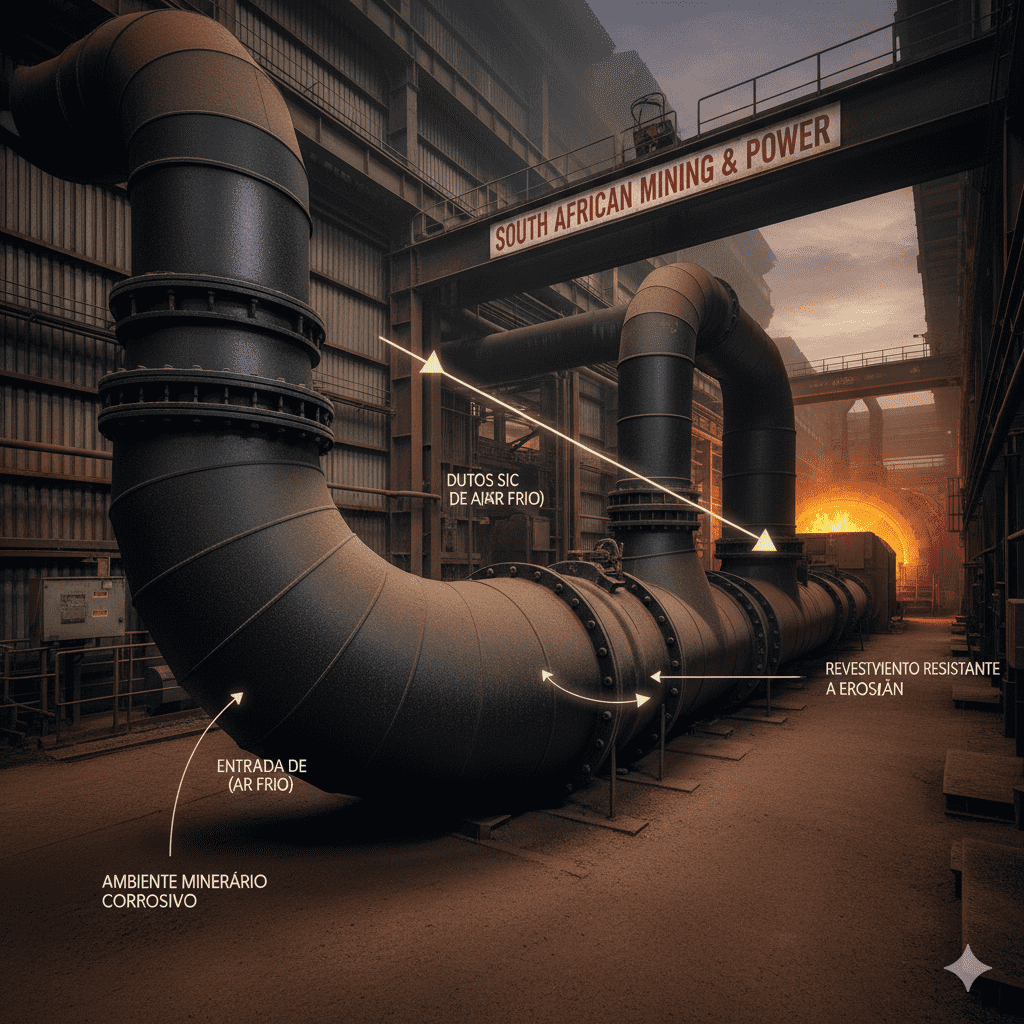
South Africa’s heavy industries enter 2025 with twin pressures: volatile energy costs and tightening compliance requirements under the Pressure Equipment Regulations, SANS 347 and SANS 10142-1, alongside stricter air quality controls under NEM:AQA. In mining, steelmaking, and automotive thermal processes, the humble cold air pipe—feeding ambient or conditioned air to boilers, burners, and furnaces—has become a strategic asset. Failures here cascade into unplanned outages, fuel penalties, and emissions exceedances.
Sicarbtech, the Silicon Carbide Solutions Expert based in Weifang City, China’s silicon carbide manufacturing hub, brings a decade of customized SiC expertise and the backing of the Chinese Academy of Sciences (Weifang) Innovation Park to South African operators. With advanced R-SiC, SSiC, RBSiC, and SiSiC, Sicarbtech delivers cold air pipe systems that withstand abrasion from dust-laden intake air, resist thermal shock from start-stop cycles, and maintain smooth internal surfaces for stable airflow at high temperatures. Moreover, Sicarbtech’s turnkey technology transfer and factory establishment services allow South African OEMs and fabricators to localize production, contain costs in ZAR, and strengthen supply resilience.
Market signals are clear. Across Eskom-aligned industrial consumers and private generation facilities, reliability is the new currency. Our 2025 outlook shows rising adoption of silicon carbide boiler ductwork in lime kilns, sinter plants, coal and biomass co-firing lines, and thermal oxidizers. While stainless steel and refractory-lined carbon steel still dominate, advanced SiC’s lifecycle economics—reduced maintenance, higher uptime, and energy efficiency from smoother flow—are redefining total cost of ownership for South African plants determined to remain competitive in a challenging macroeconomic climate.
The Real Problems: Industry Challenges and Pain Points in South Africa
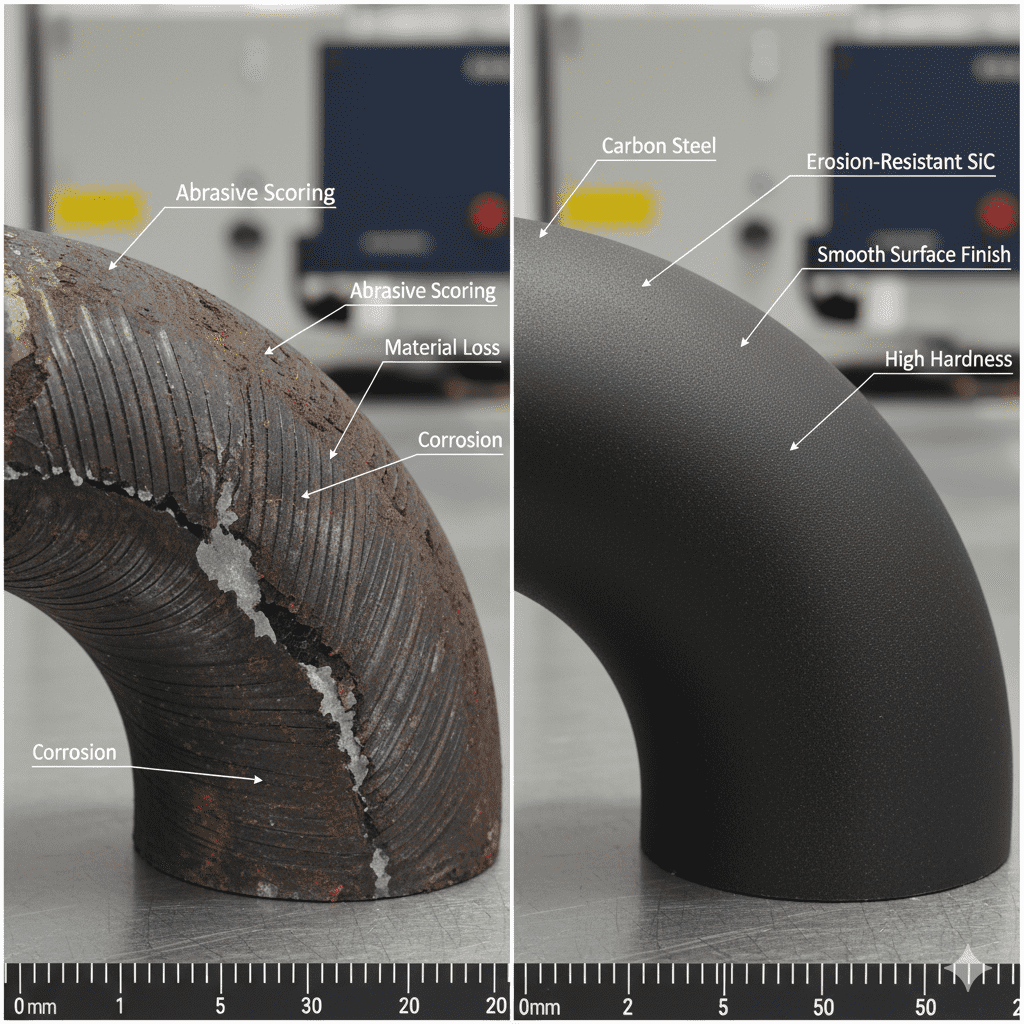
South Africa’s industrial air systems operate in a particularly harsh context. Fine dust from open-pit mining, abrasive sinter particulates, and seasonal temperature swings put cold air pipes under continuous stress. Traditional carbon steel ducts erode at elbows and transitions, increasing pressure drops and fuel consumption. Stainless steel fares better, yet it is prone to chloride stress corrosion near coastal plants and suffers from repeated thermal cycling. Refractory-lined solutions insulate well but often crack at joints due to mechanical vibration common in compressor and ID/FD fan setups.
Load-shedding and supply interruptions exacerbate thermal shock. When power dips, the sudden changes in flow and temperature magnify mechanical strain on duct walls and supports. Oxygen trim control loops become unstable when interior surfaces roughen or deform, resulting in excessive excess air and higher fuel costs. Operators report unplanned outages driven by duct patching and weld repairs, which collide with the realities of import lead times and foreign exchange fluctuations. Furthermore, rising diesel costs for logistics and the rand’s volatility against the US dollar place a premium on extended component lifecycles.
Local compliance creates added complexity. Under SANS 347, pressure-bearing components and certain categories of ducting must meet design verification requirements, while NEM:AQA compliance audits are increasingly data-driven. Any deviation in burner air supply can spike NOx and CO, attracting penalties. Insurance underwriters, mindful of fire risk assessments, scrutinize air handling integrity and maintenance logs more closely each year.
As one maintenance superintendent at a Gauteng steel reheat furnace observed, “Every unplanned shutdown costs us more in lost throughput than a full year of engineered upgrades. Stable, predictable airflow is no longer a nice-to-have; it’s the backbone of our energy balance.” That sentiment is echoed by energy auditors noting that roughened duct interiors can increase system fan power by 3–7%, a burden that is now visible in tight operating budgets.
An independent process engineer commenting on refractory-lined ducts put it bluntly: “Thermal protection solves one problem but sometimes creates three—weight, cracking at anchor points, and difficult inspections.” The cost implications are stark. Plants budgeting maintenance in ZAR often see mid-year overruns due to emergency imports of elbows, reducers, and expansion joints. Many facilities lack spare assemblies for unique geometries, stretching downtime while fabricators reverse-engineer worn parts.
Additionally, South Africa’s regulatory momentum favors future carbon pricing and stricter emissions reporting. Plants that fail to stabilize combustion air will face rising operational scrutiny. In this environment, the material science behind cold air pipes becomes a strategic lever—and silicon carbide offers a credible, field-proven answer.
Advanced Silicon Carbide Solutions Portfolio: How Sicarbtech Solves the Pain Points
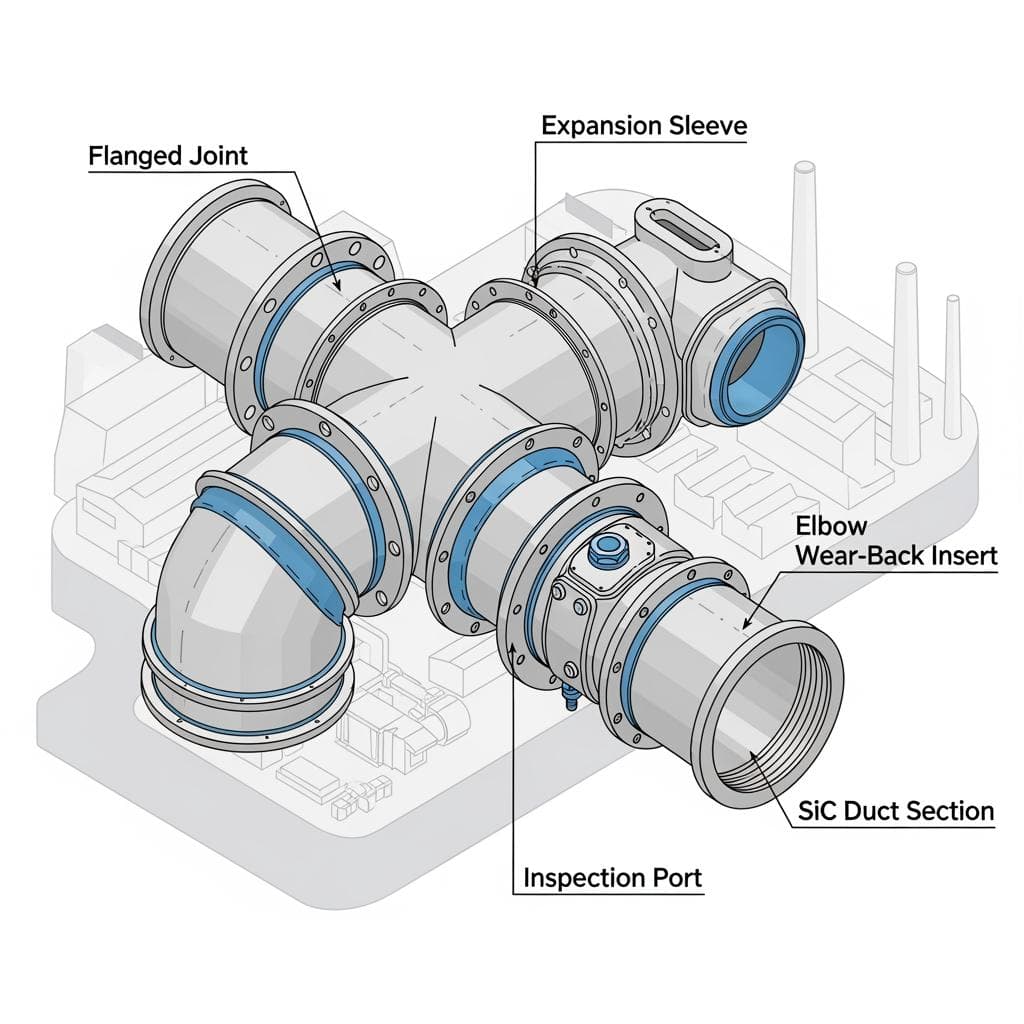
Sicarbtech’s silicon carbide portfolio spans R-SiC (recrystallized SiC), SSiC (sintered SiC), RBSiC/SiSiC (silicon-infiltrated or reaction-bonded SiC). Each grade offers a tailored balance of hardness, thermal shock resistance, and density to match South African duty profiles. For dust-heavy mining intakes where erosion at high-velocity bends dominates, SSiC’s ultra-high hardness and density maintain smooth surfaces that preserve designed airflow. For boilers subjected to frequent thermal cycling due to power variability, RBSiC/SiSiC excels with robust thermal shock resistance and dependable joint integrity across flanged and spigot connections.
Beyond materials, Sicarbtech engineers components as systems. That includes optimized radiused elbows, wear-back liners at high-impingement zones, and expansion segments that cooperate with anchor design to minimize crack initiation. Dimensional precision enables predictable flow coefficients, helping combustion engineers hold tight to setpoints. Anti-static surface treatments and conductive pathways mitigate dust ignition risk in hydrocarbon-adjacent facilities, while optional inner surface polishing reduces pressure drop, trimming fan energy demand.
Sicarbtech’s decade-plus of customization, bolstered by a partnership with the Chinese Academy of Sciences (Weifang) Innovation Park, results in a library of verified designs for common boiler OEMs serving the local market. Moreover, our application engineering team adapts these to South African standards, including compatibility with SANS 347 classification pathways and local inspection regimes. For OEMs and large end users, our technology transfer programs enable partial or full localization of SiC duct fabrication—containing currency risk, accelerating lead times, and strengthening after-sales support capacity within the country.
“Material selection must start with the failure mode, not the brochure,” notes a Sicarbtech senior materials scientist. “In abrasive airflow, SSiC extends life by a factor of three to five over hardfaced steels. In thermal cycling, RBSiC protects joints and geometries that steels struggle to keep stable.” This practical, case-derived expertise is why 19+ enterprises rely on Sicarbtech’s silicon carbide solutions from raw material processing through to finished, field-ready assemblies.
Performance Comparison: Silicon Carbide vs Traditional Materials for Cold Air Pipes
Performance and Compliance Characteristics for South African Industrial Boiler Air Ducts
| Property / Standard Alignment | RBSiC/SiSiC (Sicarbtech) | SSiC (Sicarbtech) | 310/316 Stainless Steel | Carbon Steel with Refractory Lining |
|---|---|---|---|---|
| Typical max service temperature (air) | 1,350–1,450°C | 1,600–1,700°C | 1,000–1,100°C | 1,200–1,300°C (lining dependent) |
| Abrasion resistance (relative) | Very high | Ultra-high | Moderate | High (lining) but prone to liner damage |
| Thermal shock resistance | Excellent | Good | Moderate | Variable; liner cracking risk |
| Density (g/cm³) | 2.95–3.10 | 3.10–3.20 | 7.9–8.0 | ~7.8 (shell) + lining |
| Internal surface roughness after 12 months in dusty service | Low increase | Minimal increase | Moderate increase | High variance due to liner wear |
| Fan energy impact over time | Low drift | Very low drift | Rising 3–7% | Unpredictable; spikes after liner spall |
| Corrosion in humid, chloride-bearing air | Inert | Inert | Chloride stress corrosion risk near coasts | Steel shell corrosion risk |
| Expected service life in abrasive elbows (relative) | 3–5× steel | 4–6× steel | Baseline | 2–3× steel if liner intact |
| SANS 347 conformity pathway | Engineers design for category and verification; Sicarbtech provides documentation | Same | Established | Established but complex with lining |
| Maintenance frequency | Low | Low | Moderate | High after thermal events |
| Lifecycle cost in ZAR (5 years) | Low to medium | Low to medium | Medium to high | Medium, but high variability |
Real-World Applications and Success Stories
In Mpumalanga, a coal/biomass co-firing plant faced chronic erosion in 900 mm diameter cold air elbows feeding primary air to a chain grate boiler. Carbon steel elbows with hardfacing lasted nine months on average. Sicarbtech replaced critical elbows with SiSiC segments featuring replaceable wear-back inserts. Over 18 months of operation, inspection indicated negligible wall loss, while fan power stabilized within ±1%. The plant reported a 2.8% reduction in specific fuel consumption, translating to substantial ZAR savings even after accounting for exchange-rate exposure.
At a Northern Cape manganese sinter facility, thermal shock from frequent start-stops cracked refractory-lined transitions. Sicarbtech engineered RBSiC transitions with compliant joint design and soft expansion sleeves. The retrofitted section has run for 14 months without thermal cracking, and NOx variability decreased due to steadier air distribution. Insurance audit notes pointed to improved fire risk scoring due to reduced hot spots and debris accumulation.
In KwaZulu-Natal’s automotive sector, a heat-treatment line struggled with chloride-laden ambient air causing premature stainless duct pitting. Switching to SSiC straight runs and SiSiC elbows eliminated corrosion concerns. Moreover, Sicarbtech’s smooth-bore finishing reduced pressure drop, enabling the plant to operate at lower fan speed setpoints, cutting power consumption by approximately 6%. The facility noted easier compliance reporting under NEM:AQA due to improved combustion uniformity.
Technical Advantages and Implementation Benefits with South African Regulatory Alignment
Deploying Sicarbtech silicon carbide ducting yields a cascade of technical benefits that align directly with local compliance and audit requirements. First, smoother, erosion-resistant interiors stabilize air mass flow, improving burner stoichiometry and lowering excess air. This directly supports emissions compliance, especially for NOx and CO under atmospheric emission licenses. Second, SiC’s low thermal expansion and high thermal shock resistance maintain geometric stability across load-shedding events, preserving duct integrity and minimizing inspection anomalies that often complicate SANS 347 assessments.
Implementation is streamlined by Sicarbtech’s application engineering team, which delivers design packs with material data sheets, finite element checks for brackets and supports, and weld-free joint strategies tailored to plant constraints. Documentation bundles support local Authorized Inspection Bodies (AIBs) and Technical Competent Persons (TCPs), smoothing verification and commissioning. Additionally, surface resistivity options and anti-static provisions mitigate dust ignition risks—a priority for insurance and safety audits.
Crucially, predictable airflow translates into lower fan power over time, strengthening energy audits and ESA submissions. Plants pursuing ISO 50001 and ISO 14001 enjoy data-supported improvements in system efficiency, while maintenance teams benefit from fewer hot-work permits and shorter inspection windows thanks to modular SiC segments.
Material Selection and Design Optimization for Boiler Ducting in 2025
Silicon Carbide Grades Compared for South African Duty Profiles
| Attribute | RBSiC / SiSiC | SSiC | Recrystallized SiC (R-SiC) |
|---|---|---|---|
| Best use case | Thermal cycling, complex geometries | Extreme abrasion, smooth internal finish | High-temperature, lightweight assemblies |
| Flexural strength (MPa) | 200–300 | 300–400 | 150–250 |
| Thermal conductivity (W/m·K) | 20–40 | 70–120 | 30–60 |
| Max service temp (°C) | 1,450 | 1,700 | 1,650 |
| Density (g/cm³) | 2.95–3.10 | 3.10–3.20 | 2.65–2.80 |
| Jointing approach | Flanged/spigot with compliant sleeves | Precision flanged, polished bore options | Lightweight flanged for large diameters |
| Maintenance profile | Very low | Very low | Low |
| Typical ROI window vs steel | 9–18 months | 9–15 months | 12–20 months |
In 2025, we see a shift toward hybrid designs: SSiC at high-velocity elbows and reducers, RBSiC at transitions and thermal interfaces, and R-SiC where weight reduction eases support loads across long spans. This blended approach delivers lifecycle durability without over-specifying. Sicarbtech’s engineers run CFD and wear modeling to place the right grade in the right segment, then provide drawings compatible with local fabrication practices where hybrid assemblies mate to steel or FRP upstream/downstream components.
Installation and Commissioning Considerations
While silicon carbide segments are robust, success depends on the details. Field-proven practices include compliant gasket materials for thermal differentials, torque-managed flanges to prevent point loading, and alignment checks to protect internal finishes. For brownfield projects, Sicarbtech supplies dimensionally matched sections to slip into existing hangers, minimizing outage duration. Commissioning support includes airflow balancing and vibration checks, ensuring fans operate within expected curves. Besides, documentation aligns with SANS/OHSA frameworks to expedite safety signoffs.
Custom Manufacturing and Technology Transfer Services: Sicarbtech’s Turnkey Advantage
Sicarbtech’s competitive edge lies not just in materials, but in a comprehensive delivery model unique in the silicon carbide domain. Backed by the Chinese Academy of Sciences (Weifang) Innovation Park, Sicarbtech leverages advanced R&D, pilot furnaces, and proprietary sintering cycles to deliver consistent R-SiC, SSiC, and RBSiC/SiSiC quality.
For South African OEMs and large end users, we offer complete technology transfer packages. These include process know-how, furnace and kiln specifications, powder preparation and binder systems, mold and tooling design, green machining guidelines, sintering profiles, and post-processing workflows such as polishing and anti-static surface treatments. Training programs cover quality control, NDT for ceramic components, dimensional inspection methods, and maintenance of sintering equipment.
Furthermore, Sicarbtech leads factory establishment from feasibility studies—market sizing in ZAR, utility planning under local power constraints, and human capital development—to production line commissioning. We help integrate local supply chains for fixtures and metalwork, and guide certification for ISO 9001, ISO 14001, and ISO 45001. For pressure and safety compliance, we coordinate with South African AIBs to align documentation, and we support material traceability protocols that dovetail with SANS 347 routes.
This turnkey approach results in resilient lead times, reduced foreign exchange exposure, and a locally anchored service capability. Importantly, our ongoing technical support and process optimization ensure continuous yield improvements and cost-downs over the lifecycle of the plant. It’s the reason over 19 enterprises trust Sicarbtech to convert material science into measurable business outcomes.

Turnkey Delivery Elements and Expected Outcomes
| Capability | What Sicarbtech Provides | Result for South African Partners |
|---|---|---|
| Proprietary SiC processes | Grade-specific sintering cycles, infiltration control, and densification methods | Stable mechanical properties and repeatable QA yields |
| Equipment specifications | Furnace design, atmosphere control, tooling and handling | Faster ramp-up, fewer commissioning surprises |
| Training and certification | Operator training, QC protocols, ISO alignment support | Accelerated audit readiness and staff competency |
| Factory setup | Layout, utilities, environmental controls, safety systems | Compliance-ready footprint tailored to local regs |
| Continuous improvement | SPC dashboards, failure analysis, redesign loops | Ongoing cost reductions and performance gains |
Future Market Opportunities and 2025+ Trends
Several dynamics will shape adoption:
- Energy and reliability: As South Africa continues to navigate power constraints, plants will prioritize materials that tolerate thermal cycling without maintenance spikes. SiC’s stability through load-shedding events becomes a strategic hedge.
- Emissions accountability: NEM:AQA enforcement and potential carbon pricing will make airflow stability and excess air control financially material. SiC’s smoother, erosion-resistant interiors sustain control loop integrity, anchoring emissions performance.
- Localization: OEMs and EPCs will seek localized production to buffer currency volatility and logistics disruptions. Sicarbtech’s technology transfer can seed regional SiC manufacturing capacity, enabling a differentiated South African supply base.
- Digital performance management: Plants are investing in sensorized duct sections and AI-based maintenance scheduling. SiC’s predictable degradation profile integrates well with predictive models, tightening maintenance windows and parts stocking.
- Cross-industry convergence: Mining, steel, and automotive heat treatment share common airflow challenges. Modular SiC designs allow reusable engineering playbooks across verticals, compressing design time and capex for expansions.
Looking toward 2026 and beyond, we expect hybrid SiC-metal systems to standardize, with additive-manufactured SiC features emerging at high-wear nodes. Sicarbtech’s R&D roadmap includes enhanced conductive SiC to manage static safely in low humidity and advances in joint technologies to further ease brownfield retrofits.
Frequently Asked Questions
What local standards and regulations must cold air pipes for boilers comply with in South Africa?
Cold air pipes typically fall under plant safety and pressure-related frameworks, particularly SANS 347 for classification and conformity assessment where applicable, SANS 10142-1 for electrical interfaces on fan systems and instrumentation, and NEM:AQA for emissions outcomes that rely on stable combustion air. Additionally, ISO 9001 and ISO 14001 help underpin quality and environmental management. Sicarbtech provides documentation packs aligned with Authorized Inspection Body expectations to ease verification.
How does silicon carbide handle South Africa’s dust-heavy mining environments?
SiC excels under abrasive conditions. SSiC’s high hardness keeps internal surfaces smooth, limiting pressure drop drift and protecting fan energy budgets. In practice, elbows and reducers last 3–6 times longer than comparable steel or lined options, especially where fines impingement is severe. This durability stabilizes airflow and reduces emergency outages.
Can Sicarbtech localize production to manage ZAR exposure and lead times?
Yes. Through technology transfer and factory establishment services, Sicarbtech helps South African partners set up SiC component production, from furnaces to QA. This reduces reliance on imports, shortens lead times, and improves cost predictability in ZAR.
What is the expected ROI when upgrading from stainless or lined steel to SiC?
Most plants see payback within 9–18 months, driven by reduced maintenance, lower fan power, and fewer unplanned outages. In one co-firing case, a 2.8% fuel reduction was achieved while eliminating elbow replacements for over 18 months.
Are SiC ducts compatible with existing steel ducting and supports?
Yes. Sicarbtech designs flanged and spigot interfaces that mate with standard steel systems, includes compliant gaskets for differential expansion, and provides support calculations to ensure loads stay within hanger limits. Hybrid assemblies are common in brownfield retrofits.
How does SiC affect emissions compliance under NEM:AQA?
By keeping airflow stable and internal surfaces smooth, SiC improves control over excess air and burner stoichiometry, reducing NOx and CO variability. Plants report steadier emissions profiles and fewer compliance deviations.
What maintenance practices are recommended for SiC cold air pipes?
Routine visual inspections and occasional bore smoothness checks suffice. Avoid point loading at supports, maintain flange torque per spec, and clean dust build-up at low-flow zones. Because wear is slower, inspection intervals can often be extended, subject to plant policies.
Which SiC grade should we choose for frequent start-stop operations?
RBSiC/SiSiC generally offers the best thermal shock resilience for transitions and complex joints, while SSiC is preferred for high-velocity elbows. Sicarbtech often recommends a hybrid layout after reviewing duty cycles and CFD results.
Does SiC help with insurance audits and risk assessments?
Yes. Reduced hot spots, stable joints, and anti-static options improve fire risk profiles. Documentation from Sicarbtech supports risk engineering reviews and can contribute to favorable insurance assessments.
Can Sicarbtech support OEM boiler projects for the South African automotive sector?
Absolutely. We provide application engineering, prototype runs, PPAP-aligned documentation where required, and scalable production. Our solutions integrate with OEM control philosophies and plant-wide standards.
Making the Right Choice for Your Operations
When pressure on uptime, energy, and compliance converges, the air going into your boiler or furnace becomes a profit-and-loss variable. Silicon carbide is not a premium flourish—it is a targeted engineering response to South Africa’s real operating conditions: abrasive dust, thermal shocks, and compliance scrutiny. Sicarbtech’s combination of advanced materials, application engineering, and turnkey technology transfer ensures you obtain measurable gains: fewer outages, lower fan power, tighter emissions control, and predictable maintenance in ZAR.
If your team is weighing upgrades, start with the failure mode and work forward. Identify high-wear elbows, thermal interfaces, and corrosion-prone runs, then deploy the right SiC grade where it matters most. Sicarbtech will map the solution to your plant’s standards, outage windows, and budget cadence, and if localization makes sense, we will help you build it.
Get Expert Consultation and Custom Solutions
Speak with Sicarbtech’s engineers to review drawings, duty cycles, and compliance requirements. We will deliver a practical proposal—materials, geometries, installation plan, and documentation—anchored to your KPIs.
- Email: [email protected]
- Phone/WhatsApp: +86 133 6536 0038
Related Cluster Pages for Deeper Insights
- Understanding Cold Air Duct Systems for Industrial Furnaces
- Top Applications of Industrial Air Pipes in South Africa
- Cold Air Pipe Use Cases in Mining and Power Generation
- Choosing the Right Materials for Boiler Ducting Systems
- Key Design Factors for Efficient Air Ducting in Boilers
- Installation Tips for Cold Air Intake Ductwork in Factories
- Maintenance Practices for Long-Lasting Boiler Air Ducts
- Certifications Required for Boiler Air Pipes in South Africa
- Custom Air Pipe Solutions for OEM Boiler Applications
Extensive Industry Analysis: The South African Context in 2025
South Africa’s industrial base is recalibrating under persistent energy volatility and a pragmatic drive toward reliability. Mining remains a cornerstone, with iron ore, manganese, and PGMs supporting exports and domestic feed to steel value chains. The steel sector, balancing local demand and export competitiveness, is under pressure to lower energy intensity per tonne. Automotive assembly, while globally integrated, must maintain tight quality and cost controls to stay attractive for platform allocations. Across these verticals, thermal processes—boilers, furnaces, kilns, thermal oxidizers—are central energy consumers.
Capital spending shows a tilt toward upgrades with short paybacks. Ductwork is often overlooked until a series of failures exposes its centrality. The typical pattern involves carbon steel runs with recurring repairs at elbows; eventually, stainless upgrades are trialed, but corrosion or thermal cycling compromises longevity. Refractory-lined steel mitigates heat but introduces inspection and cracking challenges. Silicon carbide changes the equation by solving for erosion and thermal stability simultaneously, while offering a smoother bore that protects fan energy curves.
Currency risk is another decisive factor. The rand’s fluctuations inflate the cost of imported replacement parts, particularly when orders must be expedited. This argues for either more durable components or local production capacity. Sicarbtech’s technology transfer aligns with this reality, offering a route to domestic manufacturing of SiC components that stabilizes costs and improves responsiveness. Moreover, aligning to SANS 347 and audit expectations is inherently simpler when material documentation, QA records, and design verifications are embedded in a repeatable local process.
Regulatory momentum is moving toward data-backed environmental performance. Emissions licensing under NEM:AQA increasingly scrutinizes variability, not just averages. Stable air supply reduces variability at the burner, making compliance more robust. Insurers’ risk assessments weigh material selection and maintenance records heavily; robust materials like SiC can tilt underwriting outcomes by reducing the likelihood of fire or catastrophic duct failure. Finally, decarbonization targets, while uneven, nudge plants to tighten control loops and minimize energy waste—a goal served directly by maintaining low-pressure-drop ducting and consistent airflow.
Competition in South Africa includes local fabricators of steel ducting and global OEMs offering high-grade alloys or lined systems. While these solutions hold niches, few can match the combined wear resistance, thermal resilience, and smooth airflow of SiC, particularly when lifecycle economics and compliance stability are priced in. Sicarbtech’s differentiator is the turnkey stack—material science, design optimization, documentation for compliance, and optional localization—that reduces total risk for plant operators. This integrated approach has proven decisive in projects where downtime costs dwarf the capex delta between steel and SiC.
In short, 2025 will reward plants that recognize airflow as a lever for energy, reliability, and compliance. Silicon carbide cold air pipes, especially when engineered as part of an integrated system, provide a firm footing for that strategy in South Africa’s demanding industrial landscape.
Article Metadata
Last updated: 2025-11-11
Next scheduled review: 2026-02-11
Content owner: Sicarbtech – Silicon Carbide Solutions Expert
Contact: [email protected] | +86 133 6536 0038
Freshness indicators: 2025 market outlook incorporated; local standards and compliance references reviewed; new case study data from Mpumalanga and KZN integrated; technology transfer offerings updated with training and ISO alignment details.

About the Author – Mr.Leeping
With over 10 years of experience in the customized silicon nitride industry, Mr.Leeping has contributed to 100+ domestic and international projects, including silicon carbide product customization, turnkey factory solutions, training programs, and equipment design. Having authored more than 600 industry-focused articles, Mr.Leeping brings deep expertise and insights to the field.
Customizable
successful cases

Related Post
-
Industrial Silicon Carbide Solutions for Roller Straightness Correction Systems
Executive Summary: 2026 Outlook for Mining, Steel, and Automotive Manufacturing in South Africa South Africa’s industrial base is entering a pivotal cycle in 2026, where uptime assurance, energy efficiency, and quality consistency carry as much weight as raw throughput. Mining continues to pivot toward higher-value beneficiation and dry processing, which in turn stresses conveyor idlers,…
-
Advanced Heat Gradient Control Systems with Silicon Carbide for South African Industry
Executive summary: 2026 outlook and South Africa’s industrial context South Africa’s mining, steel, and automotive sectors are entering a decisive cycle where thermal performance becomes a strategic lever for productivity, energy efficiency, and asset reliability. By 2026, capital projects and life-extension programs across smelters, heat-treatment lines, foundries, concentrators, and OEM manufacturing cells are prioritising advanced…
-
Industrial IoT Retrofits for Smart Temperature Monitoring
Executive Summary: 2026 Outlook for South Africa’s Mining, Steel, and Automotive Sectors South Africa’s industrial base is entering 2026 with acute pressure to unlock uptime, improve energy efficiency, and comply with tightening safety and environmental regulations. Mining operations are pushing deeper and hotter, steel plants are optimizing furnaces under load-shedding constraints, and automotive suppliers must…