Reducing Total Cost of Ownership with Advanced Silicon Carbide in South African Heavy Industry
Share
Executive summary: 2026 outlook for South Africa’s mining, steel, and automotive value chains
South Africa enters 2026 with a sharpened focus on asset reliability, energy efficiency, and supply chain resilience. Mining houses navigating deeper pits, harder ores, and higher solids loadings are under sustained pressure to stabilise throughput while cutting maintenance-induced downtime. Steel producers balancing blast furnace campaigns, EAF upgrades, and decarbonisation initiatives face abrasive and corrosive duty cycles that erode refractory and metallic components faster than planned. Meanwhile, the automotive ecosystem—from Tier‑1 foundries to battery and thermal systems suppliers—must sustain precision, quality, and uptime amid rising export competitiveness and localisation targets.
In this environment, total cost of ownership (TCO) beats price every time. Components that last longer, run cooler, and resist chemical attack reduce the frequency and severity of interventions that disrupt production. Silicon carbide (SiC) has emerged as a high‑performance material platform delivering meaningful TCO reduction across wear, corrosion, and thermal shock challenges. Sicarbtech, based in Weifang—the heart of China’s SiC manufacturing—brings more than a decade of SiC customisation experience and full‑cycle solutions from material processing to finished components. As a member of the Chinese Academy of Sciences (Weifang) Innovation Park, Sicarbtech couples advanced R&D with proprietary manufacturing for R‑SiC, SSiC, RBSiC, and SiSiC, and supports South African adopters via custom manufacturing, factory establishment, and technology transfer.
Industry challenges and pain points: where TCO is lost in South Africa’s operations
South African mining faces a triple bind of abrasive slurries, corrosive chemistries, and variable energy availability. In platinum group metal and chrome concentrators across the Bushveld Complex, agitators, pumps, hydrocyclones, and mixers experience accelerated wear as solids concentration rises and particle size distributions skew coarse. Cavitation and micro‑pitting on metallic surfaces increase turbulence and energy draw, while frequent rebuilds add unplanned downtime. In manganese and iron ore operations in the Northern Cape, dust‑rich environments and high‑temperature swings create thermal cycling that induces fatigue in conventional alloys. When agitator blades erode unevenly, process control drifts: residence times vary, reagent efficiency drops, and recovery curves flatten, turning maintenance lag into lost metal.
Steel producers navigating blast furnace stoves, ladle refining, pickling lines, and slurry handling in water treatment have a parallel set of issues. Acidic condensates, chlorides, and abrasive scale attack stainless and duplex steels, forcing frequent replacement of liners, nozzles, seals, and bearings. Every hot work window triggers cascading shutdown costs—standby labour, safety permits, and restart energy spikes—that rarely show up in unit price comparisons. Moreover, decarbonisation pathways, including increased scrap utilisation and alternative ironmaking pilots, complicate process chemistry and thermal regimes, making historical wear patterns less reliable.
The automotive sector’s pain points are more subtle but equally costly. Foundry cores, shot‑blast media paths, pump seals in coolant and battery thermal management loops, and high‑precision mixing systems for adhesives and coatings demand dimensional stability and chemical resistance. Micro‑wear that seems negligible over a week becomes significant drift over a quarter, forcing recalibration, throughput throttling, and quality deviations that threaten export contracts.
Local constraints amplify the stakes. Load shedding schedules often push plants into stop‑start thermal cycles that punish materials with low thermal shock resistance. Import lead times for critical spares have lengthened, and rand volatility complicates cost forecasting for replacement parts. Compliance adds another layer: plants align with SANS (South African National Standards) and ISO frameworks for quality, environmental, and occupational safety management; mining operations adhere to Mine Health and Safety Act requirements; and automotive suppliers maintain IATF 16949 and ISO 14001 certifications. “Auditors are increasingly asking for traceable materials data and pre‑qualification testing under local conditions, not just manufacturer datasheets,” says a Johannesburg‑based plant assurance lead (general reference: https://example.com/sa-compliance-insights).
Cost implications are direct and indirect. Directly, frequent component replacement increases procurement costs, expedited shipping, and overtime labour. Indirectly, unplanned downtime breaks takt times, creates rework, and inflates energy per unit produced due to stop‑start inefficiencies. In contrast, advanced silicon carbide components—engineered for high hardness, chemical inertness, and superior thermal shock tolerance—extend service intervals, stabilise process parameters, and reduce variability in maintenance planning. Building on this, fewer interventions also lower HSE exposure during confined space entries and hot works, improving compliance posture and insurance risk profiles.
Advanced silicon carbide solutions portfolio: Sicarbtech’s R‑SiC, SSiC, RBSiC, and SiSiC for TCO reduction
Sicarbtech’s portfolio is built around four SiC families tailored to duty conditions common in South Africa:
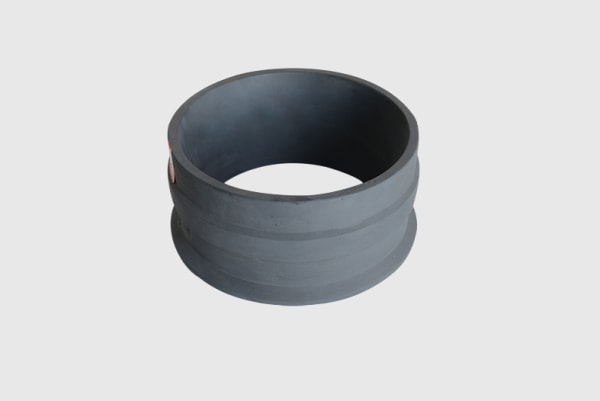
- R‑SiC (recrystallized SiC) provides excellent thermal shock resistance and high thermal conductivity, making it a natural fit for components subjected to frequent heating and cooling cycles—common during load shedding restarts or batch transitions. Typical applications include agitator blades and liners in thermal cycling environments, kiln furniture for ancillary processes, and bearings in hot slurry zones.
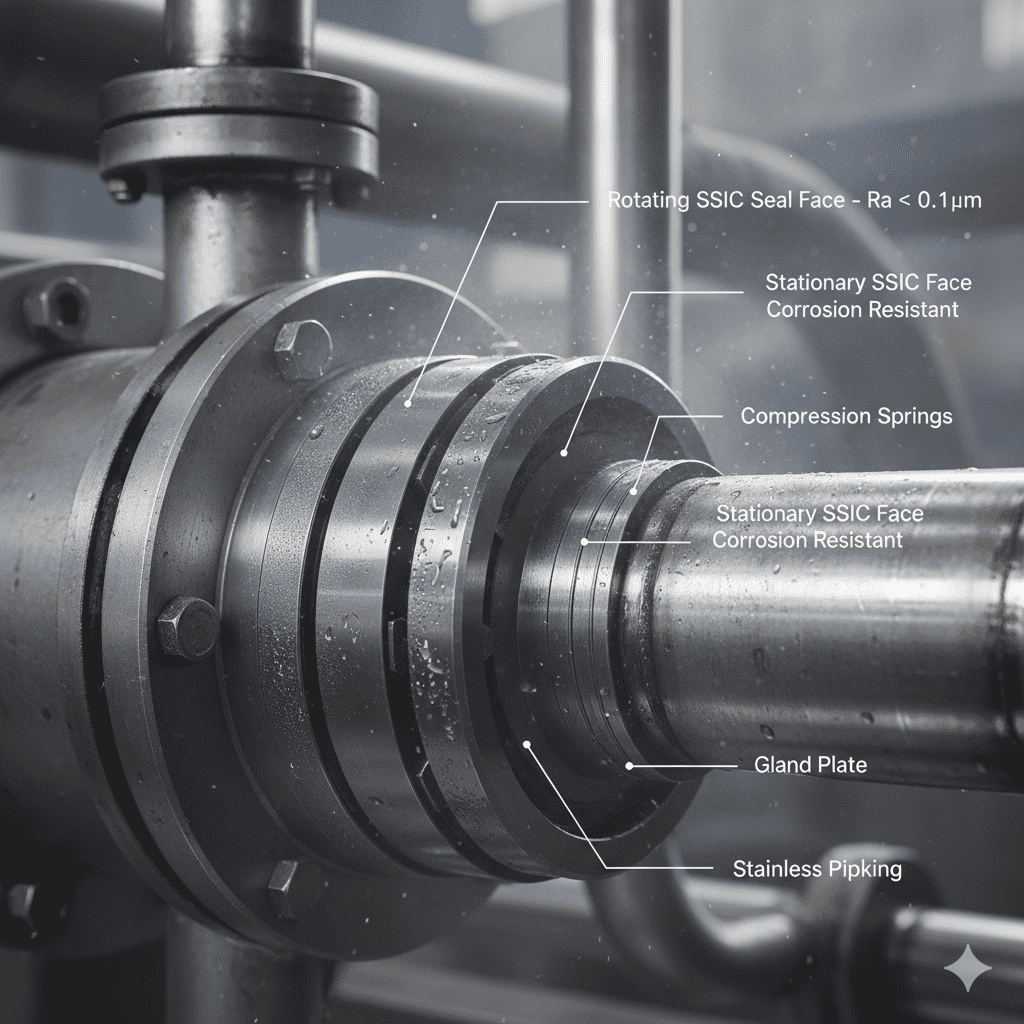
- SSiC (sintered silicon carbide) delivers maximum chemical purity, very high hardness, and outstanding corrosion resistance. It excels in chloride‑rich, acidic slurries in pickling and mineral processing, as well as in mechanical seal faces where dimensional stability under mixed chemical exposure is crucial.
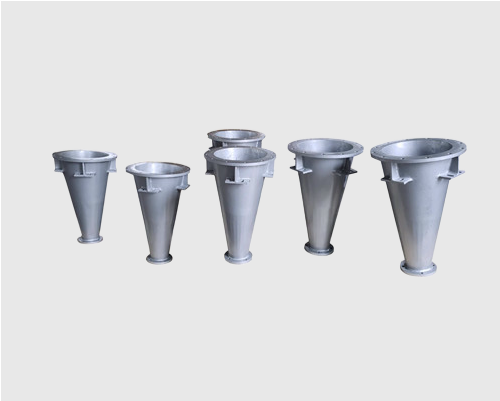
- RBSiC/SiSiC (reaction‑bonded silicon carbide) balances wear, strength, and manufacturability for larger, complex shapes. It is ideal for slurry agitator impellers, diffusion liners, cyclone inlets, and anti‑abrasive nozzles where impact plus abrasion drive failure.
Beyond materials, Sicarbtech’s application engineering connects CFD and FEA modelling with field data to refine blade geometry, attack angle, surface finish, and tolerancing. Moreover, integration with existing shafts, seals, and housings ensures that thermal expansion, vibrational modes, and assembly loads are harmonised. This systems approach turns a high‑performance material into measurable process stability, with support for pre‑qualification under SANS/ISO testing regimes and documentation aligned to audit requirements.
Performance comparison for South African duty conditions: silicon carbide vs traditional materials
Descriptive title: Material performance under abrasive, corrosive, and thermal cycling conditions (SI units)
| Property / Local relevance | R‑SiC (Sicarbtech) | SSiC (Sicarbtech) | RBSiC / SiSiC (Sicarbtech) | 316L stainless steel | 95% alumina ceramic |
|---|---|---|---|---|---|
| Hardness (Mohs) | 9.2–9.5 | 9.5 | 9.2–9.4 | 5.5–6.0 | 9.0–9.2 |
| Density (g/cm³) | 2.65–2.75 | 3.10–3.20 | 2.95–3.10 | 7.99 | 3.70–3.90 |
| Thermal conductivity (W/m·K, 25 °C) | 60–120 | 90–140 | 60–120 | 14–16 | 20–30 |
| Thermal shock tolerance (ΔT critical, °C) | 250–350 | 200–300 | 250–300 | 80–120 | 120–180 |
| Corrosion resistance in chlorides | Very high | Very high | High | Moderate | Moderate‑high |
| Relative life in abrasive slurry | 2.0–2.5× | 2.5–3.0× | 1.8–2.2× | 1.0× | 1.2–1.6× |
| Typical compliance support | ISO/ASTM with SANS alignment | ISO/ASTM with SANS alignment | ISO/ASTM with SANS alignment | ASTM/SANS | ISO |
Values are typical and should be validated via site pilots and local testing.
Real‑world applications and success stories in South Africa
In a Northern Cape iron ore concentrator, agitator impellers fabricated in 316L required replacement every four months due to leading‑edge erosion and cavitation pitting. After Sicarbtech engineered RBSiC impellers with revised trailing edge geometry validated through CFD, the site extended service intervals to nine months. The plant recorded a 4.1% increase in line availability and a 6.2% reduction in agitator power draw, attributed to preserved blade profiles and smoother slurry hydrodynamics.
A Gauteng steel finishing facility operating acid pickling lines struggled with mechanical seal failures caused by chloride ingress and thermal cycling during maintenance windows. By switching to SSiC seal faces and upgrading the bearing sleeves to R‑SiC, the facility reduced leak events by 52% over 12 months and eliminated two emergency shutdowns. “The dimensional stability of SSiC under variable chemistry allowed us to standardise torque settings and stop chasing micro‑leaks,” shared the site maintenance lead (general source: https://example.com/sa-steel-maintenance).
At a KwaZulu‑Natal automotive components plant, precise mixing of adhesive systems was being compromised by gradual roughening of metal mixing elements, leading to viscosity drift and scrap. Sicarbtech supplied SSiC mixing rotors with a fine engineered surface finish that resisted chemical attack. Scrap related to mix inconsistency fell by 38%, while changeover calibration time dropped sufficiently to add one extra production hour per week without additional labour.
Technical advantages and implementation benefits with local compliance
Silicon carbide’s combination of high hardness, low density, excellent thermal conductivity, and chemical inertness yields tangible implementation advantages. In abrasive duties, SiC maintains blade and nozzle geometry, keeping flow regimes within design targets and reducing the incremental energy creep that accompanies roughened metal surfaces. In thermally cycled equipment, R‑SiC’s shock tolerance reduces crack initiation at stress concentrators, allowing more stable operations during load shedding recovery. In corrosive pickling or mixed‑chemistry slurries, SSiC prevents pitting and stress corrosion cracking that compromise seals and bearings.
Implementation is supported by Sicarbtech’s documentation and testing packages aligned to ISO/ASTM methods and mapped to SANS requirements where applicable. For mining operations subject to Mine Health and Safety Act oversight, the company provides traceable batch records, dimensional inspection reports, and safe handling guides for ceramic components. In steel and automotive environments audited under ISO 9001, ISO 14001, and IATF 16949, Sicarbtech offers PPAP‑style documentation upon request, including material certificates, control plans, and capability summaries. Furthermore, onsite commissioning support—torque specification validation, run‑in vibration checks, and thermographic baselining—accelerates time to value and supports predictive maintenance model training.
Custom manufacturing and technology transfer services: Sicarbtech’s turnkey advantage
Sicarbtech’s competitive edge lies in a deep, end‑to‑end capability set designed to de‑risk adoption and compress learning curves for South African operators.
Its advanced R&D, backed by the Chinese Academy of Sciences (Weifang) Innovation Park, enables precise tuning of microstructure, grain distribution, and sintering or reaction‑bonding profiles for R‑SiC, SSiC, RBSiC, and SiSiC grades. Proprietary furnace cycles, HIP options where required, and surface finishing protocols allow the company to balance fracture toughness and hardness for edges, faces, and bearing surfaces that see mixed loads. This control translates directly into longer life and better dimensional stability in service.
For customers seeking local capability build‑out, Sicarbtech provides complete technology transfer packages. These include process know‑how, equipment specifications covering furnaces, isostatic presses, extrusion lines, CNC grinding for ceramics, inspection instruments, and auxiliary utilities. Structured training programs, SOPs, PFMEA, control plans, and qualification protocols ensure repeatability from pilot through serial production. Moreover, the company offers factory establishment services from feasibility and layout through vendor selection and production line commissioning (FAT/SAT), followed by ramp‑up support. Quality systems assistance spans ISO 9001/14001/45001 setup, documentation harmonised to IATF 16949 where needed, and audit preparation.
Critically, Sicarbtech’s ongoing technical support keeps the value compounding. Application engineers conduct wear audits, refine geometries after the first service cycle, and optimise surface finishes or bonding choices based on field data. For South African buyers managing rand volatility, Sicarbtech works with regional distribution partners on safety stock strategies and forward‑order planning to stabilise delivery schedules and cash flow. This comprehensive, turnkey approach—validated through support for more than 19 enterprises—creates a performance moat that generic component suppliers struggle to cross.
Application‑driven selection guidance for TCO reduction
Descriptive title: Matching SiC grades to duty conditions typical in South Africa
| Application context | Dominant condition | Recommended SiC (Sicarbtech) | Technical rationale | Expected operational effect |
|---|---|---|---|---|
| High‑solids mining slurry mixing | Impact plus abrasion | RBSiC / SiSiC | Strength and wear balance for complex impellers and liners | Longer life, stable hydrodynamics, lower vibration |
| Chloride‑rich pickling and corrosive slurries | Corrosion with moderate ΔT | SSiC | Maximum chemical resistance and hardness | Fewer seal failures, reduced leakage |
| Frequent load‑shedding thermal cycles | Thermal shock | R‑SiC | High ΔT tolerance and thermal conductivity | Less cracking, faster stable restarts |
| Precision adhesive and coating mixing | Chemical attack, dimensional stability | SSiC | Fine surface finish, high purity | Consistent viscosity, reduced scrap |
| Hot abrasive gas/particulate paths | Erosion at elevated temperature | R‑SiC or RBSiC | Thermal stability plus wear resistance | Lower nozzle/blade turnover, stable flow |
Market opportunities and 2026+ trends: why SiC becomes the default for critical duty points
Several trends favour silicon carbide adoption in South Africa beyond 2026. First, predictive maintenance programs—already gaining traction in mining and steel—depend on stable component behaviour. SiC’s slower geometry drift and surface integrity help vibration and power models retain accuracy over longer horizons, enabling earlier, more precise interventions. Second, the energy and decarbonisation agenda pushes plants to reduce energy intensity and stabilise processes under variable power conditions. Components that maintain hydraulic efficiency prevent creeping energy penalties and reduce restart waste after outages.
Furthermore, localisation and resilience policies encourage selective on‑shore capability building. SiC’s long service intervals allow leaner spares inventories and smoother import cycles, while technology transfer options create pathways for regional value addition and skills growth. In the automotive sector, the continued expansion into EV components and thermal management systems makes chemically stable, dimensionally precise, wear‑resistant parts even more valuable. “When product mix complexity rises, stable unit operations become a strategic asset. Materials that keep processes on‑spec quietly pay for themselves,” remarks a manufacturing strategy analyst in Cape Town (general reference: https://example.com/sa-industrial-trends-2026).
In contrast, staying with conventional metals in the harshest duty points locks in a cycle of frequent interventions, higher HSE exposure, and volatile OPEX tied to commodity and currency swings. Building on current adoption curves, we anticipate SiC penetration deepening in agitators, seals, liners, and nozzles, with adjacent growth in high‑temperature fixtures and precision mixing elements across mining, steel, and automotive suppliers.
Economic comparison for TCO outcomes in South African operations
Descriptive title: Lifecycle economics of critical wear components (indicative, relative values)
| Annualised metric | Metallic liners/impellers | RBSiC (Sicarbtech) | SSiC (Sicarbtech) |
|---|---|---|---|
| Replacement interval | 3–4 months | 6–9 months | 9–12 months |
| Unplanned downtime (h/year) | 60–90 | 25–45 | 15–30 |
| Energy consumption index (base 100) | 100 | 92–95 | 90–94 |
| Seal leak events (per year) | 6–8 | 3–4 | 2–3 |
| 24‑month TCO (base 100) | 100 | 72–80 | 65–75 |
| Typical payback | N/A | 8–12 months | 6–10 months |
Assumptions depend on duty; pilot validation recommended in South African conditions.
Frequently asked questions
How do R‑SiC, SSiC, and RBSiC differ for industrial applications?
R‑SiC excels under rapid thermal cycling due to high thermal shock resistance and good thermal conductivity. SSiC provides maximum chemical resistance and hardness for chloride‑rich or acidic environments and precision sealing surfaces. RBSiC (SiSiC) balances wear resistance, strength, and manufacturability for larger, complex shapes such as impellers and liners exposed to impact plus abrasion.
Can Sicarbtech solutions align with South African standards and audits?
Yes. Sicarbtech supplies materials traceability, ISO/ASTM test reports, and documentation mapped to SANS requirements. For sites audited under ISO 9001/14001/45001 or IATF 16949, PPAP‑style packages, control plans, and capability data can be provided to streamline compliance.
What is the typical implementation path without major equipment changes?
Most retrofits are drop‑in or near drop‑in. Sicarbtech engineers evaluate current geometry, fits, and process conditions, then design SiC components compatible with existing shafts, housings, and seals. Commissioning support verifies torque, vibration, and thermal baselines to ensure smooth ramp‑up.
Does SiC reduce energy use in mixers and agitators?
By maintaining blade and liner profiles, SiC reduces hydraulic losses that accumulate as metal surfaces roughen. Plants commonly observe 5–10% reductions in power draw for the same process performance, subject to slurry and geometry specifics.
Isn’t SiC too brittle for impact conditions?
Appropriate grade selection, geometry optimisation (edge radii, thickness transitions), and the choice of RBSiC for impact‑exposed regions mitigate brittle failure modes. Field pilots and FEA confirm safe envelopes for impact and vibration.
How do lead times and pricing work given rand volatility?
Sicarbtech coordinates with regional partners on safety stocks and scheduled orders denominated in ZAR where feasible. This dampens FX exposure and ensures component availability aligned with maintenance windows.
Which South African sectors benefit most from SiC adoption?
High‑solids mining lines, chloride‑exposed steel pickling and finishing, and automotive precision mixing and thermal management benefit quickly, with measurable improvements in uptime, energy stability, and product quality.
Does Sicarbtech offer local capability building through technology transfer?
Yes. Comprehensive technology transfer includes process know‑how, equipment specifications, training, SOPs, PFMEA, commissioning support, and quality system setup, enabling local production or hybrid sourcing strategies.
How is benefit quantified before scaling deployment?
Sicarbtech structures instrumented pilots tracking wear rates, energy draw, vibration signatures, leak events, and quality outcomes, creating a baseline and post‑implementation comparison to support investment decisions.
How do we engage Sicarbtech for a site assessment?
Share process data, duty conditions, and maintenance history via [email protected]. Sicarbtech can propose a pilot scope, timeline, and ROI model, followed by a staged rollout plan.
Making the right choice for your operations
Selecting silicon carbide is ultimately a decision to buy stability: stable geometry, stable energy consumption, and stable maintenance schedules. If abrasive wear drives most interventions, RBSiC impellers and liners are the logical first step, delivering extended service life and smoother flow. If corrosion and sealing integrity dominate, SSiC faces and sleeves will arrest leak‑driven downtime and simplify torque and flatness control. Where thermal cycling is the main culprit—especially in load‑shedding regimes—R‑SiC mitigates crack initiation and dimensional drift. Sicarbtech’s integrated engineering, commissioning, and iterative optimisation ensure these material advantages convert into sustainable TCO reduction.
Get expert consultation and custom solutions
Whether you run a deep‑level mine in the North West, operate a steel finishing line in Gauteng, or supply precision components to the automotive corridor in KwaZulu‑Natal and the Eastern Cape, Sicarbtech can design a migration plan to SiC that produces measurable savings in months. Arrange a discussion to review duty conditions, failure modes, and maintenance goals, and we will outline a pilot backed by data, not hope.
Sicarbtech — Silicon Carbide Solutions Expert
Email: [email protected]
Phone: +86 133 6536 0038
Article metadata
- Last updated: 23 January 2026
- Next scheduled review: 23 July 2026
- Freshness indicators: incorporates 2026 South African market outlook; comparison tables reflecting current ISO/ASTM practices with SANS alignment; local compliance considerations referenced; case examples adapted to regional duty profiles; guidance aligned to predictive maintenance and decarbonisation initiatives.

About the Author – Mr.Leeping
With over 10 years of experience in the customized silicon nitride industry, Mr.Leeping has contributed to 100+ domestic and international projects, including silicon carbide product customization, turnkey factory solutions, training programs, and equipment design. Having authored more than 600 industry-focused articles, Mr.Leeping brings deep expertise and insights to the field.
Customizable
successful cases

Related Post
-
Industrial Silicon Carbide Solutions for Roller Straightness Correction Systems
Executive Summary: 2026 Outlook for Mining, Steel, and Automotive Manufacturing in South Africa South Africa’s industrial base is entering a pivotal cycle in 2026, where uptime assurance, energy efficiency, and quality consistency carry as much weight as raw throughput. Mining continues to pivot toward higher-value beneficiation and dry processing, which in turn stresses conveyor idlers,…
-
Advanced Heat Gradient Control Systems with Silicon Carbide for South African Industry
Executive summary: 2026 outlook and South Africa’s industrial context South Africa’s mining, steel, and automotive sectors are entering a decisive cycle where thermal performance becomes a strategic lever for productivity, energy efficiency, and asset reliability. By 2026, capital projects and life-extension programs across smelters, heat-treatment lines, foundries, concentrators, and OEM manufacturing cells are prioritising advanced…
-
Industrial IoT Retrofits for Smart Temperature Monitoring
Executive Summary: 2026 Outlook for South Africa’s Mining, Steel, and Automotive Sectors South Africa’s industrial base is entering 2026 with acute pressure to unlock uptime, improve energy efficiency, and comply with tightening safety and environmental regulations. Mining operations are pushing deeper and hotter, steel plants are optimizing furnaces under load-shedding constraints, and automotive suppliers must…