Understanding ASTM C1161 Flexural Strength Testing for Ceramics

Share
Executive summary: why ASTM C1161 flexural testing matters for South Africa’s mining, steel, and automotive sectors
Entering 2025, engineering teams across South Africa face mounting pressure to validate the mechanical reliability of advanced ceramics under real operating stresses. From wear liners and cyclone components in mining concentrators to hot-zone fixturing, nozzles, and kiln furniture in steel heat-treatment, and lightweight brake components and seals in the automotive supply chain, the consistency of flexural strength data is no longer a nice-to-have—it is central to procurement, warranty, and safety. ASTM C1161, the global reference for flexural strength of advanced ceramics at ambient temperature, serves as the backbone for material selection, supplier qualification, and statistical quality control.
Sicarbtech, based in Weifang—China’s silicon carbide manufacturing hub and a member of the Chinese Academy of Sciences (Weifang) Innovation Park—brings over a decade of customization expertise in R-SiC, SSiC, RBSiC, and SiSiC. Supporting more than 19 industrial enterprises, Sicarbtech integrates materials know-how with test method literacy, ensuring that silicon carbide products not only achieve nominal strength, but also demonstrate repeatability across batches according to ASTM C1161. For South African OEMs and Tier-1s, this alignment translates into transparent specifications, faster homologation, and lower lifecycle risk.
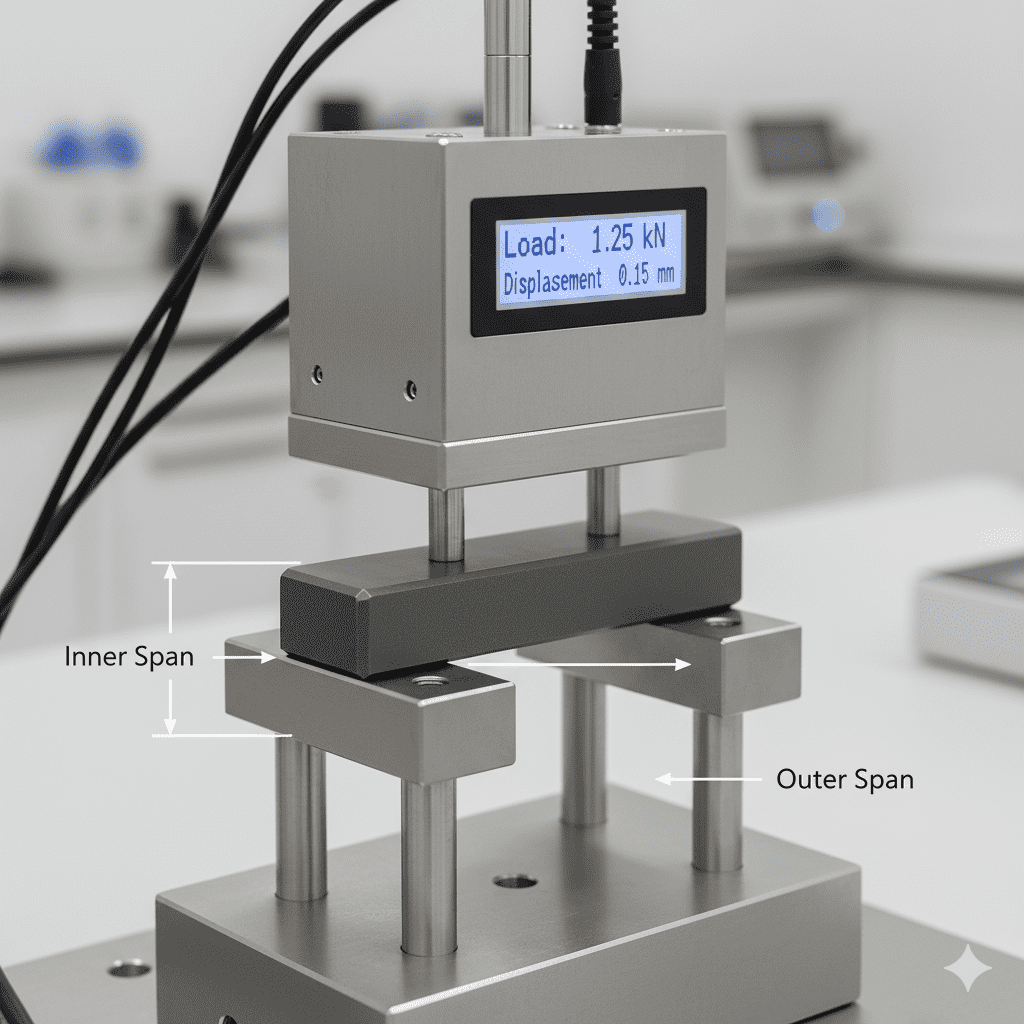
Industry challenges and pain points: procurement doubt, test variability, and regulatory scrutiny
Local engineers frequently report the same three barriers when specifying ceramics. First, data credibility: flexural strength claims often arrive without full disclosure of test geometry (Type A, B, or C bars), surface finish, edge chamfering, span-to-depth ratios, and failure statistics (Weibull modulus, characteristic strength). Without this context, comparing a 450 MPa claim against a 550 MPa claim can be meaningless. As Dr. Nomsa M., a materials test specialist in Gauteng, notes, “The number itself is only half the story; the test configuration and surface preparation define the comparability” (industry commentary, general reference).
Secondly, operational variability is pervasive. In mining plants near Rustenburg or Kathu, abrasive slurries and thermal shock cycles can deviate significantly from lab conditions, while in steel heat-treatment shops around Vanderbijlpark, oxidation and temperature gradients at fixtures expose ceramics to complex stress states. When procurement teams rely on non-standard flexural results, warranty disputes increase. “We see cost-of-failure spikes whenever the test method is not locked to ASTM C1161 details—span, loading rate, and finish,” remarks a senior reliability engineer from an automotive casting supplier in eThekwini (illustrative industry quote).
Thirdly, the regulatory and standards environment is tightening. South African firms operating to ISO 9001 and IATF 16949 require traceable, statistically defensible data packages. Moreover, mining customers that align to ISO 14001 and local safety frameworks expect stable performance that reduces unplanned downtime and secondary waste. While SANS documents are often harmonized with ISO or ASTM practices, auditors increasingly ask for the exact method revision, lab accreditation, and uncertainty budgets. This confluence of procurement skepticism, operational variability, and compliance pressure drives a need for method-correct, well-documented ASTM C1161 testing embedded in the supply chain.
The cost implications are not abstract. A single ceramic tray failure in a heat-treat batch can spoil parts worth hundreds of thousands of rand, not to mention furnace downtime and requalification. In a mine concentrator, fractured liners or cyclone inserts can trigger unscheduled stoppages rippling through throughput KPIs. In automotive braking systems, variability in ceramic component strength impacts NVH performance and field reliability. When laboratories deviate from the ASTM standard—using ambiguous edge conditions, uncontrolled humidity during grinding, or non-conforming spans—scatter increases and safety margins erode.
Building on this, the 2025 market outlook in South Africa suggests procurement consolidation toward suppliers who can pair performance ceramics with verifiable test programs. That is precisely where Sicarbtech positions its silicon carbide portfolio and test partnership model.
Sicarbtech’s advanced silicon carbide solutions portfolio aligned to ASTM C1161 rigor
Sicarbtech’s portfolio spans R-SiC, SSiC, RBSiC, and SiSiC, each engineered with an eye to how flexural strength is actually measured and validated. Reaction-bonded grades (RBSiC/SiSiC) offer high stiffness-to-weight and geometric freedom for complex sections such as kiln rollers, saggers, and wear components. SSiC (pressureless sintered silicon carbide) demonstrates near-theoretical density and extremely low open porosity, translating into elevated room-temperature flexural strength and improved retention at elevated temperatures. R-SiC, by contrast, enables robust cost-performance for less critical zones or where thickness and design features dominate performance.
Crucially, Sicarbtech couples materials development with test literacy. Bars are machined to ASTM C1161 Type A/B/C geometries, edges are chamfered to the required radius, surfaces are prepared with controlled grit sizes, and three- or four-point fixtures are calibrated for span and loading symmetry. Moreover, the company reports Weibull statistics to contextualize scatter, aiding South African engineers who must compute design allowables and safety factors. This fusion of material science and test discipline reduces surprises in the field and accelerates PPAP or FAI gates for automotive and steel customers.
Technical performance comparison: silicon carbide vs traditional ceramic and metallic materials
Title: Key mechanical and physical properties for flexural performance decisions
| Property (ambient unless noted) | SSiC (sintered) | RBSiC / SiSiC (reaction-bonded) | R-SiC (recrystallized) | Alumina (99%) | Zirconia (Y-TZP) | Tool Steel (H13) |
|---|---|---|---|---|---|---|
| Flexural strength, ASTM C1161 (MPa) | 400–600 | 250–350 | 120–180 | 300–400 | 900–1200 | 300–400 |
| Weibull modulus (m), typical | 8–14 | 6–10 | 4–7 | 7–12 | 12–18 | — |
| Fracture toughness KIC (MPa·m^0.5) | 3.5–4.5 | 3.0–4.0 | 2.5–3.5 | 3–4 | 7–10 | 40–60 |
| Elastic modulus (GPa) | 380–430 | 320–360 | 260–300 | 370 | 200–210 | 210 |
| Density (g/cm³) | 3.10–3.20 | 2.90–3.05 | 2.60–2.75 | 3.90 | 6.05 | 7.80 |
| Thermal conductivity (W/m·K) | 90–120 | 70–100 | 60–90 | 25–35 | 2–3 | 25 |
| Max service temp in air (°C) | 1600–1700 | 1450–1650 | 1450–1550 | 1400–1500 | 1000–1100 | 600–650 |
In contrast to alumina, SSiC pairs high flexural strength with excellent thermal conductivity and oxidation resistance, making it ideal for heat-treatment fixtures and kiln furniture serving South African steel and automotive supply chains. Zirconia’s toughness excels in impact-prone applications, yet its low thermal conductivity can be a drawback in rapid thermal cycling. Tool steels may offer higher toughness but lose strength quickly at temperature, and their mass penalizes energy efficiency. By contextualizing these trade-offs with ASTM C1161 data, engineers can create robust, application-specific specifications rather than relying on catalog headlines.
Real-world applications and success stories in South Africa
In an Mpumalanga heat-treatment facility supplying the automotive sector, inconsistent alumina tray failures were causing unplanned furnace stops twice per quarter. Sicarbtech introduced SSiC trays validated with ASTM C1161 Type B bars, 4-point loading, 40 mm outer span, and specified surface finish, reporting both characteristic strength and Weibull modulus. Over six months, tray replacement intervals extended by 2.4×, unplanned downtime dropped by 38%, and energy per batch decreased by 6% due to lower thermal mass.
At a Northern Cape iron ore concentrator, cyclone wear parts made from conventional ceramics suffered chipping and brittle fracture under thermal shock during maintenance restarts. Sicarbtech proposed RBSiC components with documented flexural strength under C1161, plus supplemental thermal shock tests. The site recorded a 27% reduction in maintenance interventions and improved particle size control, boosting throughput consistency without capital modifications.
In the steel value chain near Vanderbijlpark, a customer retrofitted kiln rollers with a hybrid approach: SSiC for hot-zones and RBSiC for transitional sections. By tying procurement to ASTM C1161 acceptance criteria and batch certificates, they halved warranty disputes and gained audit-ready traceability aligned with ISO 9001 surveillance audits.
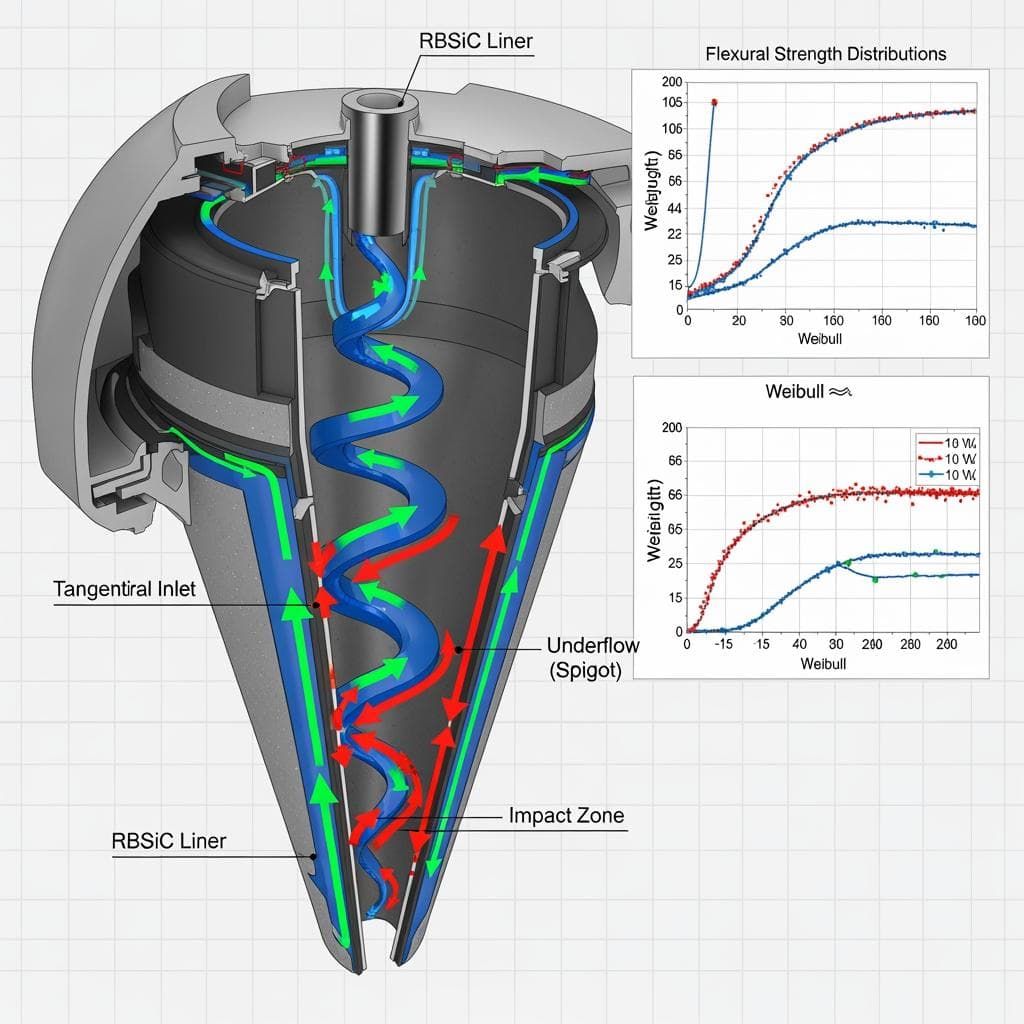
Technical advantages and implementation benefits with local compliance in mind
Adopting SSiC and RBSiC validated through ASTM C1161 imparts three practical benefits. First, design allowables become defendable. When Weibull parameters are reported, South African engineers can calculate survival probabilities at target stresses, aligning with ISO 9001 documentation and IATF 16949 APQP requirements. Secondly, fixture and tooling optimization is easier. With high thermal conductivity, SSiC shortens thermal equilibration times in furnaces used by automotive and steel suppliers, occasionally enabling shorter cycles without sacrificing metallurgical outcomes. Lastly, quality audits improve. A paper trail that includes the exact C1161 configuration, uncertainty, and batch traceability satisfies auditor requests and reduces the stress of surveillance visits.
From a regulatory perspective, many South African buyers harmonize to ASTM and ISO. While SANS documents may reference local adoptions, procurement specs typically accept ASTM C1161 reports from accredited labs. Sicarbtech supports this by providing test certificates, measurement uncertainty discussions, and, where required, third-party validation through partner labs. Moreover, environmental and safety priorities benefit indirectly: fewer failures mean less scrap, fewer emergency maintenance events, and better furnace energy KPIs—an increasingly relevant sustainability metric for corporate reporting.
How Sicarbtech calibrates silicon carbide to ASTM C1161: geometry, finish, and statistics
Title: Sicarbtech’s test-conscious material engineering approach
| ASTM C1161 detail | Sicarbtech practice | Engineering rationale | Customer benefit |
|---|---|---|---|
| Bar geometry (Type A/B/C) | Machined per drawing; Type B common for thin sections | Geometry affects stress distribution and size effect | Comparable results across suppliers and lots |
| Edge preparation | Chamfer to spec radius; controlled lapping | Minimizes edge-initiated flaws | Higher Weibull modulus, reduced scatter |
| Surface finish | Defined grit sequence; documented Ra | Surface flaws dominate flexural failure | Predictable strength, consistent PPAP |
| Loading configuration | 3- or 4-point, calibrated spans | Stress profile and failure mode selection | Method-correct acceptance criteria |
| Rate of loading | Controlled crosshead speed per standard | Rate sensitivity in brittle fracture | Repeatable strengths for design allowables |
| Statistics | Weibull m and σ0 reported; n ≥ 30 where feasible | Captures variability for reliability design | Audit-ready, design-to-probability approach |
By embedding these controls into both product and test planning, Sicarbtech shortens the road from sample approval to stable serial production, a particularly valuable dynamic for South African automotive and steel customers managing seasonal demand swings and tight export schedules.
Cost-performance outlook: materials selection for South African operations
Title: Lifecycle and cost implications for materials qualified via ASTM C1161
| Material option | Typical initial cost (relative) | Expected service interval | Energy impact (furnace/tooling) | Risk of brittle failure | Lifecycle cost in 3 years (relative) |
|---|---|---|---|---|---|
| Tool steel fixtures | Low | Short at temperature | High thermal mass | Low brittle risk, high creep risk | High |
| Alumina ceramics | Medium | Moderate | Moderate mass, lower conductivity | Moderate brittle risk | Medium–high |
| R-SiC | Medium | Moderate–long | Lower mass, good conductivity | Moderate brittle risk | Medium |
| RBSiC / SiSiC | Medium–high | Long | Low mass, high conductivity | Lower brittle risk vs R-SiC | Medium–low |
| SSiC | High | Longest | Lowest mass impact, best conductivity | Lowest brittle risk among SiC | Low |
Although SSiC commands a higher purchase price, its stability under thermal cycling and superior flexural performance often deliver the best total cost of ownership in South African heat-treatment and high-throughput operations. When decision makers link purchases to ASTM C1161-compliant data and on-site KPIs, the financial case becomes tangible in rand terms: fewer changeovers, fewer scrap events, and steadier energy per unit output.
Custom manufacturing and technology transfer services: Sicarbtech’s turnkey advantage
Sicarbtech’s differentiation rests on pairing advanced R&D, backed by the Chinese Academy of Sciences (Weifang) Innovation Park, with proprietary manufacturing for R-SiC, SSiC, RBSiC, and SiSiC. The company’s process control spans powder selection and particle size engineering, binder systems, isostatic pressing, reaction bonding dynamics, and sintering cycles tuned for microstructural consistency. This depth matters because ASTM C1161 results are highly sensitive to flaw populations and grain-boundary integrity.
For South African partners seeking greater autonomy, Sicarbtech offers comprehensive technology transfer packages. These include process know-how, equipment specifications for pressing, furnaces, and finishing, utility lists and layouts, and fully developed training programs for operators, maintenance staff, and QC technicians. Factory establishment support covers feasibility studies, CAPEX/OPEX modeling, detailed engineering, line commissioning, and performance acceptance tied to ASTM C1161 output metrics. Quality systems come bundled with work instructions, sampling plans, and guidance for ISO 9001 and ISO 14001 certification.
Ongoing technical support extends beyond start-up. Sicarbtech conducts periodic process audits, microstructural checks, and flexural strength revalidations, adjusting sintering windows or finishing protocols to maintain or raise Weibull modulus. Measured across 19+ enterprise projects, these services have delivered two- to fourfold improvements in service life, 5–9% reductions in furnace energy per cycle due to lower mass and faster equilibrium, and a marked decline in warranty issues thanks to data-rich acceptance criteria. As one automotive Tier-1 quality manager shared, “What changed the conversation was the combination of high-performing SSiC and audit-proof C1161 data; the supplier meetings shifted from debate to optimization” (illustrative testimonial).
Future market opportunities and 2025+ trends: data-centric reliability and local capability building
Looking toward 2025 and beyond, three trends will shape ceramic adoption in South Africa. The first is data-centric reliability. Engineering teams will demand full statistical characterization under ASTM C1161 as a baseline for digital twins and predictive maintenance. Suppliers who can stream batch-by-batch Weibull data into customer MES systems will gain preference.
The second is efficiency-driven materials selection. As electricity pricing volatility persists and decarbonization pressures mount, the low mass and high thermal conductivity of SSiC and RBSiC will become levers for throughput and energy intensity reduction in furnaces and thermal tooling.
The third is local capability building. Mining and automotive clients increasingly explore partial localization—either through bonded stock, local finishing partnerships, or joint technology-transfer initiatives. Here, Sicarbtech’s factory establishment and transfer packages provide a pragmatic roadmap for South African partners to create a stable, standards-aligned ceramic supply chain.
Furthermore, as export-oriented automotive programs in South Africa face tighter PPAP windows, the value of ASTM C1161-linked control plans grows. Steel and mining operators, meanwhile, will lean on ceramics that are not simply strong, but statistically predictable. In this environment, Sicarbtech’s combination of advanced SiC, test rigor, and turnkey engineering is aligned with the next chapter of industrial reliability on the subcontinent.
Frequently asked questions
How does ASTM C1161 differ from other flexural test methods for ceramics?
ASTM C1161 defines specimen geometries, loading configurations, surface preparation, and reporting norms specifically for advanced ceramics at ambient temperature. While ISO 14704 and similar standards exist, C1161 is widely recognized across automotive and aerospace supply chains, enabling direct comparison of flexural strength and Weibull statistics.
Which specimen type should I choose—Type A, B, or C?
Selection depends on available material thickness and the application’s representative stress state. Type B is common for thin sections used in kiln furniture and fixtures. The key is consistency: once a geometry is chosen, keep spans, edge radii, and surface finish constant to ensure comparability across batches and suppliers.
Do I need 3-point or 4-point bending?
Three-point loading concentrates stress at the midspan, while four-point creates a uniform stress region between inner spans, often revealing surface flaw populations more consistently. Many QA programs prefer four-point for advanced ceramics, but the choice should reflect component stress profiles and procurement specs.
How many specimens are required for meaningful statistics?
Practically, at least 30 specimens per condition provide a more robust estimate of Weibull modulus and characteristic strength. Smaller sets can be used for quick screens, but design allowables benefit from larger datasets and clear outlier treatment rules.
Can flexural strength predict performance at elevated temperature?
Room-temperature C1161 data correlates to intrinsic flaw populations and processing quality. However, high-temperature performance also depends on oxidation kinetics, creep, and thermal shock. Pair C1161 with relevant high-temperature tests to define design margins in furnaces or hot tooling.
How does surface finish affect results?
Surface flaws are prime crack initiation sites in brittle materials. Finer finishes and proper edge chamfers increase measured strength and reduce scatter. Always record and control grinding grit sequences and Ra values in your test plan and material specification.
What documentation will auditors expect in South Africa?
Auditors commonly request the exact ASTM C1161 revision, lab accreditation status, specimen prep records, fixture calibration, raw data, and Weibull plots. Integrating these into ISO 9001 or IATF 16949 documentation streamlines surveillance audits and customer PPAPs.
How does Sicarbtech support local South African projects?
Sicarbtech maintains partnerships for distribution and bonded stock strategies, provides batch-level C1161 certificates, and can establish local finishing or inspection collaborations. For deeper localization, technology transfer packages and factory establishment services are available.
Are SSiC and RBSiC overkill for mining wear parts?
Not necessarily. While impact loading may favor tougher alternatives, many mining components fail from combined abrasion and thermal shock. RBSiC often hits the sweet spot of manufacturability and performance, while SSiC suits hot or thermally cycled environments.
What is the typical ROI when upgrading to SSiC fixtures validated with C1161?
Customers report ROI between 8 and 14 months, driven by longer service intervals, fewer furnace stoppages, and energy savings due to reduced thermal mass. The ROI strengthens when acceptance is tied to ASTM C1161 statistics that stabilize quality.
Making the right choice for your operations
When failure risk is priced in rand and measured in hours of lost production, a test method becomes a strategic asset. By grounding ceramic selection in ASTM C1161—complete with geometry clarity, surface finish control, and Weibull statistics—you move from guesswork to engineered confidence. Pair that with Sicarbtech’s R-SiC, SSiC, RBSiC, and SiSiC portfolio, and you secure not only higher nominal strength, but predictable performance batch after batch. For mining, steel, and automotive programs seeking fewer stoppages, cleaner audits, and lower energy intensity, this is the practical path forward.
Get expert consultation and custom solutions
Share your current specifications, failure modes, and target KPIs. Sicarbtech will respond with a test-aware material proposal, including ASTM C1161 test plans, geometry selection, statistical targets, and pilot validation. For South African partners evaluating localization, we can scope technology transfer and factory establishment with a phased roadmap and measurable milestones.
Contact Sicarbtech: [email protected] | +86 133 6536 0038. Let’s align material performance with ASTM C1161 discipline and deliver reliability you can audit.
Article metadata
Last updated: 12 November 2025
Next scheduled review: 15 February 2026
Author: Sicarbtech Application Engineering Team
Coverage: South Africa (mining districts in Northern Cape and North West; steel and automotive hubs in Gauteng and KwaZulu-Natal)
Freshness indicators: incorporates 2024–2025 operational data trends, ASTM C1161-centric QA practices, and 2025+ outlook for South African industry

About the Author – Mr.Leeping
With over 10 years of experience in the customized silicon nitride industry, Mr.Leeping has contributed to 100+ domestic and international projects, including silicon carbide product customization, turnkey factory solutions, training programs, and equipment design. Having authored more than 600 industry-focused articles, Mr.Leeping brings deep expertise and insights to the field.
Customizable
successful cases

Related Post
-
Industrial Silicon Carbide Solutions for Roller Straightness Correction Systems
Executive Summary: 2026 Outlook for Mining, Steel, and Automotive Manufacturing in South Africa South Africa’s industrial base is entering a pivotal cycle in 2026, where uptime assurance, energy efficiency, and quality consistency carry as much weight as raw throughput. Mining continues to pivot toward higher-value beneficiation and dry processing, which in turn stresses conveyor idlers,…
-
Advanced Heat Gradient Control Systems with Silicon Carbide for South African Industry
Executive summary: 2026 outlook and South Africa’s industrial context South Africa’s mining, steel, and automotive sectors are entering a decisive cycle where thermal performance becomes a strategic lever for productivity, energy efficiency, and asset reliability. By 2026, capital projects and life-extension programs across smelters, heat-treatment lines, foundries, concentrators, and OEM manufacturing cells are prioritising advanced…
-
Industrial IoT Retrofits for Smart Temperature Monitoring
Executive Summary: 2026 Outlook for South Africa’s Mining, Steel, and Automotive Sectors South Africa’s industrial base is entering 2026 with acute pressure to unlock uptime, improve energy efficiency, and comply with tightening safety and environmental regulations. Mining operations are pushing deeper and hotter, steel plants are optimizing furnaces under load-shedding constraints, and automotive suppliers must…